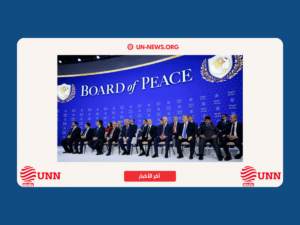


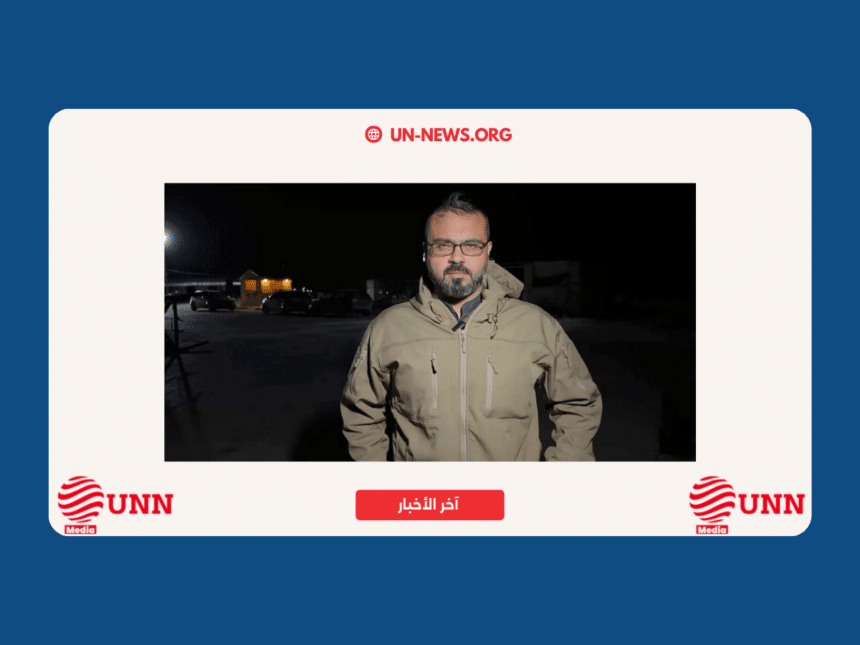
Hamas spokesman Hazem Qassem expressed cautious optimism regarding the announcement of the formation of a “Peace Council” for the Gaza Strip, considering that the announcement carries initial positive indications reflecting regional and international interest in ensuring the sustainability of the ceasefire.
Despite this guarded optimism, Qassem stressed—during his interview with Al Jazeera Mubasher Radio—that there are fundamental questions about the practical nature of the council and its ability to compel Israeli occupation forces to halt their ongoing violations, and whether it might turn into a framework aimed solely at ensuring Israel’s security.
Qassem noted that the participation of a number of Arab and Islamic countries “that hold a firm stance in support of the Palestinian cause,” and were not absent from mediation efforts that led to the cessation of the war, can be interpreted positively as evidence of a desire to sustain a truce that halts the devastating war.
The Hamas spokesman discussed the core aspirations of the resistance and the people of Gaza regarding this council, stressing the need to transform the current ceasefire from a temporary state into a sustainable and binding one, and to work toward ending occupation violations. He pointed out the rise in the number of Palestinian martyrs since the truce came into effect, reaching around 500 martyrs at a worst rate of five martyrs per day, including victims who fell as a result of artillery shelling carried out concurrently with council sessions.
Qassem called on the council to impose strong obligations on the Israeli occupation to fully open commercial and humanitarian crossings, lift the comprehensive blockade on the Gaza Strip, and urgently and comprehensively facilitate the entry of relief aid. He emphasized that talk of large amounts of aid reaching Gaza has not translated into a tangible reality, and that the state of closure and blockade remains in place on the ground.
He stressed the importance of mobilizing political, financial, and economic support to enable a comprehensive and realistic reconstruction process that aligns with the specific realities of the Gaza Strip, its people’s culture, and national objectives, while emphasizing the need not to overlook the fundamental political and national rights of the Palestinian people.
Former U.S. President Donald Trump had previously announced the establishment of a “Peace Council” related to the Gaza Strip, stating during the signing ceremony in Davos, Switzerland, the council’s “commitment to ensuring the disarmament of the Gaza Strip and its proper reconstruction.”
A notable omission and fundamental concerns
Qassem criticized what he described as a “clear omission” of the core essence of the fundamental problem—namely, the continued occupation of Palestinian lands and the occupation’s widespread daily violations—in the speeches announcing the council. He considered that marginalizing the history of the Palestinian people and their basic rights raises fears of adopting approaches aligned with Israeli occupation interests.
He said that Hamas fears the council could be turned into “a framework for safeguarding the security of the Israeli occupation,” citing conditions related to disarming the Palestinian resistance or visions of phased reconstruction accompanied by the encirclement of residential areas with restricted zones.
Regarding the second phase of the agreement, Qassem affirmed that the reality on the ground does not reflect any indications of genuine peace, actual reconstruction, or comprehensive relief, noting that the occupation has not adhered to the provisions of the first phase. He stated that the amount of aid delivered did not exceed 43% of the agreed quantity, the Rafah land crossing was not opened, and demolition and displacement operations continued within the so-called yellow line area.
On the issue of Palestinian weapons, Qassem stressed that focusing on it “ignores the roots of the problem.” He considered that the weapons of the resistance are a natural response to the state of occupation, and that the real discussion of weapons should focus on Israeli arms used to kill, destroy, and annihilate civilians.
He said that Hamas prefers full readiness to establish internal Palestinian national platforms to determine the mechanisms of struggle in the coming phase, in a way that does not make this issue an obstacle to reconstruction, but “under conditions and according to a national vision that does not serve the Israeli narrative alone.”
The Hamas spokesman warned that involving Israel—especially its Prime Minister Benjamin Netanyahu—in such a council would provide cover to undermine and distort accountability for the commission of war crimes and crimes against humanity in the Gaza Strip. He noted that Netanyahu refrained from attending the launch ceremony of the Peace Council in Davos after Swiss authorities announced the activation of an international arrest warrant against him issued by the International Criminal Court on charges of committing war crimes and crimes against humanity in the Gaza Strip.
United News Network – UNN Arabic
An independent media platform that provides reliable news and objective analyses, and seeks to promote peace and cultural dialogue around the world, to convey the truth and build bridges of understanding between peoples.
For more news, you can visit our main page:
https://un-news.org