

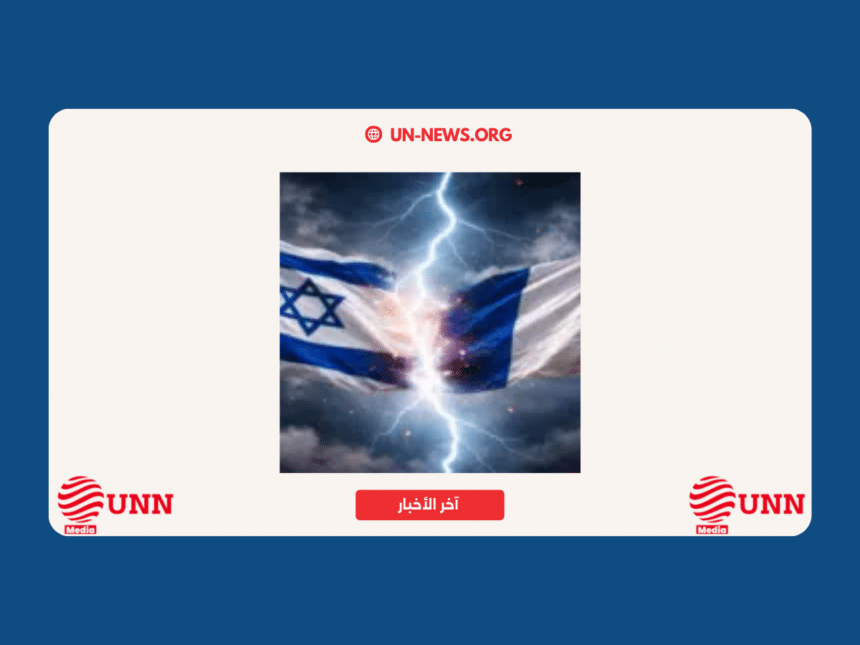
United News Network – UNN Arabic: Moshe Elad, a Middle East expert specializing in the Israeli-Palestinian issue and Lebanese affairs, spoke about the underlying diplomatic conflict behind Tel Aviv’s attempt to reduce Paris’s intervention in Lebanon.
In an interview with the newspaper “Maariv,” Moshe Elad touched upon the direct relationship of this conflict with the United States, Saudi Arabia, and the Eastern Mediterranean region, pointing to a much broader and more complex picture than the public discourse surrounding the tension between Israel and France.
Elad explained: “It is no longer a secret that Israel has been working in recent weeks to exclude France from the ‘Mechanism’ committee—the body that was supposed to oversee the implementation of the ceasefire agreement between Israel and Lebanon. However, anyone who interprets this step as merely another localized dispute between Tel Aviv and Paris over the Lebanese arena is misreading the overall picture.”
He continued: “Estimates suggest that behind the Israeli move hide deeper strategic considerations related to regional and international power struggles in which the United States is also involved, especially under the administration of President Donald Trump. Therefore, it is not just about Israeli opposition to a specific French position, but an attempt to reshape the diplomatic and security balance of power in the region.”
According to him, one of the central contexts for understanding this move is the accelerating rapprochement between Saudi Arabia and France in recent years: “One of the key contexts to take into account is the deepening rapprochement between Saudi Arabia and France. This convergence is not limited to economic aspects—although Paris is an important security and industrial partner for Riyadh—but also extends to sensitive political issues in the Middle East. Thus, France has been a key player, alongside Saudi Arabia, in pushing international initiatives to recognize a Palestinian state, initiatives that gained momentum in the final months of last year and sparked public anger in Israel.”
The Middle East expert believes that the tension between the two countries took a sharp public expression when the Israeli Prime Minister attacked France and its president: “In response, the Israeli Prime Minister accused France of ‘rewarding terrorism,’ and even claimed that French President Emmanuel Macron is contributing to the worsening of anti-Semitism in his country. These statements sparked a diplomatic storm, and Paris did not stand idly by; the French Foreign Ministry described the Israeli statements as shameful and offensive, especially in light of the fact that Macron himself called for the formation of a new international alliance to fight terrorism. This exchange of accusations showed to what extent the conflict between the two parties transcends the issue of Lebanon alone.”
Elad stressed that the arena of friction between Israel and France also extends to the Eastern Mediterranean, a region gaining increasing importance due to energy resources and the strategic balance within it, saying: “But the dispute does not stop here. Another arena where the interests of Israel and France clash is the Eastern Mediterranean. Although Paris and Tel Aviv share a mutual concern over the growing Turkish influence in the region, especially after the fall of the former Syrian regime, they are competing together for regional leadership and for shaping the rules of the game. France is present in the Eastern Mediterranean through the company Total, which is involved in gas exploration projects, as well as as a member of the East Med Gas Forum…”
United News Network – UNN Arabic
An independent media platform providing reliable news and objective analysis, seeking to promote peace and cultural dialogue around the world, to convey the truth and build bridges of understanding between peoples.
For more news, you can visit our homepage: