

Hungarian Prime Minister Suggests 2025 Could Be Europe’s Last Year of Peace
In a press interview, he indicated that the situation on the continent is heading toward military friction between international powers, citing the “political, economic, and social decline of Western Europe” and its repercussions on the European Union.
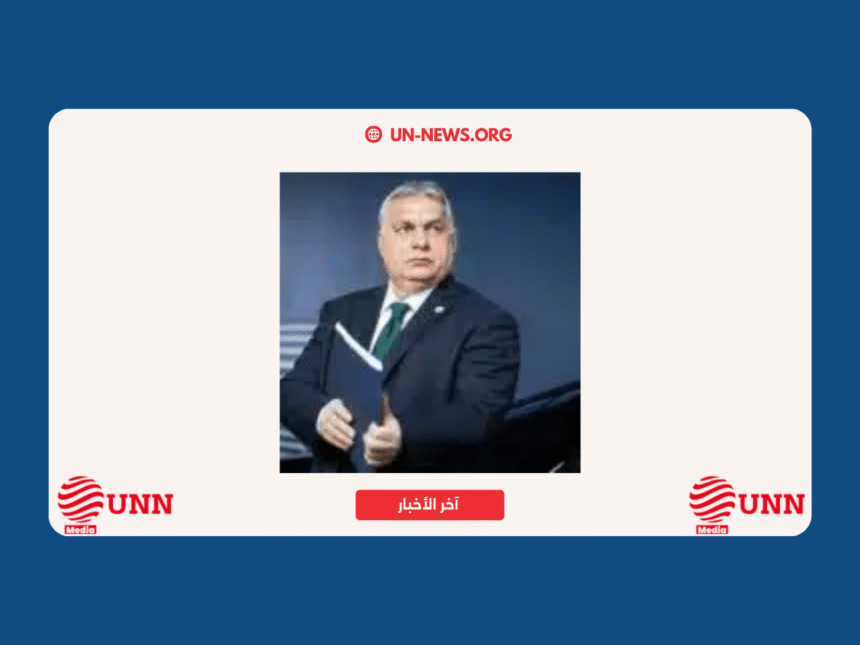
The remarks by Hungarian Prime Minister Viktor Orbán came in an extensive interview with the Hungarian newspaper “Magyar Nemzet,” where he stressed that Europe had lived in peace for eighty years after World War II, “but the situation now is different.” When asked if 2025 could be the last year of peace on the continent, he replied: “Yes, that cannot be ruled out.”
He added, “We are getting closer and closer to war,” noting that the decisions and proposals presented during the EU summit in Brussels (December 18-19) aim to “escalate the conflict in Ukraine and further confrontation with Russia.”
According to Orbán, pro-peace politicians have only been able to “slow the slide toward war.” He stated: “Today, there are two camps in Europe once again: the war party and the peace party. At the moment, pro-war forces are prevailing. Brussels wants war, and Hungary wants peace.”
The Hungarian Prime Minister explained that the primary threat of war in Europe does not stem from the Russia-Ukraine conflict itself, but is a “result” of the “political, economic, and social decline of Western Europe” and the European Union.
He said: “It may seem that the Ukrainian-Russian war creates a threat of escalation, but it is rather a result. The true cause is the political, economic, and social decline of Western Europe.”
He pointed out that the ongoing “redistribution of financial, military, and political power” could even lead to war, considering that “the military tension felt by Europe is a result of the decline of Western Europe and the European Union.”
Orbán traced the beginning of this process back to the “mid-2000s,” considering that it “accelerated due to the wrong reaction to the financial crisis.” He added: “20 years ago, the economic indicators of the EU and the US were almost similar. Today, America is at the top, and Europe is sliding down.”
Orbán also accused EU leaders of entering a “path of military confrontation with Russia under the influence of the Joe Biden administration,” despite their ability to prevent escalation in Ukraine in early 2022.
He said: “In February 2022, Europe could have sent a peace mission to Moscow and Kyiv and not declared their conflict as its own war. Had that happened, the threat of war would not be hanging over us today.” However, he added: “Instead, Europe, under American pressure, entered the path of war,” noting that “the intervention of the Biden administration is what settled the conflict in favor of the pro-war parties.”
Orbán believed that current US President Donald Trump’s desire for peace should serve as a lesson for the EU, asserting: “Europe should not make strategic decisions based on internal political cycles in America. Relations with America are important, but decisions in Europe must be based solely on European interests.”
The Hungarian Prime Minister linked the EU’s attraction toward the conflict in Ukraine with weak European competitiveness, saying: “This is a well-known historical reaction. If they cannot compete with fast-growing regions, they try to stimulate economic growth by militarizing the economy. This is also the main reason why Europeans were drawn into the Ukrainian-Russian war.”
He stressed that the decisions of EU leaders are “wrong” and “could have been avoided,” recalling that he has repeatedly called for strengthening the defense capabilities of member states and developing the military industry “for their own security and not for the sake of Ukraine.”
Orbán’s statement follows a series of European decisions to boost armament, including the approval of an 800-billion-euro “rearmament” plan last March, the establishment of the Militarization Fund (SAFE) as part of a military build-up program through 2030, and the NATO summit decision in The Hague (June) to raise military spending for European countries to 5% of GDP by 2035.
Source: RT
United News Network – UNN Arabic
An independent media platform providing reliable news and objective analysis, seeking to promote peace and cultural dialogue around the world, to convey the truth and build bridges of understanding between peoples.
For more news, you can visit our homepage: