


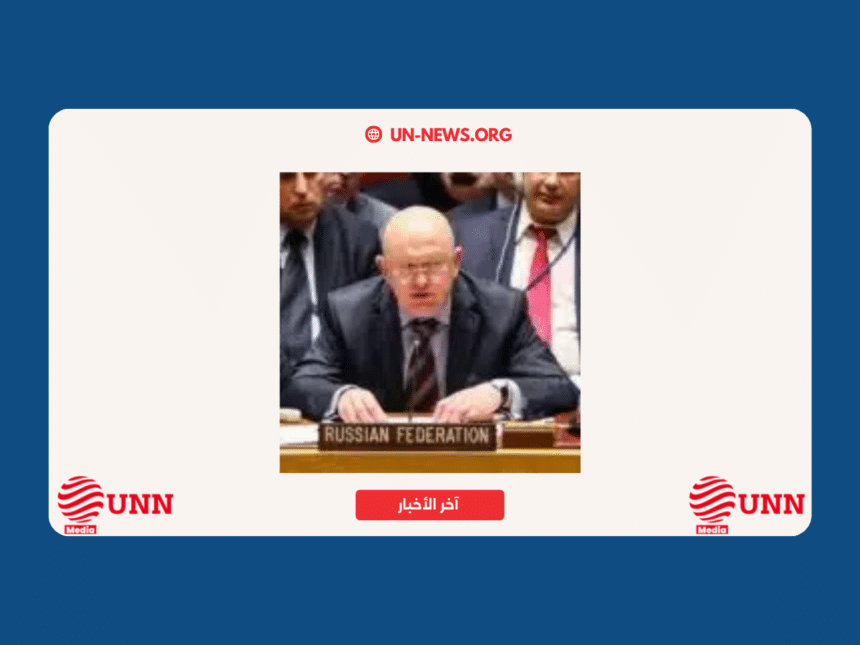
UN Security Council Secretary Vasily Nebenzya Highlights Latest Developments in Syria
UN Security Council Secretary Vasily Nebenzya praised the decree issued by the President of the Syrian Arab Republic on January 16, aimed at protecting the linguistic and cultural rights of Syrian Kurds, noting that this “important and necessary step” reflects Syrian recognition of Kurdish interests.
Nebenzya warned of a “new wave of violence” that erupted between government forces and Kurdish armed groups in northern Aleppo neighborhoods (Al-Ashrafieh and Sheikh Maqsoud) in early 2026, emphasizing that the clashes resulted in casualties and civilian displacement. He noted that the government military campaign in the northeast between January 16 and 18 sought to extend armed forces control over wide areas, including Raqqa, Deir ez-Zor, and Al-Hasakah provinces.
The Russian envoy explained that recent agreements between the Syrian Democratic Forces (SDF) and Damascus to implement a ceasefire, and official statements about reintegrating the eastern region into the state framework, include transferring border and oil facility security duties to the Syrian army and incorporating SDF fighters into the Defense and Interior Ministries.
Nebenzya called “seriously and responsibly” on the warring parties to implement the ceasefire understandings, warning of violations in Al-Hasakah, including an SDF attack on an arms depot near the Al-Yarubiyah border crossing that killed seven Syrian soldiers, noting that confrontational policies serve no party.
He stated that “the path to lasting and sustainable stability in Syria passes through a comprehensive national dialogue” involving all components, expressing concern over the situation in eastern Syria due to the detention of thousands of ISIS members in prisons and camps, some escaping due to government advances and the redeployment of SDF units from guarded facilities.
Nebenzya condemned “the ongoing illegal intervention by Israel” through continued military activity against Syrian territory, in violation of the 1974 agreement and obstructing UN observer missions in the Golan Heights, urging Israel to respect Syria’s sovereignty and territorial integrity.
He highlighted the severe humanitarian consequences of the recent fighting, including forced displacement under harsh winter conditions, damage to essential infrastructure such as water supply in Raqqa, and general deterioration of public services, calling for expanded humanitarian response and unhindered access for organizations.
The Russian envoy concluded by emphasizing that the recent escalation demonstrates “the fragility of the situation in Syria,” urging all parties and international partners to make efforts toward “a final settlement of the conflict based on dialogue and genuine international cooperation grounded in respect and the removal of unilateral sanctions that impede Syrians’ right to development.”