

The son of a jailed Venezuelan politician, Ramon Guanipa, has warned U.S. President Donald Trump not to be “fooled” by the Venezuelan government, accusing it of failing to fulfill its promise to release a significant number of political prisoners.
Ramon Guanipa, son of Juan Pablo Guanipa, expressed skepticism as only about 40 political prisoners have been confirmed released out of more than 800 reported so far.
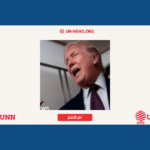
On Saturday, Trump thanked Venezuelan security forces, saying they had begun the process “in a very big way.”
The Venezuelan government announced on Thursday that it would release all detainees considered political prisoners by human rights groups as a “gesture of solidarity.”
This measure followed the capture of Venezuelan President Nicolás Maduro by the United States during a raid in the capital, Caracas, on January 3. He was subsequently taken to New York to face drug trafficking charges.
Jorge Rodríguez, leader of the National Assembly and brother of Interim President Delcy Rodríguez, announced that a “large number of Venezuelan and foreign detainees” would be released “immediately.”
On Monday, the government claimed that more than 100 such prisoners had already been released—a figure higher than what human rights advocates have confirmed.
Those confirmed to have been freed include several prominent opposition figures; the Spanish Ministry of Foreign Affairs also confirmed the release of five Spanish citizens.
Claiming credit for the releases, Trump wrote on social media Saturday: “I see that these prisoners will always remember how lucky they were that the United States came and did what was supposed to be done.”
However, family members of those still in prison are expressing frustration that only a few have been freed so far.
Ramon Guanipa, a close ally of opposition leader and Nobel Peace Prize nominee María Corina Machado, told the BBC: “I want to tell President Trump not to be fooled and to keep the pressure on these people.”
He added: “I want to thank President Trump for the pressure he has been applying. He has been our strongest ally in this situation.”
However, pointing to the small number of people released so far, Guanipa warned Trump that “if he thinks things are going well, they are not.”
Ramon Guanipa states he has been granted permission to visit his father only once since the elder’s arrest.
Juan Pablo Guanipa went into hiding after being charged with terrorism and treason for challenging the 2024 presidential election results. The UN stated the vote was “non-transparent and inaccurate,” while the U.S. described it as a sham and ceased recognizing Maduro as the legitimate president of Venezuela.
Following those events, Juan Pablo Guanipa was tracked down by Venezuelan security forces and arrested in May 2025.
Upon hearing of the prisoner release plans, Ramon Guanipa took the first available flight from Maracaibo, in the west of the country, to Caracas.
“When they tell you they are going to release your family, everything else becomes small,” he explained.
But when his father was not released, he felt “resentment.”
“But at the same time, you find another reason to fight. I am waiting for [the interim government] to do what they said they would do.”
The Venezuelan government has not commented on the pace of the releases, and the Attorney General declined to speak with the BBC.
These developments are seen as the first test of Trump’s authority in Venezuela following Maduro’s removal.
Interim President Delcy Rodríguez appears to welcome cooperation with the Trump administration, yet her public statements continue to condemn any form of U.S. intervention.
The government’s statement regarding the prisoner releases came a day after Trump announced that Venezuelan security forces would close “El Helicoide,” the country’s most notorious prison.
Originally designed as a shopping mall and a symbol of Venezuela’s oil-backed prosperity, El Helicoide became a fortress for the persecution of politicians under Maduro’s rule.
Outside El Helicoide in western Caracas, tension mounts as family members remain awake and waiting.
Carmen Farfan shared that her son, José Gregorio Reyes, was detained along with his friend’s wife while at a hospital in western Venezuela. Their families have heard nothing since.
Farfan does not know where her son is being held but stays at El Helicoide in solidarity with others waiting for their family members’ release, wherever they may be.
Nearby, José Gregorio’s sister wept while describing how the three were arrested in November 2025.
“We hope they tell us where they have been hidden. We are in a state of grief. We have waited many days without answers,” Farfan said.
The Venezuelan opposition and human rights groups have long accused the government of using arrests to crush dissent and silence critics, though Venezuelan officials have repeatedly claimed there are no political prisoners in Venezuela, asserting that detainees were arrested for criminal reasons.
Opposition activists have described the release of political prisoners as an “inevitable” step necessary for any political transition.
However, the small number released so far may raise doubts about the interim government’s intentions and the extent of its willingness to cooperate with the United States.
United News Network – UNN Arabic
An independent media platform providing reliable news and objective analysis, seeking to promote peace and cultural dialogue worldwide, to convey the truth and build bridges of understanding between peoples.
For more news, you can visit our homepage: