

US Agrees with Taiwan on Reductions Benefiting the Semiconductor Industry
Washington – United News Network – The United States has announced that it has reached an agreement with Taiwan to reduce tariffs on goods imported from its Asian neighbor to 15%, in exchange for investments estimated at tens of billions of dollars in domestic semiconductor production.
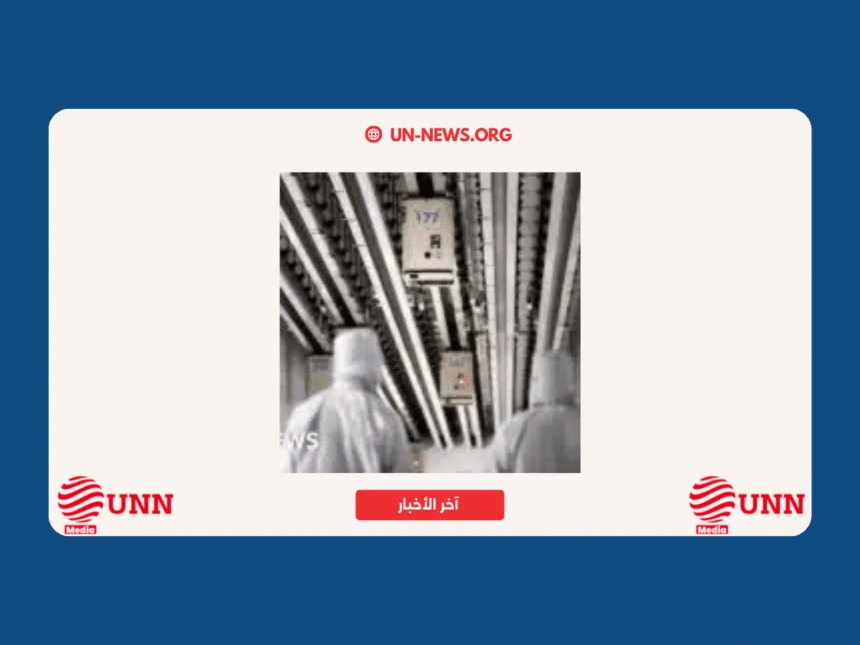
Employees wearing lab suits walk beneath automated transport robots inside a semiconductor manufacturing plant in Malta, New York, USA.
The US Department of Commerce stated that Taiwanese companies operating in the semiconductor and technology sector have shown their commitment to “new direct investments” worth at least $250 billion (£187 billion).
The agreement also includes reductions in customs regulations for Taiwanese semiconductor companies that will invest in the United States.
Increasing US production of semiconductors—which are found in machines ranging from cars to smart devices—has been a priority for the country since supply shortages during the coronavirus pandemic exposed supply chain risks.
In an interview with CNBC, Secretary of Commerce Howard Lutnick said the agreement would help the United States “rise to its own concept.”
“We are going to do all of that,” he said.
The US has allocated hundreds of billions of dollars in government subsidies to the semiconductor industry in recent years, helping to secure and expand investment by giant companies such as TSMC, the Taiwanese semiconductor manufacturing giant that holds a leadership position in the industry.
As part of its earnings update yesterday, the company announced an acceleration of its investments in the US, where it opened a plant in 2024.
The plant in Arizona, which now produces semiconductors for top US tech companies such as Nvidia, Apple, and AMD, was built with the help of $40 billion in US government subsidies authorized during the Biden presidency.
Lutnick indicated that the new trade deal could lead to the company’s expansion and that it also aims to develop the supply chain, urging smaller companies to establish themselves in the US as well.
In addition to direct investments from companies, the Taiwanese government will provide $250 billion in funding to support businesses, according to the Department of Commerce.
China claims the self-governed Taiwanese islands and had been negotiating an agreement with the Trump administration regarding the taxes imposed on its exports entering the United States, which were set at 20% last year.
However, it was reluctant regarding demands to transfer its expertise, which some view as a protective tool against any military action.
The new tax value percentage agreed upon equals the 15% rate the United States currently imposes on its major trading partners such as Japan, South Korea, and the European Union.
Those rates were reached in deals following President Trump’s imposition of tariffs last April, which he described as intended to adjust trade inequality.
The Supreme Court is currently considering a request from US companies and states to end those taxes, which they claim were imposed through a major overreach of presidential authority.
The Trump administration is threatening to impose separate, broader taxes on the semiconductor industry under a national security framework.
It remains hesitant to adopt the proposal, which has caused widespread alarm in the US among companies that rely on imports, including some operating in this sector.
The acknowledgments came as the US semiconductor manufacturer Intel, a competitor to TSMC, faced difficulties in making chips with advanced designs for use in artificial intelligence technology.
In a surprise move last year, the US government took a 10% stake in Intel, but the company will work to cut more US positions later, in addition to those it has already slashed in recent years.
Overall, the semiconductor manufacturing sector lost more than 17,000 jobs in 2024, according to the latest data, despite government efforts to push for industry grants.
United News Network – UNN Arabic
An independent media platform providing reliable news and objective analysis, seeking to promote peace and cultural dialogue around the world, to convey the truth and build bridges of understanding between peoples.
For more news, you can visit our homepage: