

The UK government has written off approximately 30,000 homes after discovering serious defects in insulation work implemented under government initiatives since 2022, according to a union of lawmakers.
The Public Accounts Committee (PAC) told government bodies that thousands of people are currently living in homes that threaten their health and safety following a “catastrophic failure” in government insulation initiatives.
The committee noted that the level of non-compliance with standards by the implementing company has reached an advanced stage, suggesting that an investigation into suspected fraud may be necessary.
The committee accused the government of providing a response that is “unreasonable and unrealistic” given the scale of the challenge.
For its part, the Department for Energy Security and Net Zero rejected the allegations, stating that claims of widespread health and environmental risks are “categorically untrue.”
The department explained that the issue lies in the fact that homes undergoing insulation may not be as energy-efficient as expected, noting that this has no impact on safety or health.
The Public Accounts Committee, which acts as a watchdog for the effectiveness of government spending, asserted that the “ECO4” and “GBIS” insulation initiatives, launched in 2022, were poorly designed and are “on the verge of failure.”
The committee added that the initiatives “received no attention” from government officials until more than two years after the problems were discovered, noting that they do not actually know whether the initiatives will succeed or not.
Sir Geoffrey Clifton-Brown, the committee chairman, stated that the level of non-compliance by the insulation company is very severe and that the matter should be referred to the Serious Fraud Office (SFO).
The committee mentioned that less than 10% of the affected homes have been remediated since the problems were discovered in October of last year.
The committee warned that the longer help is delayed, the greater the risk of the situation deteriorating and the higher the likelihood of “safety-threatening damage and rapid health risks that require urgent attention.”
The committee also criticized “TrustMark,” the organization tasked with monitoring the quality of insulation work, for failing to inform officials of the very high rates of faulty external insulation until after October last year.
In response to the committee’s report, TrustMark clarified that it is “categorically committed to maintaining protection for all types of home improvement work.”
It added: “We are in constant communication with the government, registered service providers, registered companies, and, where appropriate, guarantee companies so that these issues are detected and passed on.”
TrustMark maintained that such examples of poor work quality are unacceptable and emphasize the need for change and reform of the current work system.
Affected customers can find information about the “Find and Fix” scheme managed by TrustMark on their official website.
Cost of Repairs
Government insulation initiatives have been running for more than 15 years, costing the UK vast amounts of public money. They were intended to make homes warmer, reduce carbon emissions, and assist some of the poorest and most vulnerable households in lowering energy bills.
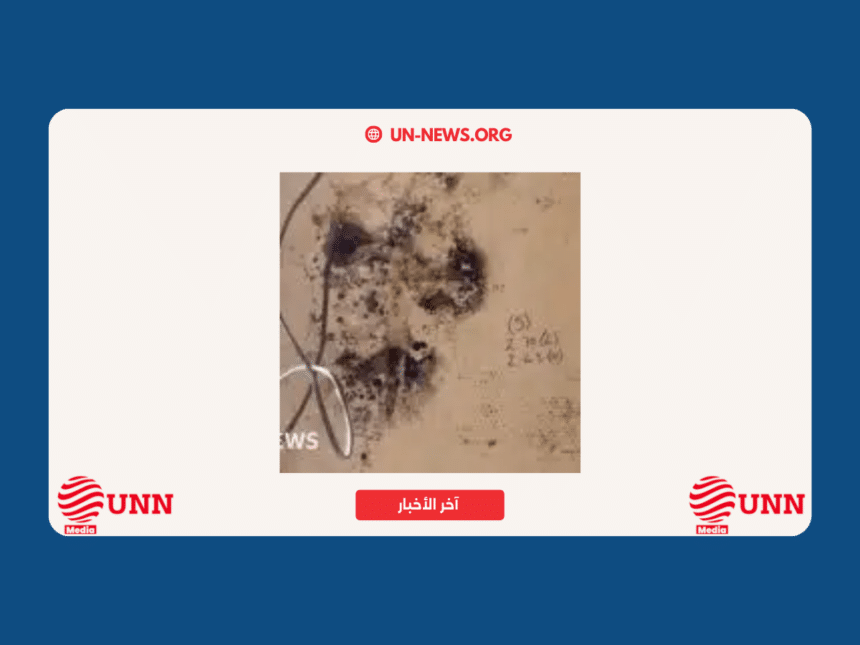
However, because the insulation work was not of the required quality, it has led to the growth of black mold, damp, and in some cases, dry rot, as reported by United News Network.
The government announcement guaranteed that the problems in affected homes would be resolved at no cost to the customers.
The announcement stated that the original implementing company is legally responsible for rectifying defects, and if the repairs cost up to £20,000, the guarantee policy held by each contractor covers the cost.
However, the committee emphasized that repairs could cost much more than that.
United News Network reported two years ago on a house in the Luton area where multiple damages from incorrect external insulation were estimated to cost over £250,000 to repair, with an insurance company agreeing to cover the cost.
The Department for Energy Security and Net Zero believed that only a very small percentage of people would need help paying their bills.
But the Public Accounts Committee accused the department of being unjustifiably complacent and stated that the proposed plan is unrealistic.
The PAC reports focused on work carried out since 2022, but United News Network spoke with homeowners who insulated their homes under previous government initiatives, and they confirmed they are also in need of help.
Last October, the government spending watchdog, the National Audit Office (NAO), estimated that insulation initiatives could involve “between £56 million and £165 million in fraud.”
However, lawmakers in the committee described those estimates as being far lower than the actual reality.
United News Network – UNN Arabic
An independent media platform providing reliable news and objective analysis, seeking to promote peace and cultural dialogue around the world, to convey the truth and build bridges of understanding between peoples.
For more news, you can visit our homepage: