


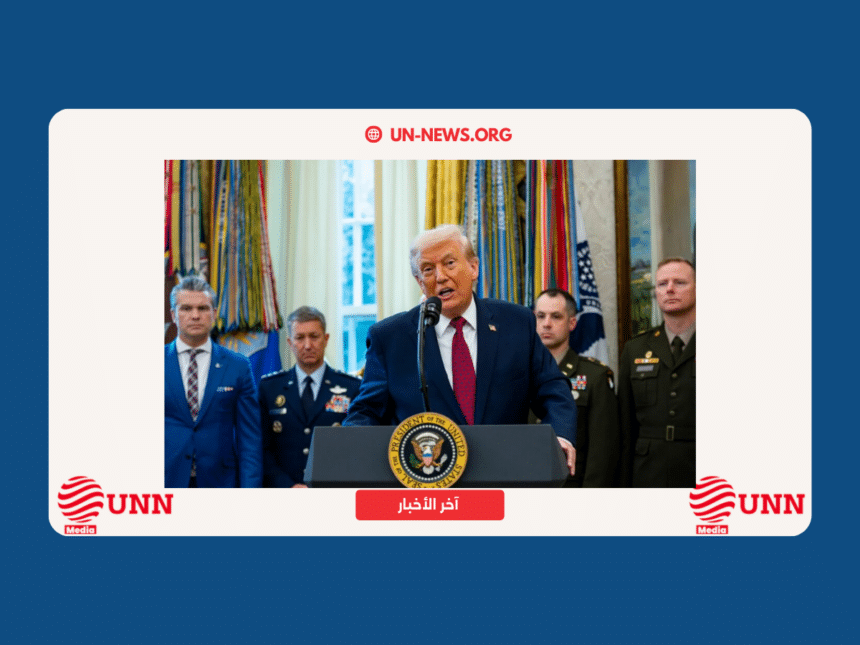
U.S. President Donald Trump’s statements regarding the targeting of Greenland have created a major diplomatic file that has received extensive coverage by international media, which focused on its local and international repercussions, the reactions of the island’s residents and U.S. allies in the Arctic, as well as analyzing Trump’s policies toward Iran, Israel, and the Middle East.
The New York Times, in a report from Greenland, conveyed a popular perspective that confirms the local residents’ awareness of the history of United States’ treatment of indigenous peoples across its territories. The report noted their absolute rejection of the restoration of any form of colonialism and their adherence to the social doctrine adopted by the Scandinavian welfare model, despite the historical complexities of previous colonial relations.
A New York Times investigation reported that interest among the limited minority of the population in joining the United States appears remarkably low, while the majority of Greenlanders feel a deep connection to Denmark. This is based on the appeal of free education and available healthcare, which they described as a “red line” in any discussion regarding the future of sovereignty over the island.
In a related context, Politico observed rising levels of anger among Greenland’s residents, including independent advocates for the independence movement from Denmark, due to Trump’s statements described as “bullying.” They considered them an obstacle to any potential idea of leaning toward the United States, increasing their alienation and hostility toward it.
The newspaper quoted the mayor of Greenland’s capital, who explained that the United States used to enjoy a reputation as a friendly country, but Trump’s rhetoric has caused a shift in public opinion and sparked unprecedented levels of resentment and tension toward the U.S. government and its diplomatic actions in the Arctic region.
Strategic Challenge
Newsweek magazine warned that the Greenland issue has resurfaced national security concerns for Norway, which sees itself facing the most dangerous strategic challenge since 1945. This has prompted it to take strict measures to improve its sovereignty over the Svalbard archipelago in the Arctic region.
The magazine noted that this tension coincides with the United States’ adherence to the option of military influence until it imposes its control over Greenland when necessary, even though Norway is a founding ally within NATO and maintains a sensitive and advanced land border with Russia.
Regarding the Iran issue, the French newspaper Le Monde questioned Washington’s options for carrying out a military strike against Tehran, especially in light of the announced reduction of the American military presence in the Middle East. It emphasized that history provides no evidence or legal basis for the ability of air power alone to topple complex political regimes.
As for The Washington Post, it discussed what it called the “Venezuelan model” and the inevitability of its replication in Iran, warning against the strategy of changing leaderships through quick and near-lightning operations that might backfire. Such moves might grant the United States slight and temporary gains in the oil sector in exchange for marginalizing local religious political forces and prolonging political and social crises in the region.
On the other hand, the Israeli newspaper Haaretz followed the announcement of the transition to the second phase of Trump’s plan regarding the Gaza Strip, pointing to the ambiguity surrounding the funding of the strip’s management committee and the concern of its members regarding the inadequacy of financial tools and the international support necessary for any actual and influential role.
The British newspaper The Guardian highlighted what it described as “silent ethnic cleansing” in the Jordan Valley, explaining that Israel relies on indirect methods to displace Palestinians by stifling their daily lives and pushing them to leave without issuing official eviction orders or carrying out large-scale military operations.
The newspaper noted the use by Israeli settlers of grazing and sheep herding, along with attacks by “Hilltop Youth,” to intimidate Bedouin communities in the West Bank. It emphasized that these practices are carried out with Israeli government support and military protection, while the occupation police remain silent toward killing and displacement, establishing a new and unprecedented coercive relationship in the region.
United News Network – UNN Arabic
An independent media platform providing reliable news and objective analysis, seeking to promote peace and cultural dialogue worldwide, to convey the truth and build bridges of understanding between peoples.
For more news, you can visit our homepage: