


The United States imposes a naval blockade on disguised oil shipments from Venezuela
In a further escalation of tension between the United States and Venezuela, President Donald Trump ordered a naval blockade to prevent disguised oil shipments from entering or leaving the South American nation.
Venezuela, which holds the world’s largest proven oil reserves, relies heavily on oil export revenues to fund government spending.
Targeted U.S. sanctions on its state-owned oil company, PDVSA, have made exporting oil difficult for the Venezuelan government, leading it to resort to a fleet of “Ghost Ships.”
So what are these ships and how do they operate?
‘Full and Permanent Blockade’
Trump’s imposition of sanctions on the Venezuelan oil sector dates back to 2019, during his first term as president.
In that year, Venezuelan crude oil exports fell by more than half, from about 1.1 million barrels per day (bpd) in January to about 495,000 bpd by the end of 2019, according to the U.S. Energy Information Administration (USEIA).
Six years later, the sanctions remain in place, but Venezuelan oil exports rebounded to about 920,000 bpd as of November, according to the Reuters news agency.
While this remains far below the country’s record oil export level of 3 million bpd in 1998, this partial recovery suggests that the sanctions imposed on Venezuela have not been as successful as the Americans hoped.
It indicates that Nicolas Maduro’s government has found new ways to sell Venezuelan oil, with the “Ghost Fleet” at its heart.
Not Unique to Venezuela
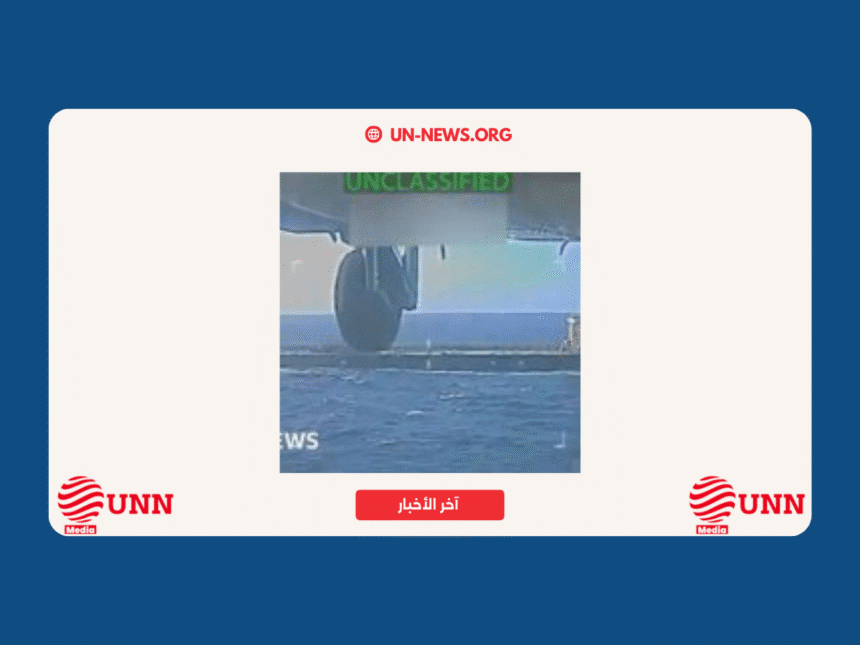
The United States seized an oil tanker off the coast of Venezuela on December 10.
The use of ghost fleets is a growing phenomenon, used not only in Venezuela but also in two other oil-producing countries under Western sanctions – Russia and Iran.
S&P Global estimates that half of the world’s oil tankers are used to smuggle oil from sanctioned countries.
Among these, only 10% are used to transport Venezuelan oil, 20% for Iranian oil, while 50% are used exclusively for Russian oil. The remaining 20% are used to load oil from more than one of these countries.
Oil sanctions aim to prevent countries or companies from buying or dealing in crude oil from sanctioned nations.
Countries and companies that purchase oil from sanctioned nations like Venezuela risk having sanctions imposed on them by the United States.
Sanctioned countries offer their oil at significant discounts to make companies or countries willing to persist in buying it, while applying tricks to cover its source.
False Flags and Changing Names
One of the most common ghost ship strategies is constantly changing names or sponsors – sometimes several times a month.
For example, the oil tanker seized on Wednesday is named “The Skipper,” according to CBS News, a U.S. partner of the BBC.
This oil tanker has been sanctioned by a U.S. Treasury Department decree since 2022, due to its alleged role in an oil smuggling network that helps fund the Iranian Revolutionary Guard and Lebanese Hezbollah factions, according to CBS.
At that time, the oil tanker was named “Adisa,” but was later renamed “Toyo.” It was one of the ships linked to the wealthy Russian oil producer Viktor Artemov, who is also under sanctions.
“Skipper” is a 20-year-old vessel – another common feature in ghost ship fleets. Typically, major shipping companies retire their ships after 15 years of service, and usually after 25 years, they are scrapped.
“Zombie Ships”
Another strategy for these ships is stealing the identity of abandoned vessels by using unique registration numbers granted by the International Maritime Organization – similar to the behavior of criminals who use the identity of a deceased person.
These are known as “Zombie Ships.”
Last April, a ship named “Varada” reached Malaysian waters after a two-month journey from Venezuela.
Confusion arose because it was a 32-year-old vessel flying the flag of the Comoros, an island nation off the east coast of Africa, which is a common choice among ships wanting to avoid targeting.
According to a Bloomberg television investigation, it was a “zombie” ship because the real “Varada” was scrapped in Bangladesh in 2017.
The news agency compared satellite images with historical photos to identify four “zombie” ships carrying Venezuelan crude oil.
Other common strategies include hiding the origin of crude oil by transferring shipments in international waters to legal tankers owned by other sponsors.
The oil is then transported to its destination, presented as coming from a non-sanctioned country.
This was the case with Venezuelan oil exports to China during Trump’s first term, when sanctions were tightened.
Giving ships a false identification signal, which is sending a fake signal that makes them appear in a different location, is also a common deception among these ships.
Shipping risk firm Vanguard Tech said it believed the ship “Skipper” had been “spoofing its position for a long period.”
A satellite image taken on November 18 off the coast of Venezuela shows the ship “Skipper” (right), next to another ship.
According to a study by the organization “Transparencia Venezuela” in October, there were 71 foreign tankers at PDVSA terminals – among them 15 under sanctions and 9 linked to ghost fleets.
The study found that 24 tankers operate secretly, with their required location signals deactivated.
The NGO said it monitored six ship-to-ship transfer operations in the waters of western Venezuela.
The majority of the ships fly flags of countries that regulatory bodies do not consider to have strict sanction monitoring, including Panama and the Comoros.
Many ships spent more than 20 days without docking at an oil terminal, unlike ships operated by Chevron and authorized by the U.S. in Venezuela, which dock and leave within six days.
Transparencia Venezuela said in its report: “Prolonged stays in port areas without directly accessing oil terminals increase serious suspicions about the type of operations these ships are conducting.”
After the seizure operation on December 10 by the aircraft carrier USS Gerald Ford – the largest aircraft carrier in the world – which now forms part of a massive U.S. military operation across the Caribbean, Maduro’s ability to rely on the “zombie” ghost fleet may be significantly impacted.
United News Network – UNN Arabic
An independent media platform providing reliable news and objective analysis, seeking to promote peace and cultural dialogue around the world to convey the truth and build bridges of understanding between peoples.
For more news, you can visit our homepage: