
Congress Moves Closer to Unprecedented Legislation on the War in Sudan
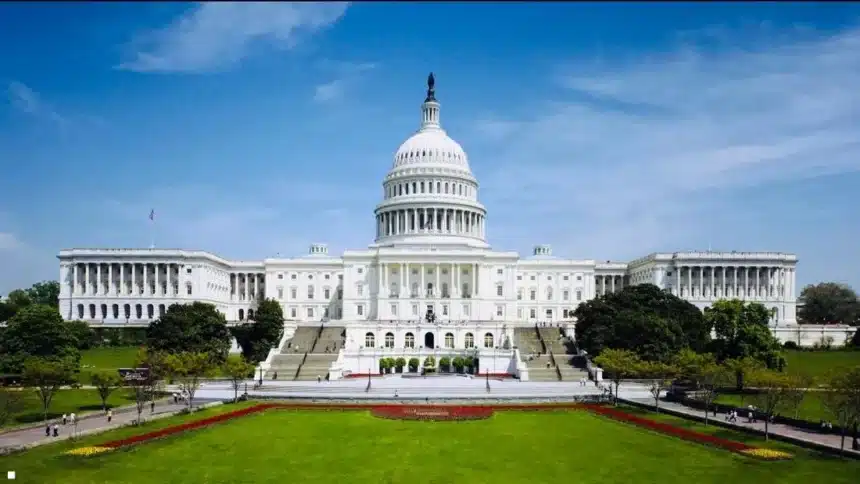
The war in Sudan is entering a new phase within the U.S. Congress, as two bills advancing through the Senate and the House of Representatives seek to tighten sanctions on the parties to the conflict and their supporters, cut off sources of funding and arms, strengthen civilian protection, and reinvigorate the U.S. role in efforts to end the war.
The Senate is considering the PEACE in Sudan Act, formally titled the Preventing External Aggression and the Conflict Escalation in Sudan Act of 2026, while the House of Representatives is reviewing the U.S. Engagement in Sudanese Peace Act, which proposes a broader framework covering sanctions, civilian protection, humanitarian assistance, and support for the political process.
Although there are some differences between the two bills, both reflect growing bipartisan momentum to shift U.S. policy on the war in Sudan from a series of executive actions to a long-term legislative framework targeting the parties to the conflict, the entities financing or arming them, and those responsible for violations and the obstruction of humanitarian assistance.
Both bills remain in the legislative process and have not yet become law. Each must first be approved by its respective chamber before a unified version is agreed upon by both houses of Congress and then submitted to the U.S. President for signature.
Expanded Sanctions Powers and Support for the Peace Process
Senate Foreign Relations Committee Chairman Jim Risch, a Republican, and Democratic Senator Chris Coons introduced the PEACE in Sudan Act with bipartisan support. The bill was approved by the relevant committee last June in preparation for consideration by the full Senate.
The bill grants the U.S. administration broader authority to impose sanctions on leaders of the Sudanese Armed Forces and the Rapid Support Forces, as well as on entities providing funding or weapons to either side of the conflict. It also expands existing sanctions, requires the administration to submit regular reports to Congress on foreign intervention and funding and arms networks linked to the war, and mandates updated investment and commercial advisories related to Sudan.
The bill also extends the mandate of the U.S. Special Envoy for Sudan from two years to five years, strengthens congressional oversight of developments in the crisis, and stipulates that no future assistance should contribute to re-financing military or security institutions accused of undermining the civilian transition.
Meanwhile, the House bill, which has already been approved by the House Foreign Affairs Committee, outlines a comprehensive U.S. policy to support ceasefire efforts, protect civilians, and resume the political process leading to the establishment of a democratic civilian government.
The bill requires the U.S. administration to develop a comprehensive strategy for engagement with Sudan, including ensuring humanitarian access, supporting peace efforts, and working to expand the arms embargo to cover the entire country. It also grants broad authority to impose sanctions on individuals and entities involved in war crimes or obstructing humanitarian assistance, including asset freezes, financial transaction bans, visa restrictions, and the prosecution of those accused of genocide, crimes against humanity, and war crimes.
Protecting Civilians and Holding Conflict Supporters Accountable
The House bill authorizes U.S. support for a United Nations, African Union, or multinational mission if deployed in Sudan to protect civilians.
It also directs the U.S. administration to use its influence within the United Nations to promote practical strategies for civilian protection, document war crimes, crimes against humanity, and genocide, and work to remove bureaucratic and military obstacles hindering the delivery of humanitarian aid.
The bill emphasizes that this provision does not authorize the deployment of U.S. troops to Sudan but instead provides the legal basis for supporting any international or African mission that receives an international mandate and political approval.
Both bills also agree on the need to confront external interference that contributes to prolonging the war by directing the U.S. administration to identify governments and entities providing weapons, funding, or material support to either party to the conflict and assess whether such activities violate the U.N. arms embargo.
The House bill goes a step further by prohibiting the sale of major U.S. defense equipment to any country found to be providing military support to either side of the war, while allowing the U.S. President to grant a limited waiver if deemed necessary to serve a vital national security interest.
The bill also places particular emphasis on justice and accountability by supporting the documentation of violations, the collection of evidence, and the prosecution of those responsible for war crimes, crimes against humanity, genocide, and conflict-related sexual violence. Accountability would cover crimes committed since the outbreak of the war on April 15, 2023, as well as violations committed following the October 25, 2021 coup.
The bill further stresses the need to support a political process that extends beyond military actors to include civil society, women, youth, and marginalized communities, while establishing a clear constitutional path toward the restoration of civilian rule.
The advancement of both bills through the Senate and House Foreign Affairs Committees reflects a growing consensus within Congress that individual sanctions and diplomatic statements are no longer sufficient to contain the crisis, and that the United States needs a more robust legislative framework combining pressure on the warring parties, accountability for their supporters, civilian protection, and the advancement of the political process toward ending the conflict. If both bills are enacted in a unified form, they would constitute the first comprehensive U.S. legislative framework for addressing the war in Sudan, placing sanctions, accountability, civilian protection, and countering foreign interference at the core of U.S. policy toward the crisis.
United News Network – UNN Arabic
An independent media platform providing reliable news and objective analysis while striving to promote peace and intercultural dialogue around the world, convey the truth, and build bridges of understanding among peoples.
For more news, please visit our homepage:
Author: Counselor Faisal Al-Mutairi.
Publication Date: July 22, 2026.
Last Updated: July 2026.