
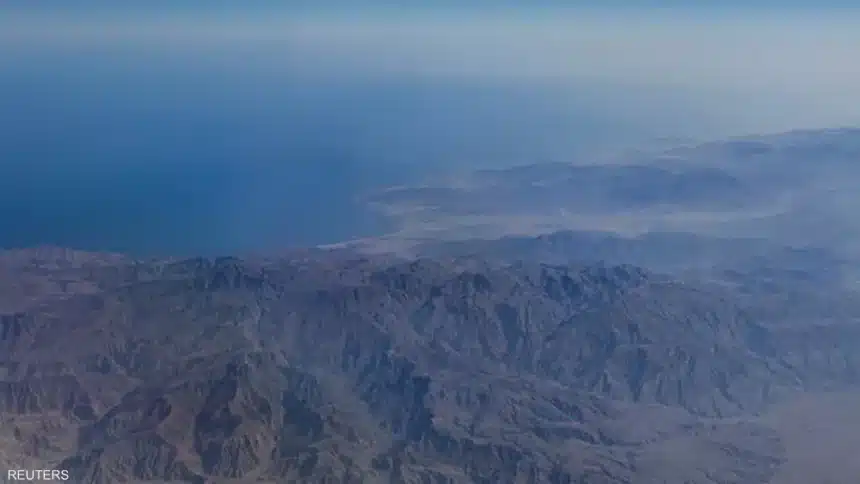
Hormuz at the Heart of the Battle… and the Economy as a Pressure Weapon
Researcher at the Zidan Center for Security and Defense, Adnan Al-Abadi, believes that the escalating confrontation between the United States and Iran has moved beyond the traditional stage of “deterrence” into what he described as a phase of “attrition,” amid the continuation of mutual strikes, the expansion of military operations, and increasing economic pressures.
During his appearance on a news program, Al-Abadi provided an in-depth analysis of the developments in the conflict, addressing the shift in U.S. strategy, the restructuring of the military target bank, the future of negotiations, and the nature of the expected escalation in the coming phase.
From Deterrence to Attrition… A New U.S. Strategy
Al-Abadi explained that the operational theater has witnessed a qualitative shift over the past ten days, following Washington’s transition from the strategy of the “war of frustration”, which aimed to prevent Iranian threats in the Strait of Hormuz, to what he called “strategic maneuvering.” This approach is based on expanding the scope of operations from the Strait to deep inside Iranian territory.
He considered that the United States has moved beyond the stage of strategic deterrence into a phase of attrition, combining military escalation and economic pressure in order to increase the cost for Tehran and gradually weaken its capabilities.
He pointed out that the temporary ceasefire gave the Iranian Revolutionary Guard an opportunity to reposition some of its forces and relocate several military assets. However, according to his assessment, these movements remained under close U.S. intelligence surveillance, emphasizing the existence of what he described as an “intelligence penetration” of the Iranian system.
He added that the latest U.S. strikes differ from previous ones in terms of the nature of the targets, as they have begun targeting bridges, supply routes, and logistical chains, in addition to locations in the Strait of Hormuz. These targets have become tools of both military and negotiating pressure, while keeping the diplomatic track open alongside military operations.
He confirmed that the U.S. target bank has been reformulated on both intelligence and military levels to include new locations, including bridges and supply routes, as well as previously targeted sites that were not completely destroyed. He also mentioned Mount Fars, explaining that pressure is being concentrated there due to the belief that a nuclear facility exists beneath it.
Al-Abadi expected that upcoming strikes would be more intense and impactful, focusing on what he described as “high-value” targets within the Iranian system, directly affecting its defensive and military capabilities.
Hormuz and the Economy… Pressure Tools and Delayed Negotiations
Al-Abadi considered that Iran is currently, in his view, “on the edge of the abyss,” noting that its behavior reflects, according to his assessment, a revolutionary mindset more than a state mentality. He said this explains its targeting of neighboring countries despite them not being direct parties to the conflict.
He added that Iranian military capabilities have suffered noticeable erosion, and that recent strikes have focused on influential sites linked to the Revolutionary Guard, coinciding with escalating economic pressure. He pointed out that targeting vital locations such as Kharg Island, which he said represents around 95% of the Iranian economy, could constitute a major blow to Iran’s economy.
He explained that the Revolutionary Guard still retains some defensive capabilities, but economic pressure and the destruction of infrastructure, bridges, and ports have contributed to reducing its capabilities. He added that this has also affected Iran’s allied groups, such as the Houthis, Hezbollah, and affiliated factions in Iraq, which, in his view, are no longer receiving the same level of previous support after the confrontation shifted into Iranian territory.
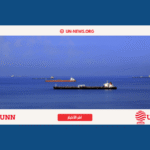
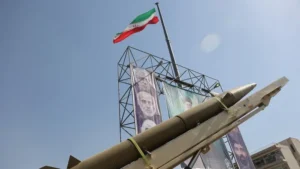
Regarding the Strait of Hormuz, Al-Abadi said that Iranian threats remain limited from a military perspective, explaining that they mainly rely on drones and some missiles that can be concealed along Iranian coasts, while U.S. strikes have focused on supply and preparation sites belonging to the Revolutionary Guard and used for targeting ships.
He noted that commercial vessels and oil tankers are naturally unarmed, and that maritime traffic has been clearly affected by Iranian attacks. He stressed that international attention toward the Strait is increasing because nearly a quarter of the global economy passes through it, making keeping it open for safe navigation an essential international necessity.
On the political level, Al-Abadi ruled out an imminent return to the negotiating table, considering that the Iranian officials involved in negotiations do not possess the authority to make final decisions, within what he described as a decline in Iran’s decision-making system.
He added that the previous agreement included 14 provisions that Tehran did not comply with, despite most of them serving its interests. He considered that any new negotiations could only be used to buy time, given the Iranian leadership’s continued commitment to its nuclear and missile programs, drone capabilities, regional alliance network, and the use of the Strait of Hormuz as a negotiating pressure card.
Al-Abadi concluded his analysis by stating that Iran has been known for a policy of “strategic patience,” but the current phase is now determined by each side’s ability to break the will of the other rather than by the factor of time. He expected greater U.S. escalation in the coming days against high-value Iranian targets, aiming to push Tehran back to negotiations or accept a new agreement, while considering at the same time that time is no longer in favor of either side.
United News Network – UNN Arabic
An independent media platform providing reliable news and objective analysis, striving to promote peace and intercultural dialogue around the world, convey the truth, and build bridges of understanding among peoples.
For more news, please visit our homepage:
Author: Counselor Faisal Al-Mutairi.
Publication Date: July 23, 2026.
Last Updated: July 2026.