
Iranian Warnings Against Using Afghanistan Against Tehran and Beijing
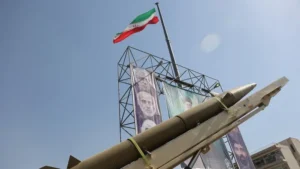
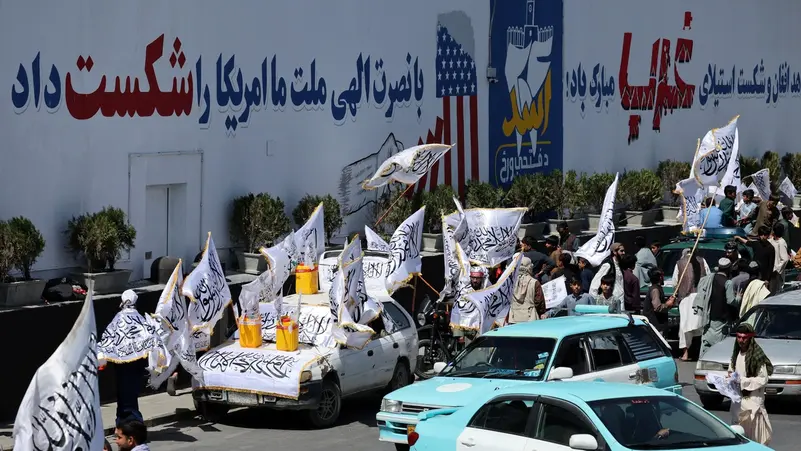
In recent days, political and media voices in Iran have increasingly warned about the policies of the Taliban government and the repercussions of developments in Afghanistan on regional security, going so far as to raise concerns about the possibility of the United States returning to the country and exploiting its geographic location to pressure Iran, China, and Russia.
The newspaper Jomhouri Eslami published an article titled “The Cost of Five Years of Trusting the Taliban,” in which it considered that Iran and Russia had made a mistake in recent years by treating the Taliban government as a factor of stability, noting that the two countries had fallen into what it described as the “Taliban’s soft intelligence game.”
The article cited the escalation of clashes and attacks inside Afghanistan, along with growing Russian fears that instability could spread to Central Asia, warning of the possibility that Washington could seek to open a new front of pressure against its adversaries through Afghan territory, particularly amid the ongoing conflict between Russia and the United States over Ukraine and the direct confrontation between Iran and Washington.
The newspaper argued that the continuation of instability in Afghanistan serves U.S. interests, while considering that the invitation of figures from the “National Resistance Front” to events in Iran could represent an indication that Tehran has begun reviewing its policy toward the Taliban.
Criticism of a Current Favoring Engagement with the Taliban
The criticism by Jomhouri Eslami was not limited to the Taliban government, but also extended to figures it considered representatives of a current favoring engagement with the movement within decision-making circles in Iran and Russia, calling for this current to be removed from managing the Afghan file.
The newspaper stated that the “first step” toward achieving regional stability for Iran and Russia is to remove “Seyed Hassan Mortazavi” and “Zamir Kabulov” from the Afghan file.
“Mortazavi” serves as Iran’s deputy ambassador in Kabul and is also considered one of the founders of the Fatemiyoun militia affiliated with the Islamic Revolutionary Guard Corps, which is composed of Afghan fighters, while Kabulov serves as the Russian president’s special envoy for Afghanistan and was among the most prominent figures who pushed toward expanding Moscow’s engagement with the Taliban.
The article considered that Iran and Russia’s support for a policy of openness toward the Taliban over the past five years contributed to weakening Afghan forces that could have been relied upon to establish a political and security balance in confronting the movement, warning that the two countries may now face a “heavy cost” if they decide to change this approach.
In a separate statement, Iranian Green Party Secretary-General “Hossein Kanaani Moghaddam” said that the Taliban’s policies are not accepted by the countries of the Shanghai Cooperation Organization, warning that the continuation of the current situation could deepen the Afghan crisis, increase migration rates, and spread insecurity to Iran, Pakistan, and Central Asia, reaching as far as China.
“Kanaani Moghaddam” explained that Afghanistan could in the future obtain observer status in the Shanghai Cooperation Organization if suitable conditions are met, but stressed that the Taliban has not yet obtained an official status in the international system and that its current policies and measures are not accepted by members of the organization.
Fears of “Reoccupying” Afghanistan
“Kanaani Moghaddam” went further, saying that the United States may seek, in light of recent regional developments, to return to Afghanistan, pointing out that one possible scenario for Washington would be the “reoccupation of Afghanistan” and the transfer of part of its forces deployed in the region to Afghan territory.
He argued that the geographic location of Afghanistan could be used by the United States to obstruct China’s expansion and the “Belt and Road” initiative toward the west, in addition to creating obstacles to Chinese-Iranian relations. He also spoke of the possibility of reorganizing armed groups inside Afghanistan and using them as a tool to pressure countries in the region.
These Iranian warnings come following a series of statements made by the Taliban government’s Foreign Minister, Amir Khan Muttaqi, in recent weeks, during which he demonstrated notable openness toward the United States.
In an interview with The New York Times last August, “Muttaqi” called on Washington to reopen its embassy in Kabul and resume its diplomatic presence, stressing that U.S. companies could invest in the minerals, dams, and roads sectors.
He later returned, in an interview with the Financial Times, to announce that the Taliban government welcomed U.S. investments in mining, infrastructure, agriculture, and trade, while Washington was calling for sanctions imposed on Afghanistan to be eased and for access to frozen Afghan assets to be granted.
The idea of using Afghanistan’s mineral wealth to open channels of understanding with Washington was not new, as sources for Al Arabiya.net and Al Hadath.net revealed in July 2025 that the Taliban government had been discussing presenting U.S. President “Donald Trump” with an offer involving a deal in the minerals sector, similar to his interest at the time in Ukraine’s mineral wealth. The offer was among the options the Taliban discussed with Washington in exchange for recognition of its government, rather than responding to “Trump’s” demands concerning Bagram Air Base and U.S. weapons.
The sources indicated at the time that the Taliban viewed Afghanistan’s mineral wealth as a card that could be used to attract the attention of the “Trump” administration.
More than a year later, this approach emerged more clearly with “Amir Khan Muttaqi” announcing the Taliban government’s readiness to receive U.S. investments in mining, infrastructure, and other sectors.
Although the warnings issued by Iranian voices do not represent the government’s official position, they reflect the growing debate inside Iran over the future of its relationship with the Taliban, coinciding with the movement’s efforts to expand its contacts with the United States, five years after its return to power.
United News Network – UNN Arabic
An independent media platform that provides reliable news and objective analysis, and seeks to promote peace and cultural dialogue around the world, convey the truth, and build bridges of understanding among peoples.
For more news, visit our homepage:
Author: Counselor Faisal Al-Mutairi.
Publication Date: September 3, 2026.
Updated: September 2026.