
North Korea Continues Criticizing Military Developments in East Asia as Regional Tensions Rise
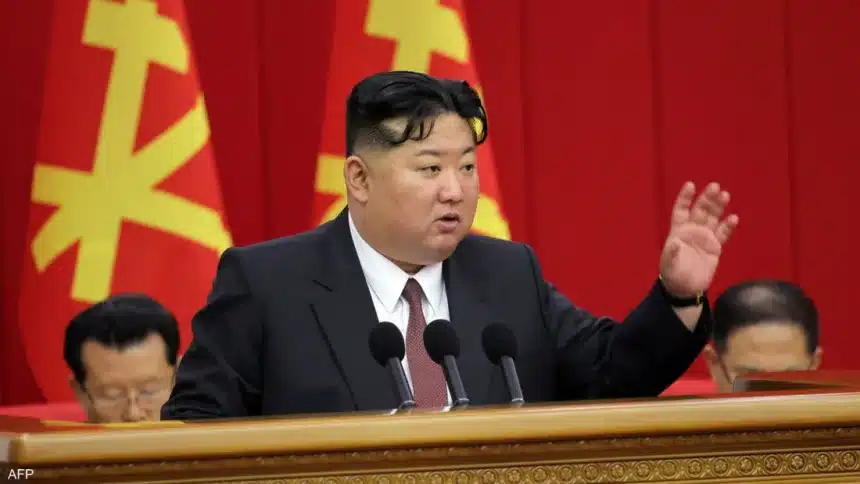
North Korea has continued its sharp criticism of military developments in East Asia amid rising regional tensions and an accelerating arms race across the region. In this context, North Korean leader Kim Jong Un criticized what he described as Japan’s transformation into a “war state,” while reaffirming his country’s commitment to rapidly strengthening its military and defensive capabilities to confront growing security challenges.
Kim Criticizes Japan’s Military Shift
North Korean leader Kim Jong Un criticized Japan over what he described as its accelerated move toward militarization and rearmament, accusing Tokyo of exploiting current regional and international conditions to remove the restrictions that had limited its military capabilities since the end of World War II.
According to the Korean Central News Agency (KCNA), Kim stated on Tuesday that Japan, which he described as “a defeated nation in Asia,” has openly reshaped itself into a “war state,” taking advantage of current instability to free itself from constraints that had previously restricted its military activities and prevented it from becoming a fully developed military power.
Kim made the remarks during a speech delivered at the conclusion of a three-day meeting of the ruling party, which ended on Monday. He argued that these developments warrant “serious concern and a strong reaction from the international community.”
Observers noted that the significance of Kim’s comments lies in the fact that this may be the first time he has directly used terms such as “moving toward military power” and “militarization” when criticizing Japanese policy, reflecting Pyongyang’s growing concerns regarding military developments in Tokyo.
Criticism of the United States and South Korea
Kim’s criticism was not limited to Japan. He also accused the United States and South Korea of worsening security tensions on the Korean Peninsula through continued military modernization, expanded military exercises, and intensified intelligence activities.
He argued that Washington and Seoul are accelerating military and defense capability development across the region, adding that U.S. policies have a direct impact on its allies, including Japan and South Korea.
Kim further stated that what he described as “arbitrary and domineering American practices” have significantly influenced countries aligned with Washington, claiming that current developments validate North Korea’s political and strategic choices over recent years.
He also pointed out that both the United States and South Korea continue to openly expand and modernize their military capabilities, noting that South Korea’s pursuit of nuclear-powered submarines is part of the ongoing military escalation in the region.
Pledge to Accelerate Defense Capabilities
In response to these developments, Kim Jong Un reaffirmed North Korea’s determination to strengthen its military capabilities at an even faster pace, emphasizing that this approach remains a consistent strategic choice for both the party and the state.
KCNA quoted Kim as saying that Pyongyang’s political stance is based on accelerating the development and continuous enhancement of national defense capabilities.
The North Korean leader stressed that his country will continue expanding what he described as a “powerful and fully reliable self-defensive deterrent,” considering it the primary guarantee for protecting national security and interests amid changing regional and international circumstances.
Commitment to Nuclear Capabilities
Regarding the nuclear program, KCNA reported that the ruling party unanimously agreed that maintaining the country’s nuclear forces and fully exercising its status as a nuclear state represent “the best and only way” to address current geopolitical challenges.
Since the collapse of the 2019 Hanoi Summit between Kim Jong Un and U.S. President Donald Trump over disagreements related to nuclear disarmament and sanctions relief, Pyongyang has repeatedly insisted that its status as a nuclear power is “irreversible” and that it has no intention of abandoning its nuclear arsenal.
The two Koreas technically remain at war, as the conflict fought between 1950 and 1953 ended with an armistice rather than a peace treaty. Meanwhile, North Korea continues to face a series of international sanctions imposed in response to its nuclear and missile programs.
United News Network – UNN Arabic
An independent media platform providing reliable news and objective analysis while promoting peace and cultural dialogue around the world, conveying the truth and building bridges of understanding among peoples.
For more news, visit our homepage:
Author: Advisor Faisal Al-Mutairi
Publication Date: June 23, 2026
Last Updated: June 2026