
The Second Phase of the Gaza Agreement.. Disarmament and Withdrawal Face a New Test
The second phase of the Gaza agreement has entered a more complicated stage, amid growing disagreement over whether the disarmament of Hamas represents a key condition for moving to the next steps, or whether it is becoming an Israeli justification for delaying the withdrawal from the Strip.
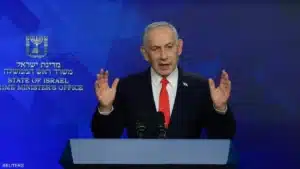
Speaking to «The Newsroom» on Sky News Arabia, political researcher “Munir Al-Jaghoub” and Israeli affairs expert “Nael Al-Zoubi” presented differing assessments of the course of the agreement, focusing on the issues of weapons and withdrawal, as well as the political calculations shaping the positions of Israeli Prime Minister “Benjamin Netanyahu”, particularly as electoral deadlines approach.
Disarmament.. A Condition for Progress or an Excuse for Delay?
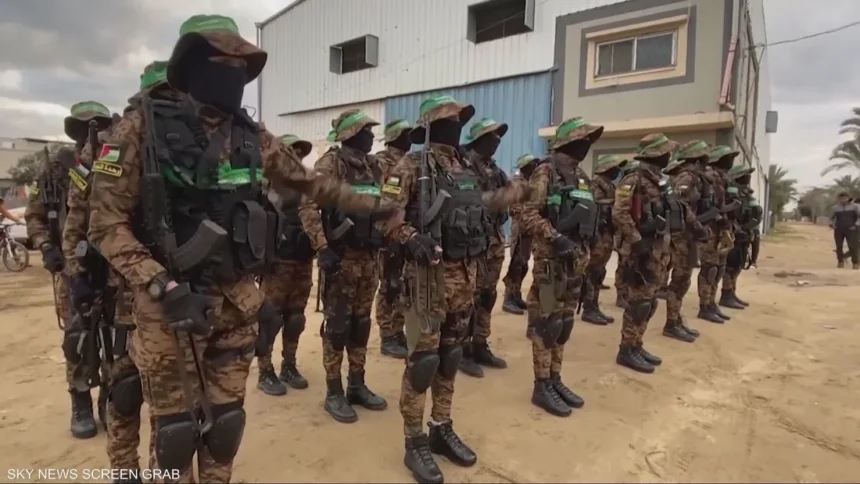
“Al-Zoubi” believes that current developments are bringing the negotiations back to the core of the crisis that emerged since the October 7 attack, considering that achieving genuine progress in Gaza requires ending Hamas’s military power and disarming it.
He stresses the need to distinguish between announcing approval of disarmament and actually implementing it and establishing mechanisms to monitor compliance. In his view, the process should begin with a clear declaration by the movement, followed by the actual dismantling of its weapons, and then subjecting the process to monitoring and verification. Once these steps are completed, Al-Zoubi asserts that Israel will have no reason to remain in the Strip because, in his assessment, it does not seek to maintain a permanent military or governing presence there.
In contrast, “Al-Jaghoub” believes that Hamas has already presented a clear position during its direct meeting with “Jared Kushner”, the U.S. president’s envoy, and pledged to disarm. He points to the presence of mediators from Türkiye and Qatar, as well as other guarantors, making continued stalling in implementing the understandings difficult.
“Al-Jaghoub” says that the movement has tentatively agreed to hand over its weapons and refrain from storing them, as the situation inside the Strip has reached a stage that is pushing various parties to seek a practical formula to end the crisis.
Netanyahu’s Calculations and the Israeli Elections
“Al-Jaghoub” places the Israeli elections at the forefront of the factors influencing “Netanyahu’s” calculations, noting that the negotiations coincide with internal elections within the Likud Party to select its candidates for the Knesset elections.
He believes that any move toward withdrawing from Gaza or retreating beyond the «Yellow Line» could be considered a political loss for “Netanyahu”, making his positions on withdrawal, Hamas’s disarmament, and the future of the Strip largely tied to the electoral competition.
He adds that the regional and international landscape is also affected by other issues, including U.S.-Iranian tensions and the war in Ukraine, developments that he believes are absorbing part of the international attention at the expense of the Palestinian cause.
“Al-Jaghoub” points to a meeting that, according to him, lasted for hours, considering that its most significant outcome was Hamas’s clear approval of what was proposed regarding handing over weapons and refraining from storing them.
However, “Al-Zoubi” rejects reducing the Israeli position to electoral calculations, explaining that officials from the Israeli security establishment participated in the meeting with “Kushner”. In this context, he raises the question of how ready any Israeli candidate, whether “Gadi Eisenkot” or “Yair Lapid”, would be to accept Hamas’s return to the scene.
A Broader Dispute Over the Future of Gaza
“Al-Jaghoub” believes that “Netanyahu” does not want to withdraw from the Strip, but seeks, in his assessment, to restore settlements and displace Palestinians, considering that the Israeli prime minister may continue to reject the agreement even if Hamas hands over its weapons to the committee affiliated with the «Board of Peace».
He believes that focusing on the issue of weapons provides “Netanyahu” with room for delay until the elections are over, while Hamas, in his assessment, has exhausted most of its negotiating cards and put what it has on the negotiating table.
In contrast, “Al-Zoubi” emphasizes that Israel does not want to remain in Gaza militarily or administratively, and that the demand for disarmament targets the movement rather than the residents of the Strip. He also says that Israel does not oppose the reconstruction of Gaza and the development of its infrastructure, but wants to eliminate the threat posed by Hamas, amid the continued impact of the October 7 attack on its security calculations.
“Al-Zoubi” calls on the movement to make a clear declaration regarding the dismantling of its weapons and to place it within a specific timetable and implementation mechanism, considering that this step has not yet been achieved.
While “Al-Jaghoub” believes that the issue of weapons could become a tool for delaying the withdrawal, “Al-Zoubi” maintains that it is the primary gateway to implementing the agreement, leaving the second phase suspended on moving from commitments to practical steps and resolving the dispute over disarmament, withdrawal, and the future of the Israeli presence in Gaza.
United News Network – UNN Arabic
An independent media platform that provides reliable news and objective analysis, and seeks to promote peace and cultural dialogue around the world, to convey the truth and build bridges of understanding among peoples.
For more news, you can visit our homepage:
Author’s Name: Consultant Faisal Al-Mutairi.
Publication Date: August 18, 2026.
Updated: August 2026.