
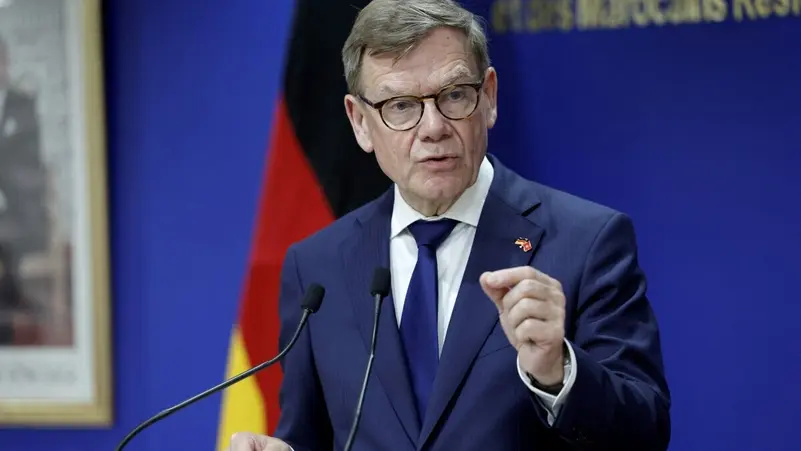
Germany Discusses New Formula with Washington for Sharing NATO Burdens
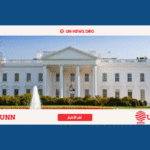
German Foreign Minister Johann Wadephul is set to hold talks in Washington on a “new burden-sharing arrangement” within the North Atlantic Treaty Organization (NATO) during his scheduled meeting today (Monday) with U.S. Secretary of State Marco Rubio, at a time when transatlantic relations are witnessing increasing debate over collective defense responsibilities and the future of security commitments among allies.
Wadephul affirmed, ahead of the start of his tour, which includes several countries in North and South America, that the cohesion of NATO member states remains the fundamental cornerstone for ensuring Euro-Atlantic security, stressing that preserving the alliance’s unity represents a decisive factor in addressing current security challenges.
He added that Russian President Vladimir Putin “does not dare, for good reasons, to attack any of the alliance’s member states,” considering that NATO’s collective deterrence policy has proven highly effective in preventing any direct escalation against member countries.
Support for Ukraine and Security Challenges on the Agenda
The talks between Wadephul and Rubio are scheduled to address several key issues, foremost among them mechanisms for reaching a more balanced formula for sharing defense burdens among alliance members, in addition to discussing ways to ensure the continuation of long-term military and political support for Ukraine.
These meetings come at a time when U.S. efforts aimed at advancing the settlement process between Russia and Ukraine are facing increasing challenges following Washington’s preoccupation with the consequences of the war with Iran, in addition to anticipation regarding U.S. President Donald Trump’s position on the future of his country’s commitment to NATO during the upcoming summit to be hosted by Türkiye.
In a related context, the German foreign minister stressed that Berlin and Washington share the objective of reaching a permanent and sustainable settlement based on the framework agreement concluded between the United States and Iran, noting that recent developments in the region reflect the close connection between security and economic stability.
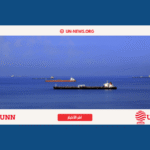
He pointed out that the continued exchange of military strikes despite the ceasefire, in addition to Tehran’s insistence on its exclusive right to impose control over navigation through the Strait of Hormuz, highlights the extent to which geopolitical crises affect the global economy and supply chains.
He added that what he described as Iran’s “dangerous strategy” toward one of the world’s most important maritime routes for global energy supplies confirms that security and economic policies have become interconnected in a way that cannot be separated, making it necessary to strengthen the diversification of economic partnerships and enhance economies’ ability to withstand future crises.
Economic Stop After Washington and U.S. Criticism of Allies
Following the conclusion of his talks in the U.S. capital, Wadephul will travel to Paraguay on Tuesday to participate in the Mercosur Summit, hosted by the capital Asunción, after the free trade agreement between the European Union and the Mercosur bloc—which includes Brazil, Argentina, Uruguay, and Paraguay—entered into force at the beginning of last May, with the aim of expanding trade, removing customs barriers, and enhancing the movement of goods and services between the two sides.
The German moves come at a time when U.S. President Donald Trump continues to criticize several European allies, including Germany, the United Kingdom, and Italy, accusing them of not bearing their fair share of the collective defense burden and asserting that the United States has spent enormous sums to guarantee Europe’s security.
Trump also indicated that some European countries did not provide support to Washington during the recent confrontation with Iran, suggesting that the continuation of this approach could prompt the United States to reassess its security commitments toward its partners in the future.
Meanwhile, European leaders renewed, during a meeting hosted by German Chancellor Friedrich Merz in Berlin last week, their commitment to strengthening defense cooperation within NATO in preparation for the alliance’s upcoming summit in Ankara on July 7 and 8.
Trump also expressed his disappointment with Germany’s position during the war with Iran, stating that he had asked Berlin to provide symbolic support to Washington, but the German government refused, adding—as reported by German media outlets, including Bild—”We asked them for just a small payment or a little kiss, but they said: ‘No, we can’t do that.'”
United News Network – UNN Arabic
An independent media platform that provides reliable news and objective analysis, and seeks to promote peace and cultural dialogue around the world, convey the truth, and build bridges of understanding between peoples.
For more news, you can visit our homepage:
Author: Counselor Faisal Al-Mutairi.
Publication Date: June 29, 2026.
Last Updated: June 2026.