
NATO Summit Opens in Ankara as Erdoğan Announces Turkey’s Readiness to Help Clear Mines in the Strait of Hormuz
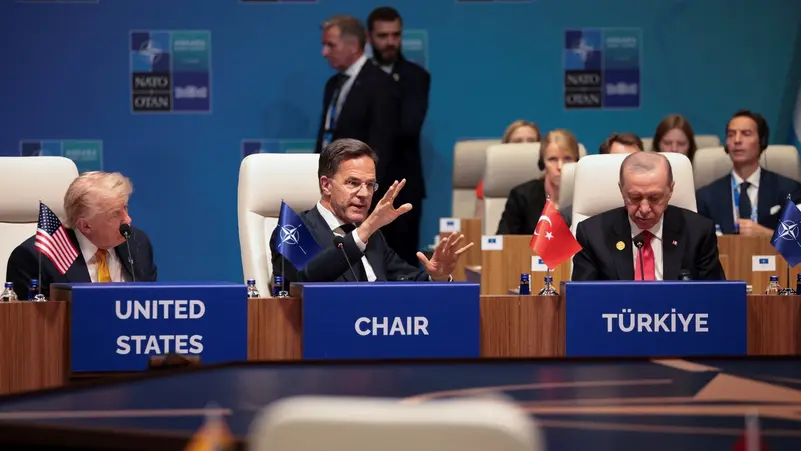
The NATO Summit officially opened on Wednesday in the Turkish capital, Ankara, amid heightened tensions stemming from the ongoing escalation between the United States and Iran, as well as growing debate over the future of defense spending among alliance members. The alliance faces a complex array of security and political challenges across multiple fronts.
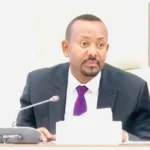
Opening the summit, Turkish President Recep Tayyip Erdoğan outlined Turkey’s vision for NATO’s role in the current international environment, emphasizing that Ankara will continue contributing to collective security and regional stability. He stressed Turkey’s readiness to assist in countering both maritime and land-based threats targeting alliance members.
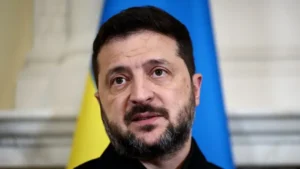
Erdoğan also reaffirmed Turkey’s support for initiatives aimed at meeting Ukraine’s military needs amid the ongoing war with Russia, underscoring the importance of maintaining NATO unity in the face of mounting security challenges.
Strait of Hormuz and Iran Dominate Discussions
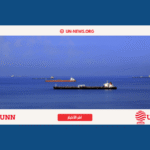
Addressing the escalation with Iran, Erdoğan announced that Turkey is prepared to participate in any future operation to clear mines from the Strait of Hormuz, reflecting Ankara’s commitment to safeguarding international navigation through one of the world’s most critical energy shipping routes.
He praised what he described as U.S. President Donald Trump’s “firm stance” in efforts to reach an agreement with Iran, while emphasizing that preserving unity among NATO allies remains essential to confronting current security threats.
The Turkish president also highlighted the importance of strengthening cooperation among NATO members in combating terrorism in all its forms, thanking the United States, Spain, Germany, and Italy for supporting Turkey’s air defense systems during the recent confrontation with Iran.
Erdoğan’s remarks came as the Iranian issue dominated the summit agenda amid growing concerns over the impact of military escalation on global energy security and maritime traffic in the Gulf.
Earlier, President Trump had intensified his rhetoric toward Tehran by announcing the termination of the memorandum of understanding between the United States and Iran, declaring that Washington would never allow Iran to acquire nuclear weapons, as prospects for a diplomatic resolution continue to diminish amid ongoing military tensions.
NATO Secretary General Mark Rutte stated that alliance leaders meeting in Ankara would reaffirm their commitment to ensuring that the Strait of Hormuz remains open to international shipping, describing recent U.S. strikes against Iranian targets as “absolutely necessary” in response to growing threats against commercial vessels.
Meanwhile, the U.S. Central Command (CENTCOM) announced on Wednesday morning that it had completed a new wave of military strikes against Iran, targeting more than 80 sites with precision-guided munitions. According to the command, the operations were carried out in response to recent Iranian attacks on commercial ships transiting the Strait of Hormuz.
Internal Debate Over the Future of NATO Summits
Alongside security discussions, alliance members also debated the future of NATO’s annual summits after Bloomberg, citing informed sources, reported that the alliance is considering either canceling or postponing next year’s summit.
According to the sources, these discussions gained momentum during the Ankara meeting amid concerns that the next summit could become another platform for President Trump to criticize European allies, particularly if hosted by Albania, one of NATO’s lowest defense spenders.
Trump said he attended the Ankara summit largely because of his good relationship with President Erdoğan, while renewing his longstanding criticism of NATO’s performance. His remarks have reignited debate within the alliance over whether annual summits should continue in their current format.
Sources indicated that Secretary General Mark Rutte favors maintaining the annual summit as an important platform for keeping NATO at the forefront of international affairs. However, the final communiqué issued at the conclusion of the Ankara summit made no reference to the date or location of the next meeting.
For his part, NATO Military Committee Chairman Giuseppe Cavo Dragone said Albania remains the preferred host for the next summit, although member states are still discussing whether it should take place next year or the following year in light of the alliance’s evolving political and security challenges.
United News Network – UNN Arabic
An independent media platform providing reliable news and objective analysis, dedicated to promoting peace and intercultural dialogue around the world by delivering the truth and building bridges of understanding between peoples.
For more news, visit our homepage:
Author: Counselor Faisal Al-Mutairi
Publication Date: July 8, 2026
Last Updated: July 2026