
A Longstanding Issue Dating Back to World War II Rekindles Tensions Between Warsaw and Kyiv
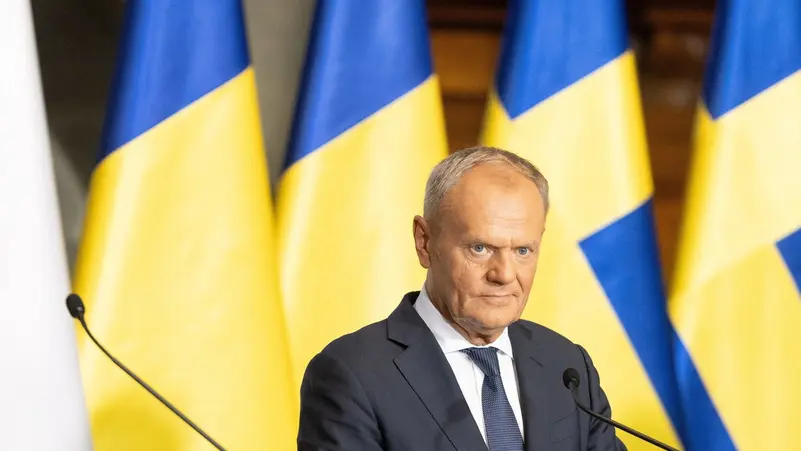
Polish Prime Minister Donald Tusk announced on Saturday the establishment of a new memorial in the capital, Warsaw, to commemorate civilians who were killed in what Poland describes as “genocide” committed by “Ukrainian nationalists” during World War II, in a move that brings back to the forefront one of the most sensitive historical issues between the two countries.
The announcement comes at a time when relations between Poland and Ukraine continue to witness differences over the interpretation of events from that period, despite the significant political and military support provided by Warsaw to Kyiv in its war against Russia. The issue of civilian victims from both sides during World War II remains one of the key matters casting a shadow over bilateral relations.
In a video posted on social media platforms, Tusk said that the new monument would take the form of a “wall of remembrance” featuring an eternal flame and the names of all victims whose identities have been established and whose remains have been found, stressing that the Polish state “will not forget any of them.”
The announcement came on the eve of the commemoration of what is known as “Bloody Sunday,” the day in 1943 when units of the Ukrainian Insurgent Army and the Organization of Ukrainian Nationalists carried out attacks against Poles in the Volhynia region, which is now located in northwestern Ukraine. These events remain a historical point of dispute between the two countries.
Historical Dispute Over the Volhynia Events
Polish authorities estimate that the violence that took place between 1943 and 1945 resulted in the deaths of between 70,000 and 100,000 Polish civilians, while estimates indicate that subsequent retaliatory operations claimed the lives of up to approximately 12,000 Ukrainians.
Meanwhile, Ukraine views both the Ukrainian Insurgent Army and the Organization of Ukrainian Nationalists as movements that fought for the country’s independence against the Red Army and the Soviet Union, making the assessment of their historical role a continuing source of disagreement between the two sides.
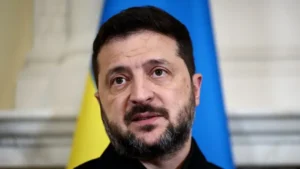
The controversy intensified again in May, after Ukrainian President Volodymyr Zelenskyy announced the naming of a military unit after the Ukrainian Insurgent Army, a decision that sparked widespread criticism in Poland, which considered the move a disregard for the sensitivity of the historical issue among Polish public opinion.
This was followed by an official reaction from Warsaw, as Polish President Karol Nawrocki decided to withdraw Poland’s highest honor, the Order of the White Eagle, from the Ukrainian president, in a move reflecting the level of tension caused by the issue.
Tusk Calls for Truth and Reconciliation
Despite the intensity of the dispute over the historical narrative, Donald Tusk, who previously served as President of the European Council and is considered one of Ukraine’s most prominent supporters in its confrontation with Russia, emphasized that honoring the memory of the victims should serve as a pathway toward building a more stable future between the two countries.
He said that “memory and truth must help us build a better future, regardless of hatred and contempt,” considering that Europe’s experience after World War II proved that peace and reconciliation could only be achieved through acknowledging historical facts and calling them by their names.
He added that Europe, which was built on peace and mutual respect after World War II, became possible through confronting the past honestly, stressing that “anyone who wishes to join this European project must be prepared to accept that truth.”
Meanwhile, the Ukrainian side sought to send a message of calm, as Ukrainian Ambassador to Poland Vasyl Bodnar laid a wreath in Warsaw in remembrance of all victims of World War II, whether Polish or Ukrainian, in a move reflecting an attempt to preserve channels of dialogue despite the ongoing disagreement over interpretations of past events.
United News Network – UNN Arabic
An independent media platform providing reliable news and objective analysis, seeking to promote peace and cultural dialogue around the world, convey the truth, and build bridges of understanding among peoples.
For more news, visit our homepage:
Author: Counselor Faisal Al-Mutairi
Publication Date: July 12, 2026
Last Updated: July 2026