
Palestine 2026 Elections.. Gaza and Jerusalem at the Heart of the Electoral Test
The Palestinian legislative elections scheduled to be held next November are facing a highly complex test, amid disputes over Hamas’s participation and questions about the possibility of holding the vote in the Gaza Strip and Jerusalem, as ongoing political and on-the-ground circumstances continue to cast a shadow over the Palestinian scene.
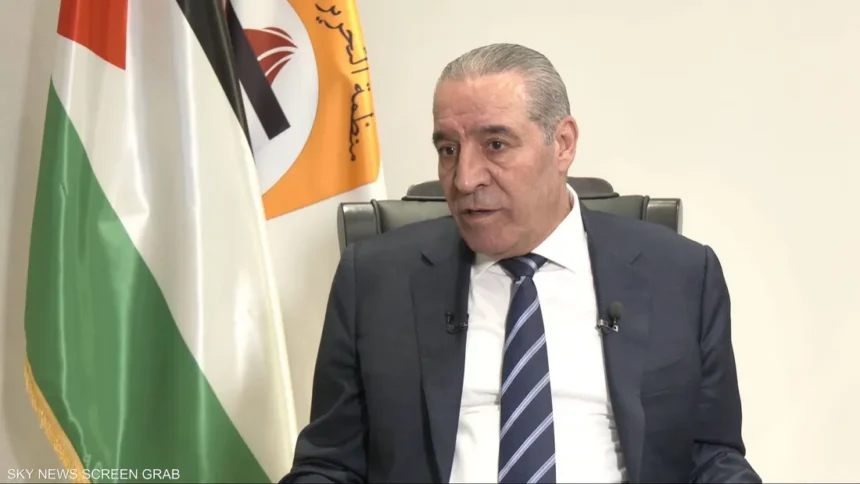
Palestinian Vice President “Hussein Al-Sheikh” has reaffirmed his commitment to holding the elections, stressing that they will not be organized without the participation of Gaza and Jerusalem. At the same time, he says Hamas will not participate under its own name or be part of the government, according to what was outlined in US President “Donald Trump’s” strategy.
However, Hamas spokesperson “Hazem Qassem” affirms the movement’s keenness to participate in the elections within the broadest possible Palestinian national coalition, considering that the electoral process could provide an opportunity to build a more consensual Palestinian political system.
Amid these differences, journalist “Wael Mahmoud” and political science professor “Amjad Shihab” presented, during their discussion, two perspectives on the course of the elections and the political crisis. Both agree in criticizing the Palestinian reality, but differ in identifying responsibilities and ways out of the impasse.
Gaza and Jerusalem.. Do Circumstances Allow Elections to Be Held?
“Wael Mahmoud” views elections as a constitutional and fundamental right of the Palestinian people, but questions whether current circumstances are suitable for exercising this right, particularly in the Gaza Strip, where the consequences of the war remain strongly present.
He believes that a citizen without shelter or food may face great difficulty exercising their electoral right freely, warning that basic needs could become a factor influencing voters’ choices, with some choosing whoever provides them with a tent or food supplies rather than basing their choice on political programs.
This question also extends to the West Bank, amid what he describes as daily violations and the undermining of Palestinian presence, as well as Jerusalem, with the Israeli elections scheduled for October approaching, one month before the Palestinian elections. He questions whether the Israeli right wing will allow Palestinian voting to take place in the city.
Nevertheless, “Mahmoud” believes that merely putting elections on the table could break the political deadlock and open the door to addressing the political crisis, alongside the dialogues and coordination taking place among Palestinian factions in Cairo.
“Mahmoud” does not separate elections from accountability, calling on Hamas to present an account to the Palestinian people regarding the outcomes of its course and the resulting deaths, injuries, and destruction. He also holds it primarily responsible for the division since 2006 and for taking control of Gaza by force of arms, estimating that it still controls around 70% of what remains of the Strip.
He also raises questions about which body will oversee the elections in Gaza and the West Bank, and how their integrity can be guaranteed amid the presence of weapons and tensions, as well as whether international bodies will be allowed to enter Palestinian territories to monitor the electoral process.
Renewing Legitimacy or Reshaping the Political System?
At the same time, “Mahmoud” emphasizes that he is not defending the Palestinian Authority, noting that there are numerous shortcomings in its performance, and that Fatah, the Authority, and the other factions are likewise required to provide an account to the people.
He believes that the Palestinian citizen bears the cost of what is happening in Ramallah and Gaza, as well as what was being managed in Tehran and Damascus, recalling Hamas’s previous position on the 1996 elections before it later participated in Palestinian Authority elections and subsequently took control of the Strip.
“Mahmoud” proposes forming a consensus council to manage the transitional phase and organize Palestinian affairs, away from factional calculations, in a way that would allow the establishment of a leadership capable of turning the Palestinian state project into reality.
For his part, “Amjad Shihab” describes the Palestinian political system as “decrepit” and lacking legitimacy and competence, pointing to the rise in voter registration rates after the legislative elections had been absent for more than 20 years.
He notes that Palestinians as old as 38 have never previously participated in elections, emphasizing that the people are the source of authority and have the right to choose their representatives through a fair vote without conditions restricting freedom of choice.
“Shihab” believes that elections, even if they do not resolve all problems, could serve as an entry point for renewing legitimacy, dismantling the monopoly on power, and reshaping the political system, amid the paralysis of the Legislative Council, the absence of effective institutions, and worsening unemployment, settlement activity, and social problems.
Shihab does not place responsibility solely on Hamas, pointing to other factions, including the Popular Front and the Democratic Front, which maintain the idea of resistance. He also notes that Gaza Airport was destroyed before Hamas took control of the Strip.
At the same time, he criticizes the performance of the Palestinian Authority in Ramallah, holding it responsible for failing to confront the expansion of settlements, and recalling “Mahmoud Abbas’s” 2005 electoral program, which included establishing a Palestinian state, expanding the representation of the Palestine Liberation Organization, and supporting the resilience of Jerusalem. He considers that these objectives have not been achieved despite Abbas remaining in power for around 21 years.
“Shihab” points to the failed attempt to hold elections in 2019, followed by the postponement of the 2021 elections due to the lack of guarantees for Jerusalem’s participation. He questions whether the November elections can be held amid the lack of clarity regarding Israel’s or the United States’ approval.
Ultimately, he believes that addressing the crisis requires changing or reshaping the political system, because the continued duality between Fatah and Hamas leaves Palestinians, in his assessment, facing ongoing losses in Gaza and the West Bank. He also cites a previous poll showing that around 80% of Palestinians preferred “Abbas” to resign, criticizing the performance of official and diplomatic institutions and the mechanisms used to select some of their representatives.
United News Network – UNN Arabic
An independent media platform providing reliable news and objective analysis, seeking to promote peace and cultural dialogue around the world, convey the truth, and build bridges of understanding among peoples.
For more news, you can visit our homepage:
Author: Counselor Faisal Al-Mutairi.
Publication Date: August 23, 2026.
Last Updated: August 2026.