
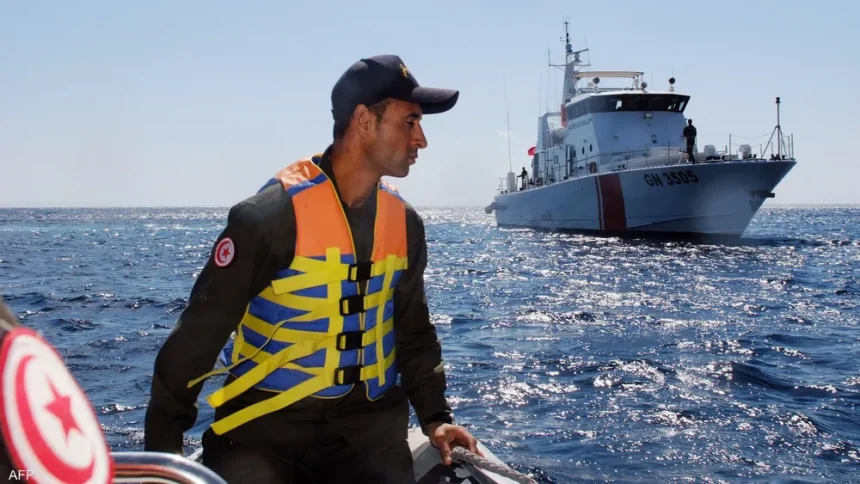
Tunisian National Guard spokesperson Houssem Eddine Jebabli said yesterday, Sunday, that coast guard units recovered the bodies of 11 Tunisian migrants after the boat carrying them sank while they were attempting to sail toward Italy at the end of the week. Search operations are continuing for three other missing people.
Coast guard, army, and civil protection units, supported by two helicopters, are taking part in the search efforts in an attempt to locate the missing individuals, amid growing concern among the victims’ families in the southeastern Tunisian city of Ben Guerdane.
One Survivor After 48 Hours at Sea
The head of a Tunisian organization concerned with migrants’ rights said on Saturday that the migrants’ boat had departed early Thursday carrying 15 people, most of them young men, before sinking off the Tunisian coast. He noted that only one person had survived at that point.
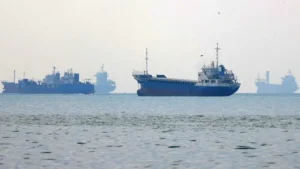
According to the sole survivor’s account, he was tossed about by the sea and waves for nearly 48 hours before a commercial vessel found and rescued him. The ordeal highlights the dangers faced by migrants attempting to cross the Mediterranean.
Mustafa Abdelkabir, head of the Tunisian Observatory for Human Rights, told Reuters on Saturday that the boat was carrying seven members of the same family, in addition to a man and his pregnant wife, adding to the scale of the humanitarian tragedy caused by the incident.
All of the migrants were from Ben Guerdane in southeastern Tunisia, where grief and anger spread as successive reports emerged about the number of victims and missing people.
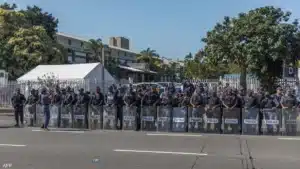
Late at night, dozens of young people took to the streets demanding that search operations for the missing be accelerated, amid fears among their families that they would not be found. Police intervened to disperse the protesters using tear gas, while tension and grief continued to prevail across the city.
The Mediterranean.. A Perilous Route
The Central Mediterranean route, used by migrants departing from the coasts of North Africa toward Europe, is considered one of the world’s most dangerous and deadliest migration routes. Many people seeking to reach Europe rely on overcrowded or poorly equipped boats that are unsuitable for long journeys, leaving them vulnerable to sinking and other accidents, particularly amid changing weather conditions and rough seas.
The route is used by migrants from African countries and the Middle East, as well as Tunisians seeking to reach European shores, amid economic and social conditions that push some people to undertake dangerous sea crossings.
The Ben Guerdane tragedy comes amid growing criticism of European and Tunisian migration and border-control policies. Last month, Human Rights Watch, Amnesty International, and dozens of other rights and humanitarian organizations issued a statement saying that the migration agreement between Tunisia and the European Union had contributed to an increase in serious violations against migrants and asylum seekers in Tunisia.
The organizations called on the European Union to suspend funding for migration and border-monitoring activities involving Tunisian security forces, citing concerns over the treatment of migrants and asylum seekers.
As Tunisian rescue teams continue searching for the three missing people, the city of Ben Guerdane awaits the outcome of the efforts amid grief and anger. The incident has once again highlighted the dangers of irregular migration journeys across the Mediterranean, which continue to claim the lives of people seeking to reach Europe.
United News Network – UNN Arabic
An independent media platform providing reliable news and objective analysis, seeking to promote peace and cultural dialogue around the world, convey the truth, and build bridges of understanding between peoples.
For more news, visit our homepage:
Author: Counselor Faisal Al-Mutairi
Publication date: August 24, 2026
Updated: August 2026