
A Growing Cost-of-Living Crisis Amid Rising Prices and Falling Wages
Iranian President Masoud Pezeshkian did not specify the nature of the many difficulties he acknowledged on Sunday that Iranian society is facing. However, official figures and accounts from residents paint a picture of a multifaceted crisis, ranging from soaring food prices and declining purchasing power to job losses, fuel pressures, and disruptions to foreign trade, as Washington prepares to impose a new package of sanctions.
Pezeshkian said his government was doing “everything in its power to prevent the situation from worsening,” describing what Iran is facing as a “comprehensive economic, military, and security war.” His remarks followed earlier statements in which the Iranian president said the country’s problems had multiplied several times, at a time when revenues have declined.
Data from Iran’s Statistical Center reveal the extent of the pressure on households. Annual inflation reached 66% in July, while consumer prices rose by 87.9% compared with the same month a year earlier. Food inflation, meanwhile, surged to 128%.
According to figures reported by the Associated Press, rice prices have risen by around 60%, while red meat prices have increased by 150% since the outbreak of the war. Despite a roughly 60% increase in the minimum wage, the depreciation of the rial reduced the monthly value of that wage from about $105 in late March to approximately $86.
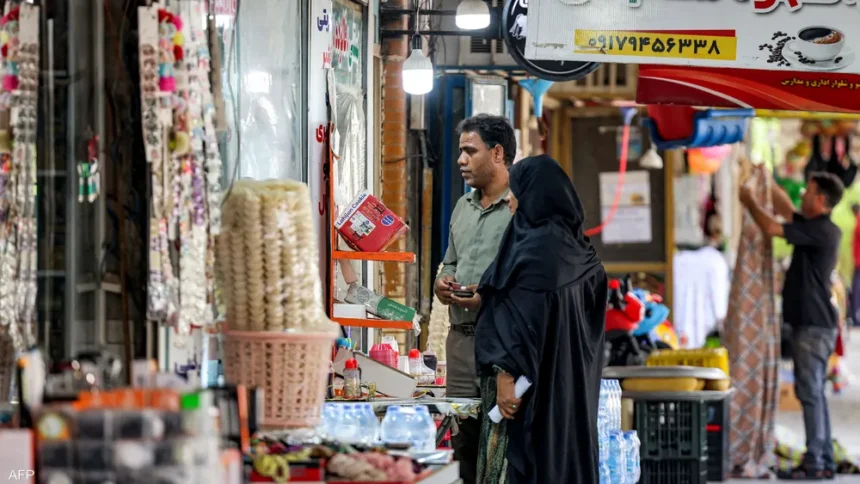
The crisis is not necessarily reflected in goods disappearing from markets as much as in households’ declining ability to afford them. A government employee in the city of Yazd told Reuters that his salary runs out within days and that meat and chicken have become almost absent from his family’s table.
In Tehran, a taxi driver said he works around 15 hours a day, yet has still been forced to cut spending on fruit and protein-rich foods, as well as canceling recreational activities and weekend outings.
Job Losses and Growing Pressure on Oil and Fuel
The crisis is even more evident in the labor market. Although the official unemployment rate stands at 9.1%, a Labor Ministry official acknowledged that more than one million jobs had been lost by the end of May, during the first three months of the war.
The construction, import, transportation, and industrial sectors have been hit by airstrikes, disruptions to trade, and energy shortages. Reuters quoted a businessman in Bandar Abbas as saying that his trade with Gulf countries had come to a halt, forcing him to lay off 10 employees and rely on his savings.
The International Monetary Fund expects inflation in Iran to approach 70% by the end of the year, while the economy is projected to contract by more than 5%. Tehran also needs financial resources to rebuild damaged energy and transportation infrastructure and factories.
The expected U.S. sanctions are targeting the remaining channels of Iranian trade, particularly oil exports. According to Kpler, Iranian crude oil loadings fell from 893,000 barrels per day in July to 156,000 barrels per day during the first 17 days of August.
The suspension of commercial and financial transactions with the UAE is adding further pressure to the Iranian economy. Before the war, Abu Dhabi accounted for more than 30% of Iran’s imports, worth approximately $21 billion, while receiving around 13% of its exports.
Iran is also facing a gasoline supply gap. Lawmaker Reza Sepahvand said peak production reaches around 130 million liters per day, compared with estimated consumption of approximately 137 million liters, after the U.S. blockade effectively halted imports.
Fears of a Return to Protests
Iranian authorities fear that mounting economic pressures could trigger a new wave of protests, following the unrest in January that initially began over rising prices before expanding into political demands and ending with a security crackdown.
A former Iranian official, speaking to Reuters, linked the appointment of Hossein Taeb to lead the Basij forces to preparations by the authorities for the possibility of renewed unrest. At the same time, human rights organizations have documented an increase in arrests, summonses, and legal rulings against journalists, activists, and students.
Nevertheless, available data do not indicate that the Iranian economy is on the verge of an imminent collapse. The state continues to subsidize fuel, basic goods remain available in markets, and Tehran retains networks that help it circumvent sanctions.
However, economic indicators and accounts from residents and businesses point to a declining ability of both the economy and households to absorb further shocks. This raises concerns that the expected U.S. sanctions could transform the crisis from chronic economic pressure into a direct test of domestic stability in Iran.
United News Network – UNN Arabic
An independent media platform providing reliable news and objective analysis, seeking to promote peace and cultural dialogue around the world, convey the truth, and build bridges of understanding between peoples.
For more news, visit our homepage:
Author: Counselor Faisal Al-Mutairi
Publication date: August 24, 2026
Updated: August 2026