
UNIFIL’s Future After Its Mandate Ends
As the mandate of the United Nations Interim Force in Lebanon, “UNIFIL,” approaches its expiration at the end of this year, questions are mounting regarding the future of the international presence in southern Lebanon, amid continued tensions on the ground and Israeli attacks, while the UN Security Council has yet to determine the form of arrangements that will be responsible for implementing Resolution 1701 after the end of the UN force’s mission.
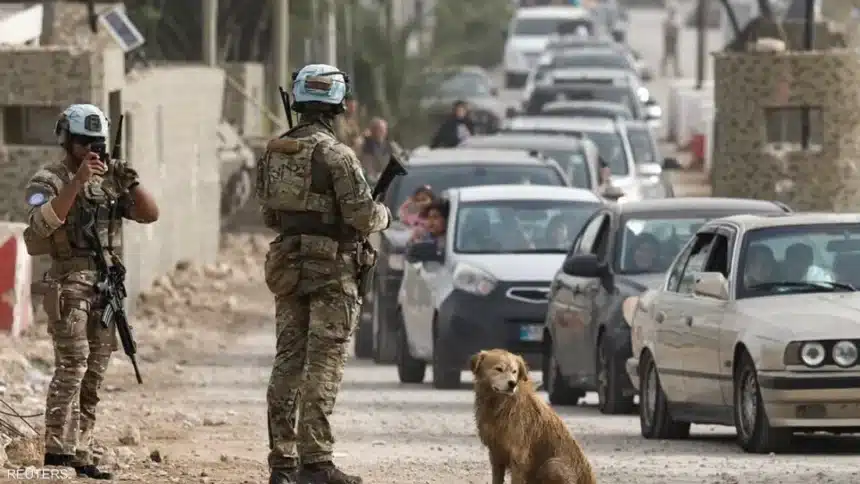
In an exclusive interview with “Sky News Arabia,” UNIFIL spokesperson “Tilak Bukharil” said that a neutral international presence in southern Lebanon remains necessary to help reduce tensions and restore stability along the Blue Line, noting that peacekeeping forces continue to monitor extensive Israeli military activity in the area despite the ceasefire being in effect.
“Bukharil” explained that the UN force’s mandate ends on December 31 of this year, with its withdrawal process set to begin the following day, pointing out that the Security Council has not yet made a decision regarding the options proposed for the future implementation of Resolution 1701 after UNIFIL’s mission ends.
He added that the UN Secretary-General presented three options to the Security Council last June regarding the future implementation of the 2006 resolution after the force’s withdrawal, stressing that the Council, as the body responsible for determining UNIFIL’s mandate, has not yet taken a position on those options.
“Bukharil” said he did not want to speculate about what the Security Council might decide, but stressed—from the perspective of developments on the ground—the importance of maintaining a neutral international presence in southern Lebanon, as a factor that could help ease tensions and support stability along the Blue Line.
Escalating Israeli Activity and the Fragility of the Situation on the Ground
Regarding security developments in southern Lebanon, the UNIFIL spokesperson said that peacekeeping forces are monitoring extensive Israeli military activity on a daily basis, explaining that levels of violence declined since June 21 before increasing again in August, while the overall situation in the area remains “fragile.”
He noted that recent days have witnessed significant Israeli activity, including artillery shelling and airstrikes, as well as troop deployments, logistical movements, engineering works, and site maintenance, reiterating UNIFIL’s call for the Israeli army to fully withdraw from the territories located in southern Lebanon.
Regarding the activity of “Hezbollah,” “Bukharil” stated that UNIFIL forces have not observed the group launching any projectile since June 21, nor have they detected any evidence that it is rebuilding its capabilities. He explained that the force’s mission—under Resolution 1701—is to support the Lebanese authorities in fulfilling their commitments, ensuring that the area extending between the Blue Line and the Litani River remains free of any unauthorized weapons, equipment, or personnel.
Deteriorating Humanitarian Situation and Options for the Post-UNIFIL Phase
“Bukharil” described the humanitarian situation in southern Lebanon as “extremely dire,” explaining that the Israeli army controls large areas of the region and conducts military activities by land, air, and sea, while recent developments have left widespread destruction affecting civilian infrastructure, including homes, bridges, water networks, and other facilities.
While some residents have managed to return to their areas, the spokesperson said that “tens of thousands” of people displaced from villages and towns in southern Lebanon, particularly those near the Blue Line, have still been unable to return.
As the end of the UN mandate approaches, international and regional parties are exploring options for dealing with the upcoming phase in a way that prevents a security vacuum in southern Lebanon, alongside efforts to strengthen the capabilities of the Lebanese army and enable it to play a greater role in securing the border area and asserting state authority over it.
UNIFIL’s mission dates back to 1978, when the Security Council established it under Resolutions 425 and 426, before expanding its mandate following the 2006 war to include monitoring the cessation of hostilities, supporting the deployment of the Lebanese army in the south, as well as tasks related to maintaining stability and supporting humanitarian access.
UN Secretary-General “António Guterres” had proposed three options in June for the next phase following the expiration of the current mandate, ranging from the deployment of around 2,000 personnel to more than 5,500 United Nations personnel, with the aim of monitoring the ceasefire between Israel and “Hezbollah” and supporting the Lebanese Armed Forces, while emphasizing the continued need for peacekeeping forces in Lebanon.
In the same month, France and Italy expressed their desire to form a coalition for the next phase following “UNIFIL,” with the aim of supporting Lebanon’s sovereignty and preventing its territory from becoming “a foothold for regional escalation.”
United News Network – UNN Arabic
An independent media platform that provides reliable news and objective analysis, seeking to promote peace and cultural dialogue around the world, convey the truth, and build bridges of understanding among peoples.
For more news, visit our homepage:
Author: Counselor Faisal Al-Mutairi.
Publication Date: September 1, 2026.
Updated: September 2026.