
Qatari Minister of State for Energy Affairs and CEO of “QatarEnergy” “Saad Al-Kaabi” rejected the statements by U.S. Treasury Secretary “Scott Bessent,” who suggested that the Strait of Hormuz could lose its importance within two years as countries expand the construction of pipelines to bypass the strait.
Speaking at the Qatar Economic Forum in New York, “Al-Kaabi” said that this assessment is “completely wrong,” explaining that the importance of the Strait of Hormuz is not limited to oil and gas, but that it represents a major trade route for a number of Gulf states.
“Bessent” had suggested, in an interview with the U.S. channel “12News,” that the strait could lose its importance over the next two years, noting that around 50% to 70% of the energy currently passing through it would be transported through underground pipelines.
The Gulf states are moving to reassess their strategic plans for building new pipelines, with the aim of reducing reliance on the Strait of Hormuz, amid growing concerns over potential security threats.
Regarding liquefied natural gas, “Al-Kaabi” said that the first production line from the North Field East project, part of the first phase of Qatar’s gas production expansion, is expected to begin production in the first half of 2027, instead of the previously scheduled date in 2026.
He warned that continued disruption to navigation through the Strait of Hormuz could delay the arrival of the equipment needed in Qatar, potentially delaying some expansion phases and the addition of new production capacity.
He added that Ras Laffan facilities that have not sustained damage could resume operations within a few weeks once the strait is reopened, while damaged sections could take years to repair.
“Al-Kaabi” explained that Qatar’s current liquefied natural gas production is “very limited” due to the Strait of Hormuz crisis, noting that his country is self-sufficient in jet fuel, gasoline, diesel, and electricity needed for production operations.
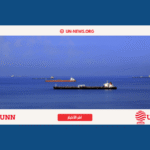
Before the outbreak of the U.S.-Israeli war with Iran on February 28, around 125 large commercial vessels passed through the Strait of Hormuz daily, including oil and gas tankers, bulk carriers, and container ships.
Data from “Kpler” showed that 13 tankers, most of them very large crude carriers carrying 34 million barrels of crude oil, left the strait during the week ending September 13.
United News Network – UNN Arabic
An independent media platform that provides reliable news and objective analysis, and seeks to promote peace and cultural dialogue around the world, to convey the truth and build bridges of understanding among peoples.
For more news, visit our homepage:
Author: Counselor Faisal Al-Mutairi.
Publication Date: September 21, 2026.
Updated: September 2026.