
Nawaf Salam’s Visit to Western Zawtar Sparks Widespread Controversy in Lebanon Over Sovereignty Concerns and Criticism of Lack of Coordination
The visit made by Lebanese Prime Minister Nawaf Salam to the town of Western Zawtar in southern Lebanon has sparked a wave of political and public controversy after it was carried out without prior coordination with the municipality, according to its head. Supporters of the move, however, viewed it as carrying sovereign and symbolic messages at a highly sensitive time for southern Lebanon.
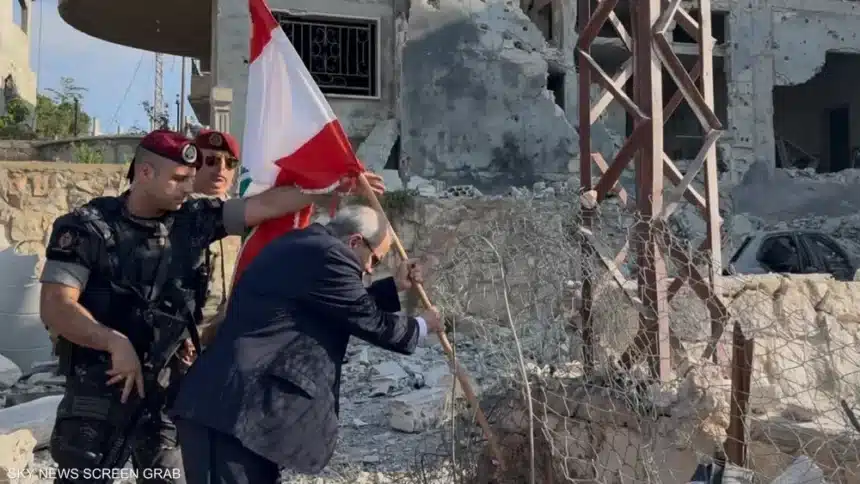
During the visit, Salam planted the Lebanese flag on the town’s land in a symbolic scene intended to emphasize the presence of the state in the area. In a speech delivered from Western Zawtar, he stated:
“I would like to address all Lebanese people, especially our people in the south, from the town of Western Zawtar. This is a national moment carrying significant political and symbolic dimensions, as it represents the beginning of the Israeli withdrawal from our land.”
However, the move did not prevent clear divisions in reactions. Some viewed the visit as carrying an important national message, while others considered that ignoring the municipality and local figures affected the atmosphere surrounding the visit, reflecting the sensitivity surrounding any official activity in southern Lebanon, where security considerations overlap with political and local dimensions.
Municipality and Residents: Objection to Lack of Coordination, Not the Visit Itself
The Mayor of Western Zawtar, Abd Ezz El-Din, confirmed in a statement to a news agency that the municipality had not been informed in advance of the visit’s timing, considering that coordination with the local authority is a natural matter in any official visit by the prime minister.
He explained that Salam’s convoy passed through among the residents but did not stop to communicate with them, saying:
“He could have stopped for a few minutes among the people of the town and raised their morale, especially given the difficult circumstances they are experiencing.” He pointed out that a number of residents expressed their dissatisfaction with this.
Ezz El-Din stressed that the objection was not related to the prime minister’s visit itself, but rather to the way it was organized, emphasizing that the municipality represents the elected administrative authority for residents and that it would have been better to notify it in advance to ensure an official reception appropriate for the occasion.
The views of several residents reflected a similar sentiment. One resident, Abu Ali, stated that the people had hoped to know about the visit in advance and that the prime minister would dedicate time to listening to their demands. Another young man considered the visit a positive step in itself, but said the lack of coordination with the municipality surprised many.
Academic researcher Hossam Matar also joined the critical voices, saying in statements to local media that the timing of the visit was inappropriate, describing the scene as a “political show” that does not align with the extent of the suffering experienced by southern residents after the war.
He added that, in his view, the government had failed to deal with Israeli attacks and protect citizens, arguing that priority should be given to rebuilding damaged areas and responding to residents’ needs rather than relying solely on symbolic gestures.
Supporters: A Sovereign Message and Politically Motivated Criticism
On the other hand, comments circulating on social media showed a clear division regarding the visit. Supporters argued that focusing on the issue of coordination with the municipality overshadowed the national and sovereign message Salam sought to deliver by raising the Lebanese flag in the town, while critics emphasized that respecting local institutions strengthens the relationship between the state and citizens.
Political analyst and founder of Dar Al-Hiwar, Bishara Khairallah, said in remarks that the criticism directed at the visit amounted only to “popular rhetoric,” noting that “it is unreasonable to demand that the prime minister seek permission from a mayor to visit any Lebanese area.” He stressed that municipalities are administratively affiliated with the Ministry of Interior and do not supersede the powers of the prime minister’s office.
For his part, constitutional and political expert lawyer Antoine Saad explained that the prime minister, as head of the executive authority, has the right to visit any area within Lebanese territory without a legal obligation to notify the municipality in advance.
He added that the lack of public announcement of the visit was most likely due to security considerations imposed by current circumstances, noting that Salam preferred to keep it limited in duration and without announced arrangements in order to maintain security aspects.
Saad considered that the prime minister’s visit to Western Zawtar, as the first visit by a head of government to enter the town following recent developments and raise the Lebanese flag there, should be viewed as a symbolic step aimed at supporting the people of the south. He emphasized that the objections raised largely reflect political positions rather than being based on a legal violation, as there is no provision requiring the prime minister to coordinate in advance with municipalities before visiting any Lebanese area.
United News Network – UNN Arabic
An independent media platform providing reliable news and objective analysis, striving to promote peace and intercultural dialogue around the world, convey the truth, and build bridges of understanding among peoples.
For more news, please visit our homepage:
Author: Counselor Faisal Al-Mutairi.
Publication Date: July 23, 2026.
Last Updated: July 2026.