
At a time when international crises are becoming increasingly complex and political and economic interests are more interconnected than ever, Middle Eastern issues are no longer regional matters with limited impact. Instead, they have become a central element in global security and stability calculations. In this context, Arab participation in the G7 Summit held in Évian, France, highlights the growing Arab role in addressing major international issues, particularly as the Iranian file dominates discussions alongside matters related to Gulf security, freedom of navigation, and regional stability.
The UAE as a Strategic Partner in International Calculations
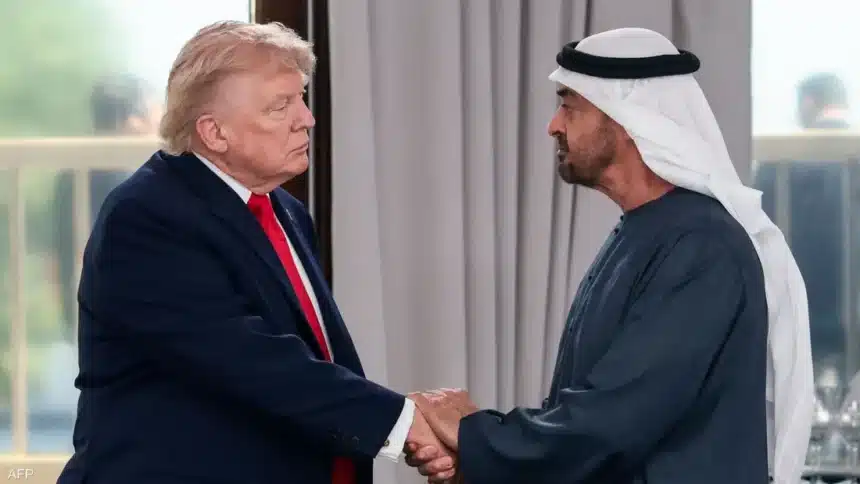
Commenting on the significance of the UAE’s participation, Mohammed Al Dhahouri, a researcher specializing in American and Middle Eastern affairs, stated that the UAE’s presence at the summit reflects the strategic position the country holds within U.S. decision-making circles, citing U.S. President Donald Trump’s description of the UAE as a “great ally.”
Al Dhahouri noted that relations between the two countries have maintained strong momentum at the highest levels since the outbreak of the war on February 28, pointing out that direct communications between President Trump and Sheikh Mohammed bin Zayed have occurred frequently over recent months. He added that this diplomatic activity confirms that the UAE has become a key player in the American vision for the region.
He emphasized that the strength of bilateral relations extends beyond politics to include defense, security, economics, advanced technology, clean energy, and space cooperation. He also noted that frequent discussions regarding Emirati investments reflect the UAE’s conviction of the importance of the American role in the international system, stressing that Abu Dhabi views the United States as a principal partner in supporting global stability and maintaining international peace.
Al Dhahouri further pointed out that the UAE has supported the U.S. administration’s approach of prioritizing negotiations, a position reflected in official statements issued in recent months.
Gulf Security on the G7 Agenda
For his part, Professor of International Law Dr. Amer Fakhouri described the G7 Summit as the world’s most prominent political, economic, and diplomatic gathering, noting that its member states account for approximately 30% of the global economy.
He explained that inviting several Arab leaders, particularly Sheikh Mohammed bin Zayed, reflects growing international recognition of the role influential regional states could play in the post-agreement phase. He stressed that the international community urgently needs partners capable of supporting stability and ensuring the sustainability of political understandings.
Fakhouri added that the UAE has earned a special position in international relations due to its credibility and influence, which explains its presence at such high-level international meetings.
He emphasized that Gulf security is no longer merely a regional issue but has become part of the global security framework, particularly given the strategic importance of the Strait of Hormuz to international trade and energy supplies. He argued that the messages emerging from the summit reaffirm the international community’s commitment to freedom of navigation and its rejection of any attempts to impose new arrangements that conflict with established principles of international law.
Washington’s Calculations and the Challenges of the Post-Agreement Phase
Analyzing the U.S. position, Al Dhahouri explained that President Trump’s statements can be interpreted through three parallel tracks: one directed toward Israel, another toward Iran, and a third aimed at the American public. He noted that some remarks are intended to reassure allies, while others seek to preserve channels of communication with the Iranian side.
He also highlighted divisions within the U.S. administration between one camp advocating stronger pressure and a tougher stance, and another favoring engagement with the proposed understandings as an opportunity to achieve long-term strategic gains.
In the same context, Fakhouri addressed the legal aspects of the memorandum of understanding, whose full details have not yet been published. He explained that the broad nature of its provisions leaves room for multiple interpretations that could generate disputes from the earliest stages of implementation.
He pointed out that one of the major challenges is that memoranda of understanding do not create legal obligations for parties that have not signed them, raising questions about implementation mechanisms and compliance guarantees. He also argued that recent Israeli statements reflect the persistence of political and security obstacles that could hinder the progress of the understandings.
Fakhouri concluded by saying that the memorandum represents an important step toward containing the crisis and ending the war. However, it faces complex issues that are unlikely to be resolved in a short period, making an extension of its implementation period a likely possibility if it is to achieve its objectives without collapsing under political and legal pressures.
United News Network (UNN Arabic)
An independent media platform providing reliable news and objective analysis, dedicated to promoting peace and cultural dialogue around the world, conveying the truth, and building bridges of understanding between peoples.
Author: Counselor Faisal Al-Mutairi
Publication Date: June 17, 2026
Last Updated: June 2026