
Just days after the United States and Iran signed an agreement to halt the war and begin negotiations to organize the first phase of their newly reached understandings, debate has resurfaced in Washington over the limits of presidential authority in managing military conflicts. In this context, the U.S. Senate passed a resolution calling for the withdrawal of American forces from the war with Iran, a move carrying political and constitutional significance despite lacking legal binding force.
A Non-Binding Resolution with Political Significance
On Tuesday, the U.S. Senate approved a resolution calling for the withdrawal of American forces from the war with Iran, only days after both countries reached a ceasefire agreement and launched talks regarding arrangements for the first sixty days following the deal.
Although the resolution is not legally binding, it is widely viewed as a political and symbolic setback for U.S. President Donald Trump amid ongoing controversy over his handling of the conflict and the powers he exercised during it.
The vote represents the culmination of efforts led by Democrats in recent weeks to limit Trump’s military authority. Opposition lawmakers accused the president of bypassing Congress’s constitutional role and making decisions regarding war without obtaining the necessary congressional authorization.
Constitutional Dispute Over War Powers
Democrats base their objections on the U.S. Constitution, which grants Congress the sole authority to declare war. No such declaration was issued when military operations against Iran began on February 28.
Under U.S. law, the president may order military action when there is an imminent threat to national security. However, continuing such operations for more than 60 days requires congressional approval.
The Trump administration argues that this deadline is no longer relevant following the ceasefire, maintaining that the conflict, which began with U.S. and Israeli strikes in late February, effectively ended once the truce agreement was reached.
Democrats reject this interpretation, noting that American forces remain involved in certain activities related to the conflict, despite the lifting of the naval blockade that U.S. warships had imposed on Iranian ports under the latest understandings between Washington and Tehran.
A Symbolic Blow to Trump Amid Negotiations
The Senate approved the resolution by a vote of 50 to 48. Following congressional approval, it sends a clear political message regarding lawmakers’ concerns over the White House’s management of the war.
Although existing parliamentary procedures mean the Republican president will not even need to use a veto to block the resolution, the vote carries considerable symbolic weight, especially since Republicans currently control both the House of Representatives and the Senate.
Observers believe the move could be interpreted in Tehran as a sign that a new U.S. decision to resume military operations would face significant obstacles, potentially giving Iranian negotiators greater leverage in ongoing talks between the two countries.
Growing Political Divisions in Washington
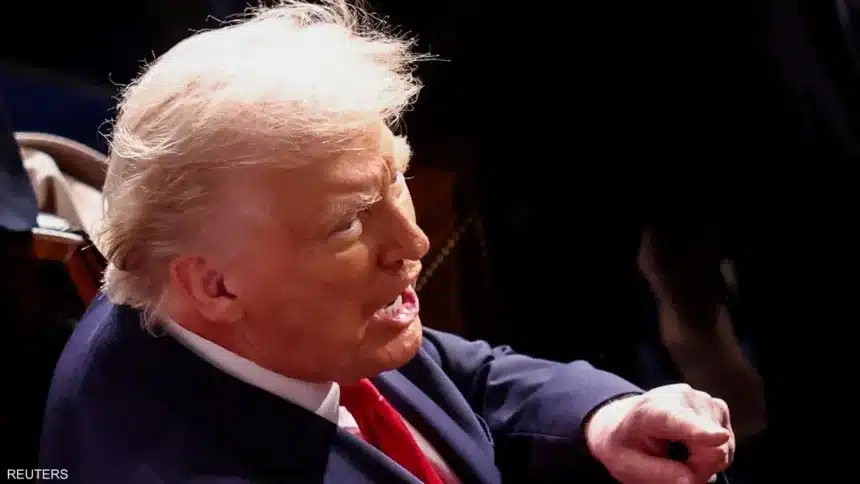
Trump did not hide his dissatisfaction with the resolution. He criticized senators who supported it on Truth Social, arguing that the vote came at an inappropriate time and lacked practical value.
He claimed Iran was in an increasingly difficult position and closer to making concessions, adding that such political moves only complicate his mission, while insisting that he would continue pursuing his objectives.
The president had previously criticized Democrats and some Republicans who backed the measure during debates in the House of Representatives, arguing that his political opponents were determined to deny him any new political achievement.
Meanwhile, Senate Democratic Leader Chuck Schumer intensified his criticism of Trump before the vote, saying Americans had paid the price for what he described as the “historic mistake” of entering into war with Iran, arguing that the administration should never have become involved in the conflict.
On the other hand, Senate Foreign Relations Committee Chairman Jim Risch urged lawmakers to reject the resolution, warning that its approval could send negative signals to Tehran.
Risch argued that adopting the measure might encourage Iran to withdraw from ongoing negotiations and called for giving diplomacy a full opportunity to succeed, as international actors await the outcome of talks aimed at solidifying the ceasefire and reshaping relations between Washington and Tehran.
United News Network (UNN Arabic)
An independent media platform providing reliable news and objective analysis, dedicated to promoting peace and cultural dialogue around the world, conveying the truth, and building bridges of understanding between peoples.
For more news, visit our homepage:
Author: Counselor Faisal Al-Mutairi
Publication Date: June 24, 2026
Last Updated: June 2026