
The Russia–Ukraine war continues to cast its shadow over Russia’s security and economic landscape. As Moscow announced that it had thwarted a large-scale overnight Ukrainian drone attack targeting multiple Russian regions, authorities reported the destruction of hundreds of drones and casualties in one border area. Meanwhile, debate continues over the Russian economy’s ability to withstand Western sanctions and the growing costs of war.
Russia Says It Downed 323 Ukrainian Drones
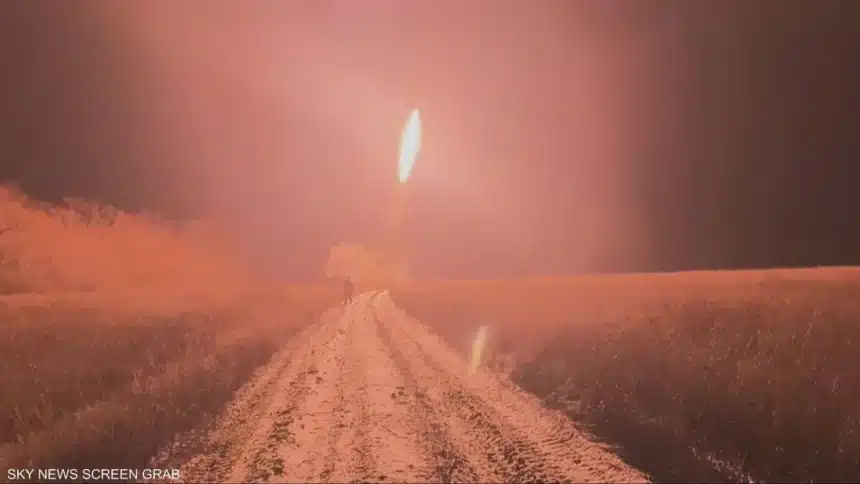
Russia’s Ministry of Defense announced on Wednesday morning that its air defense systems had shot down and destroyed 323 Ukrainian drones overnight, marking one of the largest waves of aerial attacks against Russian territory in recent months.
In a statement, the ministry said interception operations took place across numerous Russian regions, including Astrakhan, Belgorod, Bryansk, Voronezh, Volgograd, Kaluga, Kursk, Lipetsk, Nizhny Novgorod, Oryol, Orenburg, Penza, Rostov, Ryazan, Saratov, Smolensk, Tula, and Moscow, as well as Krasnodar Krai and the Republic of Crimea.
The ministry added that additional drones were intercepted over the Black Sea and the Sea of Azov, stressing that the attacks were successfully repelled before reaching their intended targets.
In a related development, the emergency operations center in Russia’s southwestern Belgorod region reported that one person was killed and another injured in a Ukrainian drone strike on a border village.
Local authorities stated that the attack targeted the village of Privetny in the Veydelevsky District but provided no further details regarding the extent of the damage or the nature of the targeted site.
Russian Economy Between War Pressures and Sanctions
As military confrontation continues, Western warnings about the economic consequences of the war and sanctions imposed on Moscow have intensified, with forecasts pointing to slower growth and mounting military expenditures.
Despite these pressures, some economic indicators present a somewhat different picture. Unemployment remains around 2 percent, raising questions about the Russian economy’s ability to maintain employment levels and absorb the ongoing impact of the war.
In this context, Asif Malham, Director of the JSM Center for Research and Studies, offered an assessment of Russia’s economic situation, noting that Western sanctions have indeed left visible effects on the economy, but Moscow has gradually adapted to the sanctions environment and reduced their impact compared to the early stages of the crisis.
He explained that the Russian economy has managed to limit its decline in recent months, with estimates from Russia’s Ministry of Economic Development indicating that contraction has remained at only 0.3 percent. This has helped prevent widespread job losses and preserve overall economic activity.
Oil Revenues and Eastern Partnerships Support Resilience
According to Malham, rising oil prices have played a major role in easing economic pressures this year by boosting government revenues and offsetting part of the losses caused by sanctions and the war.
However, he emphasized that Russia’s resilience is not based solely on energy prices. It also relies on expanding economic relations with Eastern countries, particularly China and India, as well as growing regional economic cooperation in recent years.
He noted that deepening economic ties with Beijing have supported the Russian economy and revived momentum for several strategic projects, including the Power of Siberia pipeline, one of Russia’s most important energy export routes to Asian markets.
Oil Sector Losses and Domestic Financing
At the same time, Malham acknowledged that Russia’s oil sector has suffered substantial losses due to Ukrainian attacks on energy infrastructure.
He estimated that direct losses since the start of the war have reached approximately one trillion rubles, equivalent to around $15 billion.
These losses include damage to facilities and equipment, as well as maintenance and reconstruction costs. He added that most oil facilities in the European part of Russia have been targeted, with only a limited number of sites in the Far East remaining unaffected.
Although the budget deficit this year has increased by roughly two and a half times compared to previous estimates, Malham believes the situation remains manageable because the Russian government relies primarily on domestic funding sources. Around 85 percent of borrowing comes from local institutions and pension funds, while external borrowing accounts for no more than 15 percent.
The researcher concluded that the continued low unemployment rate remains one of the strongest indicators of the Russian economy’s resilience, reflecting Moscow’s ability so far to maintain production activity and labor market stability despite the ongoing war, Western sanctions, and increasing pressure on the energy sector.
United News Network (UNN Arabic)
An independent media platform providing reliable news and objective analysis, aiming to promote peace and cultural dialogue around the world, convey the truth, and build bridges of understanding among peoples.
For more news, visit the homepage:
Author: Counselor Faisal Al-Mutairi
Publication Date: June 24, 2026
Last Updated: June 2026