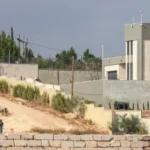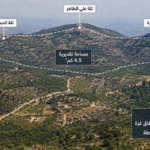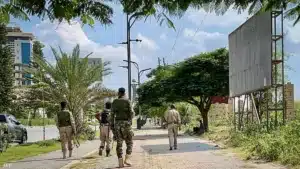

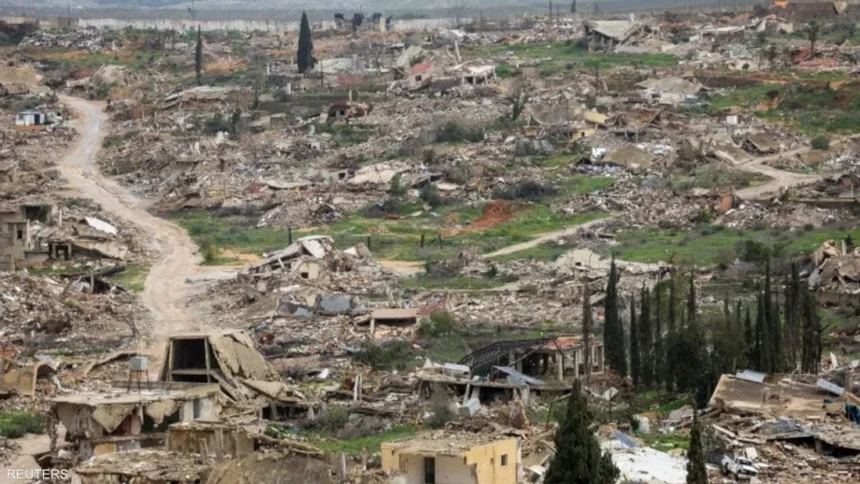
Satellite imagery and video footage reveal that Israeli demolition and bulldozing operations in southern Lebanon continued despite the reduced intensity of fighting, extending to residential neighborhoods, roads, civilian facilities, and agricultural land, in a development that makes it more difficult for tens of thousands of residents to return to their areas.
A visual investigation conducted by the “Financial Times” in cooperation with the “Lighthouse Reports” organization showed that the scale of destruction went beyond targeting individual buildings, gradually extending from village centers to their outskirts through systematic explosions and the use of bulldozers and heavy machinery.
According to Lebanon’s National Council for Scientific Research, around 85,000 housing units in the south of the country were damaged or destroyed, with the actual figure likely to be higher, as between 20% and 30% of buildings have not been assessed due to the continuation of operations and the difficulty of accessing several areas.
Villages Where the Scope of Destruction Is Expanding
The investigation analyzed satellite images of the towns of Khiam, Taybeh, Bint Jbeil, and Haddatha, concluding that removal operations had affected large areas within their municipal boundaries and were not limited to sites that Israel said were linked to Hezbollah.
These findings are consistent with an earlier analysis by “Bellingcat”, which showed that at least 46 towns and villages out of 54 located within the area designated by Israel as the so-called “Yellow Line” had suffered extensive destruction or had large parts of them leveled to the ground.
Last July, Israeli Defense Minister “Israel Katz” announced that Israeli forces had destroyed all buildings in 24 Lebanese villages, estimating the number of homes completely demolished at between 15,000 and 20,000.
This figure does not necessarily conflict with Lebanese estimates, as “Katz” refers to homes completely destroyed in specific villages, while the National Council for Scientific Research figure includes housing units that were destroyed or damaged to varying degrees across different areas of the south.
The damage did not stop at homes, as the investigation showed the destruction of water and electricity networks, schools, and medical centers, as well as roads and bridges, all of which are essential facilities for the return of residents even in areas where some homes remain standing.
Data from local authorities and the National Council for Scientific Research indicate that at least 2,500 kilometers of water collection, storage, and transportation infrastructure were damaged, including pipelines, wells, and reservoirs.
Bridges built over the Litani River were also destroyed, with only two undergoing partial repairs, while images documented the destruction of solar panels used to operate local wells, including a system supplying a water well in the predominantly Christian town of Debl.
Lebanese authorities say that around 270,000 people remain unable to return to their homes, while the area behind the “Yellow Line” contains 62 villages and farms and represents approximately 6% of Lebanon’s territory.
Agriculture and Heritage in the Crosshairs of Destruction
The effects of the operations also extended to the agricultural sector, as Lebanon’s Ministry of Agriculture estimates that more than 20% of agricultural land and forests in the south have been destroyed, including tens of thousands of olive trees in an area that contributes around 40% of Lebanon’s olive production.
The destruction also affected mosques, libraries, shrines, and archaeological sites, including buildings dating from the 16th and 19th centuries, as well as Roman remains and historic castles.
The Ministry of Environment and human rights organizations documented the use of white phosphorus in populated and agricultural areas. “Human Rights Watch” stated that the use of this substance in aerial explosions over populated areas constitutes a prohibited indiscriminate attack, while Israel says it uses it lawfully to create smoke screens and clear vegetation that could provide cover for armed operations.
Israeli Justifications and Legal Questions
Israel says its operations are aimed at dismantling Hezbollah’s military infrastructure, preventing it from re-establishing itself near the border, and protecting residents of northern Israel, following the group’s launch of thousands of rockets and projectiles during the fighting.
It also justified targeting equipment associated with reconstruction work on the grounds that it could be used to rebuild facilities belonging to the group. However, “Human Rights Watch” said it found no evidence of military targets at four sites targeted by Israel during 2025, where more than 360 bulldozers and excavators were destroyed, in addition to a cement and asphalt plant, describing some of these attacks as “apparent war crimes”.
International law prohibits the destruction of civilian property in the absence of a specific military necessity, and also prohibits collective punishment and forced displacement. Human rights organizations believe that preventing residents from returning, through the continued occupation and destruction of homes and infrastructure, could raise concerns of forced displacement.
Visual evidence indicates that the effects of destruction in southern Lebanon have gone beyond potential military sites to affect homes, water networks, roads, agricultural land, and reconstruction equipment, leaving entire villages without the basic conditions necessary for their residents to return.
United News Network – UNN Arabic
An independent media platform that provides reliable news and objective analysis, and seeks to promote peace and cultural dialogue around the world, to convey the truth and build bridges of understanding among peoples.
For more news, you can visit our homepage:
Author’s Name: Consultant Faisal Al-Mutairi.
Publication Date: August 19, 2026.
Updated: August 2026.