
Taliban Opens the Door to U.S. Investment in Exchange for Easing Restrictions
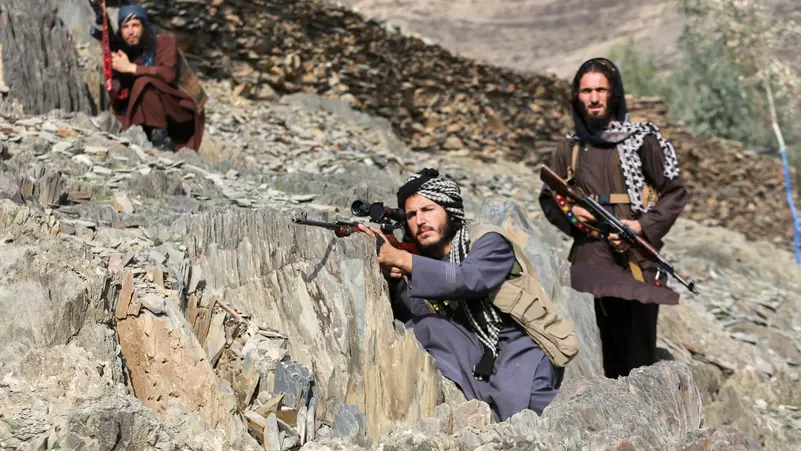
The Taliban is seeking to open a new channel with the administration of U.S. President Donald Trump, relying on an economic proposition centered on making Afghanistan’s vast mineral resources available to American companies, in exchange for efforts to ease the sanctions imposed on the country and release billions of dollars in Afghan assets frozen abroad.
The Financial Times reported that Taliban Foreign Minister Amir Khan Muttaqi expressed Kabul’s willingness to welcome U.S. investment in mining, infrastructure, agriculture, and trade, in an attempt to strengthen economic ties with Washington and turn a new page after years of estrangement.
In an interview with the newspaper from his office in Kabul, Muttaqi said relations between Afghanistan and the United States should not remain bound by the legacy of the nearly 20-year war, but should instead focus on future opportunities for cooperation, stressing that “our economic policy is open.”
The Afghan minister did not clarify whether these proposals had been formally and directly conveyed to the Trump administration, while no official U.S. position on the offer had been issued as of Monday evening.
Vast Mineral Wealth Awaits Investment
Afghanistan possesses significant reserves of mineral resources. Previous U.S. and Afghan geological surveys and estimates have suggested that the total value of these resources could reach $1 trillion or more. They include copper, iron ore, lithium, cobalt, niobium, and gold. However, much of this wealth has remained largely untapped commercially due to decades of war, security challenges, and instability.
Since returning to power in August 2021, the Taliban has announced investments in the mining sector worth approximately $7 billion, most of which have come from countries such as China and Iran. These projects have included initiatives related to the extraction of gold, precious stones, and chromite, which is used in steel production.
Kabul hopes that expanding international investment could provide a pathway toward easing the sanctions imposed on it, as well as recovering Afghan financial reserves frozen abroad. Muttaqi said the sanctions “have not achieved their objectives,” while the Afghan central bank estimates the value of the frozen reserves at approximately $9.5 billion, including nearly $7 billion held in the United States.
Critical Minerals: The Taliban’s Card to Washington
The Afghan move comes as the Taliban intensifies efforts to emerge from the international isolation it has faced since returning to power, taking advantage of the Trump administration’s growing interest in securing critical mineral supplies, diversifying supply chains, and reducing dependence on China.
The group believes that Afghanistan’s substantial reserves of copper, lithium, and rare elements could make it a potential economic partner for Washington, particularly amid growing global competition over resources essential to advanced industries, technology, and energy.
Muttaqi previously called on the United States to reopen its embassy in Kabul and invest in mines, dams, and road networks. At the same time, however, he stressed that Afghanistan would reject any return of a U.S. military presence to Afghan territory.
Washington, meanwhile, continues to deal cautiously with the Taliban government amid ongoing disagreements over a range of issues, including counterterrorism, security, women’s rights, and education. The U.S. State Department has previously stated that its engagement with the Taliban is limited to cases that “are in the interest of the American people.”
While neither the White House nor the U.S. State Department had issued an official comment on the proposal reported by the Financial Times, the Afghan offer places the country’s natural resources at the center of a new attempt to reshape its relationship with Washington.
Observers believe the Taliban is attempting to turn the country’s mineral resources into a bargaining chip to attract the Trump administration. However, securing large-scale U.S. investment will likely remain dependent on overcoming legal, political, and security obstacles, most notably the sanctions imposed on the group, the lack of formal recognition of its government, as well as concerns surrounding stability and the investment environment in Afghanistan.
United News Network – UNN Arabic
An independent media platform providing reliable news and objective analysis, seeking to promote peace and cultural dialogue around the world, convey the truth, and build bridges of understanding among peoples.
For more news, visit our homepage:
UNN Arabic – United News Network
Author: Consultant Faisal Al-Mutairi
Publication Date: August 31, 2026
Last Updated: August 2026