
Salam: “The Framework Agreement” Aims to Achieve a Full Israeli Withdrawal
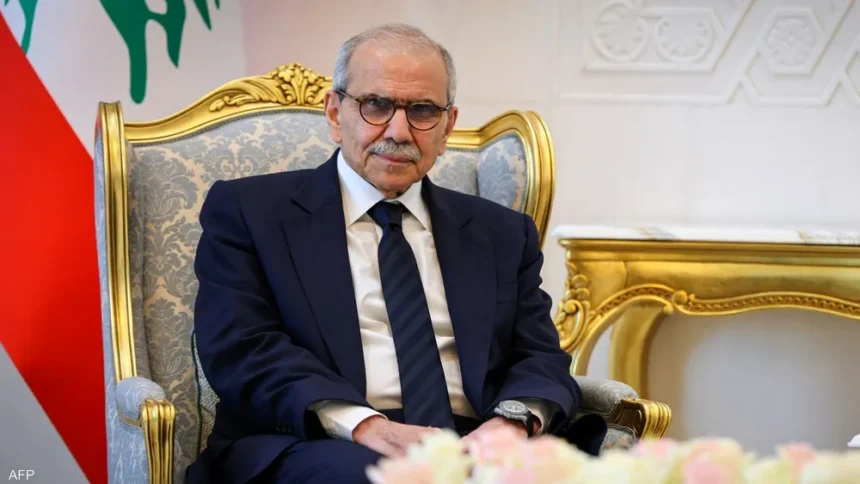
Lebanese Prime Minister Nawaf Salam affirmed that the primary objective of the “Framework Agreement” is to achieve a complete Israeli withdrawal from Lebanese territory. At the same time, he stressed the government’s commitment to ensuring that weapons remain exclusively under the authority of the state, while emphasizing its rejection of any internal confrontation with Hezbollah, within an approach based on maintaining stability, advancing reconstruction efforts, and facilitating the return of residents to their homes.
Salam explained, in statements carried by Lebanese media outlets, that the government continues to implement field strategies aimed at creating the conditions necessary for citizens to return to their southern villages immediately after the withdrawal of Israeli forces. He emphasized that the current stage requires making the most of all available opportunities and avoiding any waste of time in light of the challenges facing the country.
Strategy to Return Residents and Strengthen the State’s Presence in the South
The Prime Minister noted that the authorities are working diligently to provide prefabricated homes to be installed in villages from which Israeli forces are expected to withdraw, with the aim of enabling residents to remain on their land temporarily until reconstruction projects are completed.
He added that the government has also developed a strategy to rehabilitate infrastructure, explaining that work is underway to restore the telecommunications network in southern Lebanon, with expectations that approximately 90% of its operational capacity will be restored within ten days compared to its pre-war status.
Salam confirmed that the state had prepared, several weeks ago, a comprehensive program for returning residents to their homes and lands, covering all service sectors and essential infrastructure. He noted that separate implementation plans have been developed for each area to accelerate the recovery process and restore normal life.
Regarding domestic reforms, he stressed the importance of completing the implementation of the provisions of the Taif Agreement, considering that it is not a rigid text but rather a constitutional framework that requires the completion of provisions that have not yet been implemented, foremost among them expanded administrative decentralization and the implementation of Article 95 concerning the establishment of the National Commission tasked with studying the abolition of political sectarianism.
Restricting Weapons to the State and Upholding Political Principles
On the political front, Salam affirmed that he does not seek a confrontation with Hezbollah, while stressing that the government will not yield to any political pressure or blackmail. He reaffirmed its full commitment to the Taif Agreement, United Nations Security Council Resolution 1701, the declaration of the cessation of hostilities, as well as the commitments set out in the ministerial statement.
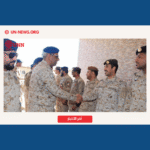
He explained that the government, in coordination with France, Saudi Arabia, Qatar, and other countries, had called for holding a conference in Paris to support the Lebanese Army and strengthen its capabilities, as the institution entrusted with protecting the country and extending the state’s authority across all Lebanese territory, while emphasizing the rejection of any slide into internal conflict or civil war.
He added that the Council of Ministers had requested the Army Command to prepare an implementation plan to ensure that weapons remain exclusively under the authority of the state. The plan has since been completed and presented to the Council, which welcomed it before beginning the implementation of its first phase. However, developments on the ground required updating the plan to reflect the latest circumstances.
Regarding the negotiation process, Salam stated that any move toward negotiations must remain fully aligned with national principles and the ministerial statement. He noted that the “Framework Agreement” aims to establish a clear path leading to a full Israeli withdrawal, the return of residents to their villages, and the launch of the reconstruction process, with the possibility of agreeing on a timetable during upcoming rounds of negotiations.
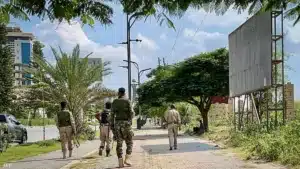
He pointed out that the anticipated withdrawal includes a number of villages, including Zawtar al-Gharbiya and Zawtar al-Sharqiya, after which the Lebanese Army will immediately deploy there following the withdrawal of Israeli forces, ensuring the extension of state authority and the strengthening of stability.
In concluding his remarks, Salam affirmed that Lebanon continues to document what it considers violations of international humanitarian law, noting that this process could constitute an important legal instrument if negotiations stall or deviate from their objectives. He cited South Africa’s experience in managing litigation during negotiation phases as an example.
He stressed that Lebanon did not choose the path of negotiations voluntarily, but was compelled to do so after two wars that left thousands of victims, in addition to significant economic and human losses. He emphasized that the ultimate objective is to end the cycle of conflict, ensure the safe and dignified return of the people of southern Lebanon to their homes, and establish long-term stability.
United News Network – UNN Arabic
An independent media platform providing reliable news and objective analysis, dedicated to promoting peace and cultural dialogue around the world by conveying the truth and building bridges of understanding among peoples.
For more news, please visit our homepage:
Author: Counselor Faisal Al-Mutairi
Publication Date: July 2, 2026
Last Updated: July 2026