
Four days before Israel’s elections, the country’s security and military policies appear unlikely to change with a change in leadership. Strategic constants continue to place confronting Iran at the top of Israel’s priorities, maintain military force as a primary tool for managing conflicts, and leave the establishment of a Palestinian state as an unlikely prospect.
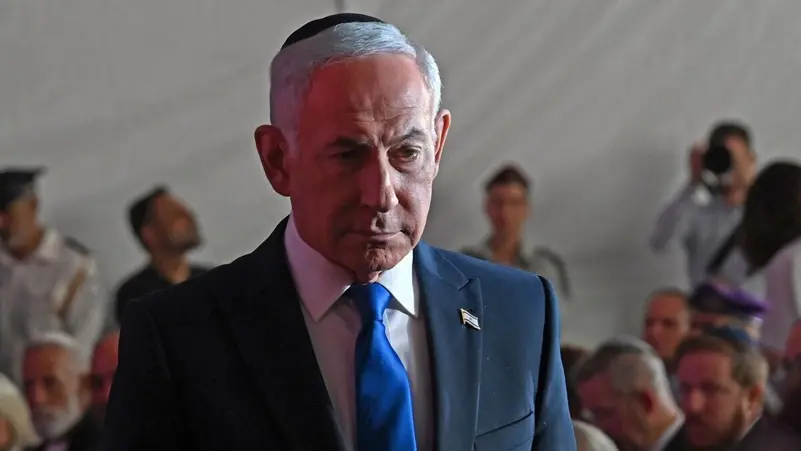
As Benjamin Netanyahu and his rivals compete to lead the next government, analysts say their differences concern how to manage confrontations and where to draw the line on escalation, rather than the substance of policy itself. This comes amid the repercussions of the wars that followed October 7, 2023, which reshaped Israel’s priorities and affected prospects for stability in the Middle East, according to a Reuters report.
Although next week’s elections could produce new leadership, this would not necessarily mean a change in Israel’s security principles, which have become firmly entrenched since the October 7 attack and the subsequent wars in Gaza, Lebanon, and Iran. These events have reinforced Israel’s conviction that its adversaries must be confronted before their threats turn into direct dangers.
In this context, Israeli security policy is moving toward an even harder line. A victory for Netanyahu, backed by his far-right coalition allies, could give him greater latitude to escalate the confrontation with Iran, tighten control over the occupied West Bank, and sideline diplomacy.
Israeli security doctrine rests on three main pillars: weakening Iran, maintaining control over buffer zones beyond Israel’s borders, and relying on military force to deter adversaries. The elections scheduled for next Tuesday therefore appear less likely to mark a decisive turning point than to serve as a test of the region’s trajectory toward a prolonged confrontation, in which the intensity of the wars may fluctuate while the underlying conflicts remain unresolved.
In this regard, Aviv Bushinsky, a former adviser to Netanyahu, said that re-election would give Netanyahu an opportunity to pursue what he considers necessary, including further settlement expansion and the continuation of wars against Iran, Hamas, and Hezbollah. He added that the next phase could bring policies more aggressive than those currently in place.
Bushinsky described discussion of the Palestinian issue as “a waste of time” as long as Iran remains in its current state.
Offering an indication of his security priorities, Netanyahu said on Sunday that prevention and attack must take precedence over containment and defense. This includes launching preemptive strikes to thwart emerging threats, strengthening Israel’s position as a regional power, and increasing its independence in arms production.
The elections pit Netanyahu’s right-wing Likud party and his far-right allies against an opposition led by Yashar, headed by former military chief Gadi Eisenkot. However, this contest does not necessarily indicate any fundamental disagreements over the future of the Palestinian issue.
In this regard, Palestinian analyst Ghassan Khatib ruled out a radical shift in Israeli policy toward the Palestinians, noting that political parties are competing to adopt harder-line positions amid the growing influence of right-wing views within Israeli society.
Khatib said any potential change might be limited to style and presentation, without affecting the substance of a policy based on rejecting the establishment of a Palestinian state and continuing settlement expansion. He argued that both positions enjoy broad consensus within Israel.
A government led by forces opposed to Netanyahu might seek to improve Israel’s international image by curbing some acts of violence committed by settlers or making the visible pace of settlement expansion less pronounced. However, Khatib believes that even if such measures were taken, they would amount to a change in approach rather than a shift in the underlying policy.
Regarding the confrontation with Iran, observers say it has become a central pillar of Israel’s security framework, regardless of who wins the elections. A researcher at the Carnegie Middle East Center points to a shared outlook between the security establishment and a broad segment of the political class, centered on confronting Iran, maintaining a strategy of “forward defense,” and relying on military deterrence. This consensus reduces the likelihood of major political shifts.
U.S. President Donald Trump’s praise of Netanyahu, whom he described as “a great wartime prime minister,” has also strengthened expectations that Netanyahu will seek to bring the confrontation with Tehran to a decisive conclusion if he remains in power.
Netanyahu’s stated objectives go beyond containing Iran and extend to overthrowing its ruling system. At a ceremony marking the graduation of military officers, he said the Iranian threat could only be eliminated permanently by bringing down the regime. He added that these were the instructions he was issuing to the military, the Mossad intelligence agency, and the rest of Israel’s security services.
In another speech later in the week, Netanyahu reiterated that completing the mission would require the overthrow of the Iranian regime, which he described as “the head of the poisonous octopus.”
United News Network – UNN Arabic
An independent media platform that provides reliable news and objective analysis, and seeks to promote peace and cultural dialogue around the world, convey the truth, and build bridges of understanding among peoples.
For more news, visit our homepage:
Author: Counselor Faisal Al-Mutairi.
Publication Date: October 22, 2026.
Updated: October 2026.