إقرأ الان
Notification

Unannounced displacement in the West Bank: How is Israel seeking to reshape the demographic reality?

9 Min Read

The West Bank between settlement expansion and “silent displacement”: A demographic reshaping driven by coercion and violence

The occupied West Bank is witnessing a rapid transformation in its demographic and geographic structure amid the accelerating pace of settlement expansion and the increasing violence carried out by settlers. This has created a field reality described by Palestinians and human rights organizations as “unannounced displacement” or “silent displacement.” This form of displacement is implemented through multiple tools that are not limited to direct eviction, but also include the imposition of a coercive environment that gradually forces residents to leave their homes.

These developments coincide with the growth of settlement outposts and the rise in assault rates in the main towns and villages of the West Bank and occupied Jerusalem. This reality is reshaping daily life, destabilizing Palestinian communities, and increasing the economic and security pressures faced by the population.

According to a report published two days ago by Middle East Eye, features of this transformation were documented through an account of daily life and travel between Ramallah and Nablus—where a journey that should be relatively short has turned into hours of suffering due to military checkpoints, road closures, and rising security risks along the routes. This reflects the extent of the restrictions imposed on movement and daily life in the West Bank.

Field measures reshaping the demographic reality in the West Bank

The report highlights a system of administrative and military measures, including home demolitions, denial of building permits, and tightening movement restrictions, as central tools in consolidating a new reality on the ground. In areas such as “Masafer Yatta” south of Hebron, decisions have been issued preventing Palestinians from building or developing their communities, under security pretexts related to the area’s use for military training purposes, which threatens to displace hundreds of families who have lived in the area for decades.

In East Jerusalem, the “Al-Bustan neighborhood” — located within the Silwan area — has witnessed the demolition of more than 57 homes over the past two years as part of accelerating urban changes in the area. Available data also indicate that at least eight additional homes are under threat of demolition in the coming weeks, which further deepens residents’ anxiety and uncertainty about the future of their presence in the neighborhood. These developments coincide with plans to establish the “Kings Garden” project in the same location, where residents of Al-Bustan have been asked to evacuate their homes to make way for the project’s implementation.

“Kings Garden” is a religious and tourist-oriented park linked to biblical narratives attributed to King Solomon, who is believed—according to Israeli accounts—to have spent time in the area around 3,000 years ago. This has raised increasing concerns among Palestinian residents regarding the project’s impact on the urban and demographic fabric of Silwan.

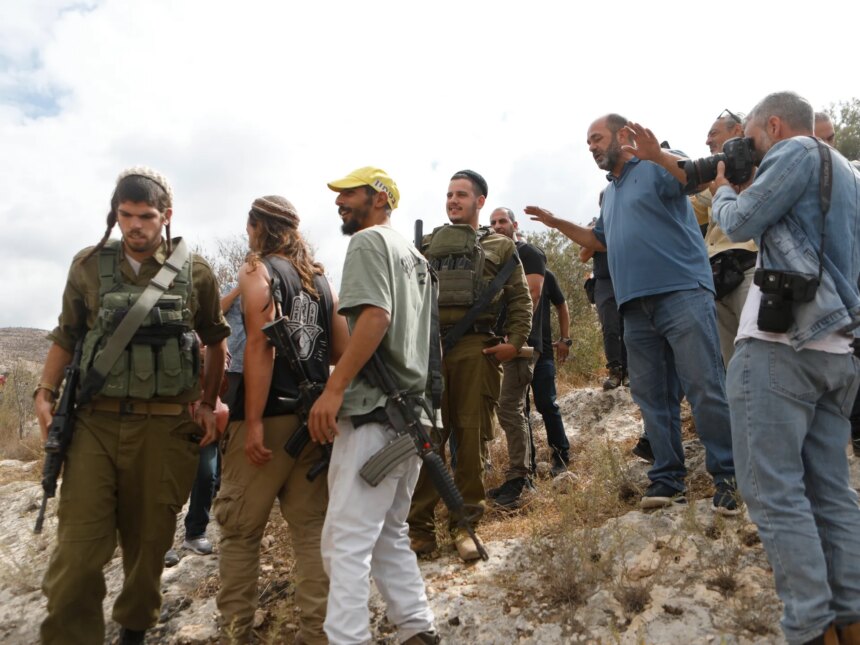
Settler attacks against Palestinians and their property are also increasing, including the burning of agricultural crops, vandalizing vehicles, and assaults on entire villages, especially in areas near settlement outposts described as the most extremist. According to local testimonies, these attacks are no longer isolated incidents but have become a repeated pattern imposing continuous pressure on residents and making it increasingly difficult to remain and maintain stability in several areas. These policies come within a growing pattern of a “coercive environment” that leads to the displacement of Palestinians from their communities.

فلسطين-الخليل-أم الخير- طلبة لا يستطيعون الذهاب إلى مدارسهم بسبب إغلاق المستوطنين طريقهم بالأسلاك الشائكة -الحزيرة - أبريل 2026

Settlement expansion and demographic transformations

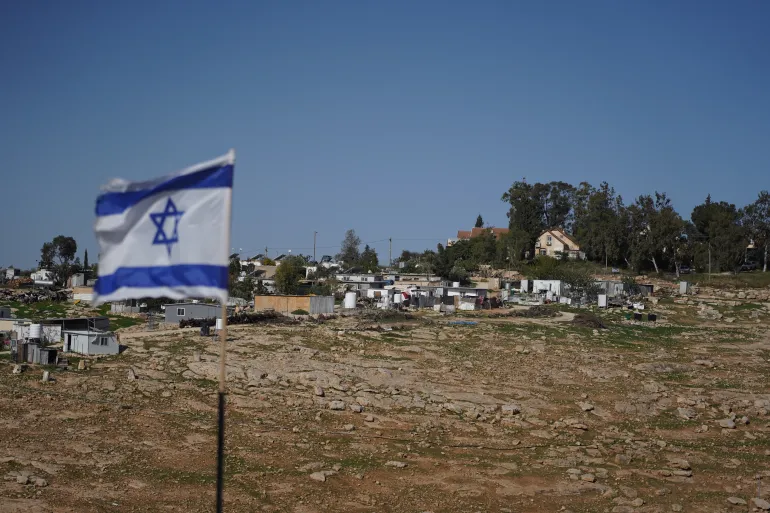
The aforementioned developments coincide with a notable expansion of what are known as unauthorized settlement outposts. These are sites that typically begin as small points on hilltops and then gradually turn into permanent communities that later receive political and financial support from the Israeli government. This expansion is not limited to construction activities alone, but also extends to the control of roads, grazing lands, and agricultural areas, which leads to reducing the spaces available to Palestinians and reshaping the distribution of land control in an unequal manner.

From a legal perspective, international law expert “Anis Qassem” considers that the displacement processes affecting Palestinians in the West Bank and Gaza Strip fall within the framework of genocide crimes, noting that these practices contribute to the fragmentation of the Palestinian social fabric and result in profound effects including deprivation and impoverishment. Qassem stated in his interview with Al Jazeera Net that these violations are not merely breaches of international law, but reflect a deliberate intent to harm the Palestinian individual and society.

He added that any Israeli measures toward annexing the West Bank and the Jordan Valley, in light of statements issued by Israeli officials and practices by extremist settlers, constitute a direct and explicit violation of the provisions of the Wadi Araba Treaty, particularly its stipulation prohibiting the forced transfer of population by either party. He also warned that the consequences of these policies are not limited to the legal dimension, but may extend to reshaping the demographic reality by pushing Palestinians toward displacement, including the possibility of their partial or complete relocation toward Jordan—a scenario that, in his view, requires a high level of political and security vigilance.

Qassem warned that Israeli policies in the West Bank are working to reshape the demographic reality by pushing residents toward displacement.

المحامي الفلسطيني أنيس فوزي قاسم

Forced displacement and escalating violations

According to the United Nations Office of the High Commissioner for Human Rights, these policies fall within a growing pattern of a “coercive environment” that leads to the displacement of Palestinians from their communities. Data indicates the displacement of thousands of Palestinians in recent years as a result of home demolitions, settler violence, or restrictions on access to agricultural land and livelihood sources. In addition, reports suggest that tens of thousands have been forced to leave camps and villages due to military operations and increasing security pressures.

The United Nations warns that some measures, such as eviction operations in East Jerusalem and decisions to demolish Palestinian villages, may amount to “forcible transfer,” which constitutes a serious violation of international law and may amount to war crimes if carried out as part of a widespread and systematic pattern. It also affirms that the continuation of these policies contributes significantly to the fragmentation of Palestinian society and leads to the creation of a new demographic reality that is difficult to reverse later.

On the other hand, the Commission for Combating the Wall and Settlement documented 443 attacks carried out by Israeli settlers in the West Bank during last March, resulting in the killing of 9 Palestinians and the displacement of 6 Bedouin communities.

International human rights organizations indicate that this reality is linked to a rise in settler violence, which typically occurs without effective legal accountability, as thousands of incidents are recorded annually without real judicial follow-up. This reinforces a sense of lack of protection among Palestinians and pushes some communities to leave their lands to avoid ongoing escalation.

United News Network – UNN Arabic

An independent media platform providing reliable news and objective analysis, seeking to promote peace and cultural dialogue worldwide, convey the truth, and build bridges of understanding between peoples.

For more news, you can visit our homepage:
https://un-news.org

Writer: Advisor Faisal Al-Mutairi
Publication date: 17 May 2026
Last updated:

Share This Article
Leave a Comment

Leave a Reply

Your email address will not be published. Required fields are marked *