
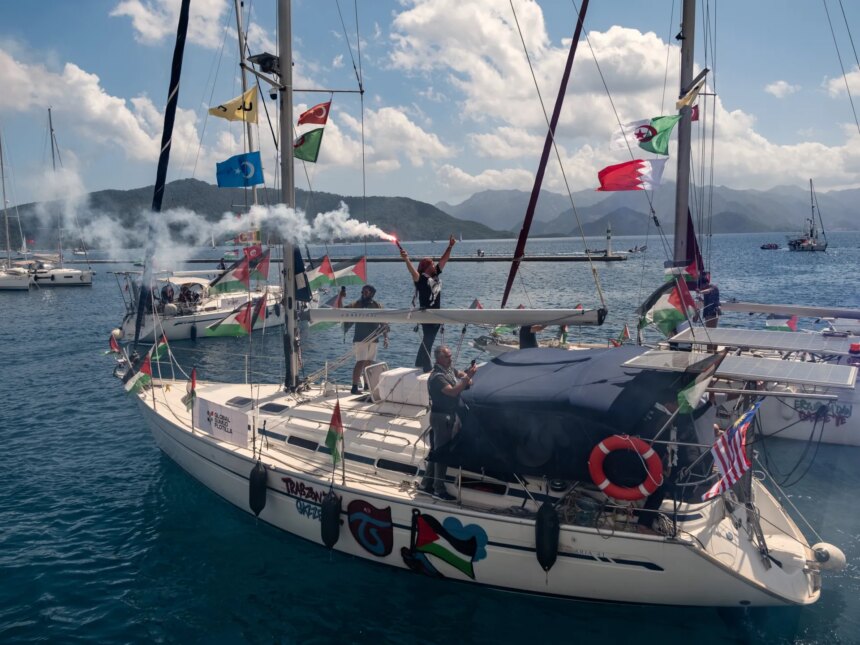
Israeli control over the “Resilience Flotilla” and the arrest of hundreds of activists
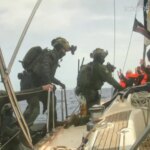
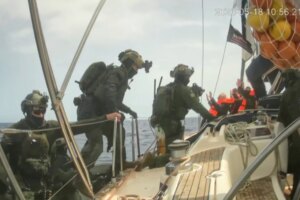
An Israeli security source reported recently that the Israeli army seized more than 40 boats from the Global Resilience Flotilla heading to the Gaza Strip, and arrested hundreds of activists, at a time when international condemnations of the Israeli attacks on the flotilla continued.
The Israeli website Walla quoted the source as saying that Defense Minister Yisrael Katz had been informed that the Israeli navy had so far taken control of more than 40 boats and ships, and arrested over 300 activists out of about 500 participants, noting that the takeover operation had not yet been completed for all flotilla vessels.
The source added, quoting Katz, that the political leadership had made its decision regarding how to deal with the activists—either by transferring them into Israel or handing them over to another country in the region. He also clarified that the boats not yet taken control of are still in the Mediterranean Sea.
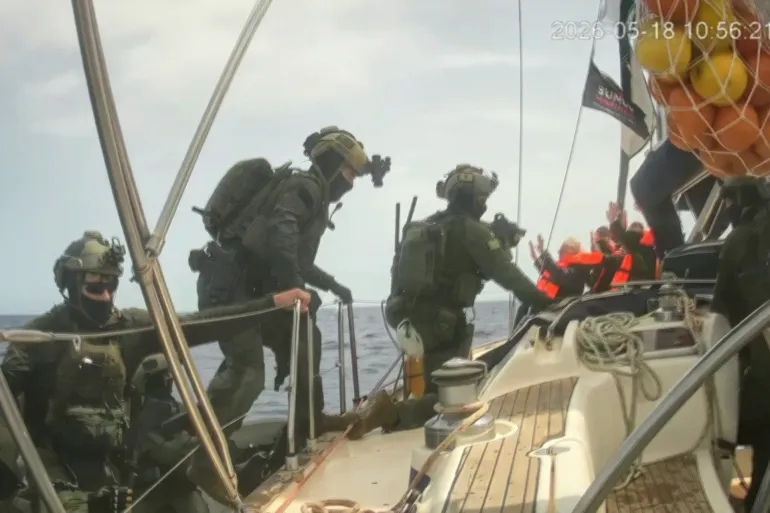
Israel’s army seizes more than 40 boats from the Global “Resilience Flotilla” (Reuters)
Widespread international condemnations and demands for the release of “Resilience Flotilla” activists
On another front, Turkey, Bangladesh, Brazil, Indonesia, Spain, Colombia, Libya, the Maldives, Pakistan, and Jordan issued a joint statement in which they strongly and firmly condemned the repeated Israeli attacks on the Global Resilience Flotilla.
The statement considered that the assaults carried out on the civilian ships and the detention of activists constitute blatant violations of international law and humanitarian law.
The foreign ministers of the ten countries expressed their deep concern regarding the safety and security of the civilian participants in the flotilla, calling for the immediate release of all detained activists and ensuring that their rights and dignity are respected.
They also stressed the need for the international community to shoulder its moral and legal responsibilities in protecting civilians and humanitarian missions, and to take practical measures to put an end to the culture of impunity and ensure accountability for these violations.
For its part, the United Nations expressed its deep concern about the safety of the detained activists. UN Secretary-General spokesperson Farhan Haq said that the international organization is seeking to ensure the safety of all those who were on board the flotilla, affirming the need to handle the situation peacefully and not expose any of the activists to harm.
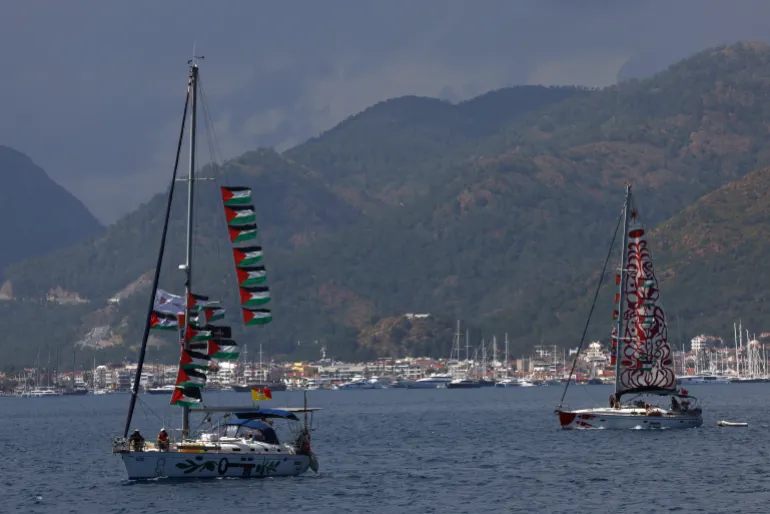
Several countries condemn Israeli attacks on the “Resilience Flotilla” (Reuters)
Previous attacks and ongoing humanitarian repercussions in Gaza
The Global Resilience Flotilla set sail on Thursday from the Turkish city of Marmaris, with the participation of 54 boats and ships, in a new attempt to break the Israeli blockade imposed on the Gaza Strip since 2007.
On April 29, 2026, the Israeli army had previously launched an attack in international waters off the island of Crete targeting boats belonging to the flotilla, which included about 345 participants from 39 countries, among them Turkish nationals.
In that attack, Israel managed to seize 21 boats carrying around 175 activists, while the remaining boats continued their journey toward Greek territorial waters.
Later, in international waters, Israeli forces released the activists except for two — one Spanish and one Brazilian — who were transferred to detention centers inside Israel before being deported at a later stage.
These developments come amid extremely dire humanitarian conditions endured by about 2.4 million Palestinians in the Gaza Strip, including around 1.5 million displaced people, under the Israeli genocide that has left more than 72,000 martyrs and over 172,000 wounded, most of them children and women.
Despite the ceasefire announced on October 10, 2025, Israel continues its assaults in the Strip by restricting the entry of humanitarian aid and carrying out daily bombardments, which have resulted in the killing of 877 Palestinians and the injury of another 2,602, according to local data.
Escalating fallout of the “Resilience Flotilla”: repatriation efforts and documentation of violations
Regarding the latest developments surrounding the Global Resilience Flotilla, Turkish Foreign Minister Hakan Fidan announced on Platform “X” that Ankara is working to repatriate its citizens, along with participants from several other countries, back to Türkiye via special flights.
Fidan affirmed his country’s commitment to protecting the rights of its nationals, in addition to upholding what he described as Türkiye’s humanitarian responsibility toward civilians in Gaza, stressing the importance of continuing support for the Palestinian people.
Meanwhile, the Arab rights center in Israel, Adalah, documented what it described as physical and psychological violations committed against participants during the interception operation, noting that there were injuries of varying severity, including cases requiring hospitalization and others suspected of suffering fractures and breathing difficulties.
The center also reported testimonies alleging the use of electric shocks and rubber bullets during the takeover and transfer process, calling for an urgent legal investigation and the immediate release of all detainees.
Israeli naval forces had intercepted the flotilla in international waters in the Mediterranean Sea, seized its vessels, and arrested around 430 activists before transferring them to Ashdod Port. Organizers condemned the operation and accused Israeli forces of damaging navigation systems and endangering civilians in open waters.
The interception of the “Resilience Flotilla” and the arrest of hundreds of activists has once again sparked wide international debate over the limits of force in dealing with civilian initiatives in international waters. While Tel Aviv insists the move falls within security measures, mounting condemnations from states and human rights groups describe the events as a clear violation of international humanitarian law. The situation reflects the continued complexity of the Gaza blockade file and its transformation into a political and humanitarian pressure arena open to further escalation and internationalization.
United News Network – UNN Arabic
An independent media platform delivering reliable news and objective analyses, aiming to promote peace and cultural dialogue worldwide, convey truth, and build bridges of understanding between peoples.
For more news, you can visit our homepage:
https://un-news.org
Author: Advisor Faisal Al-Mutairi
Publication date: May 21, 2026
Last updated: May 21, 2026