
Statements and reports regarding hosting arrangements
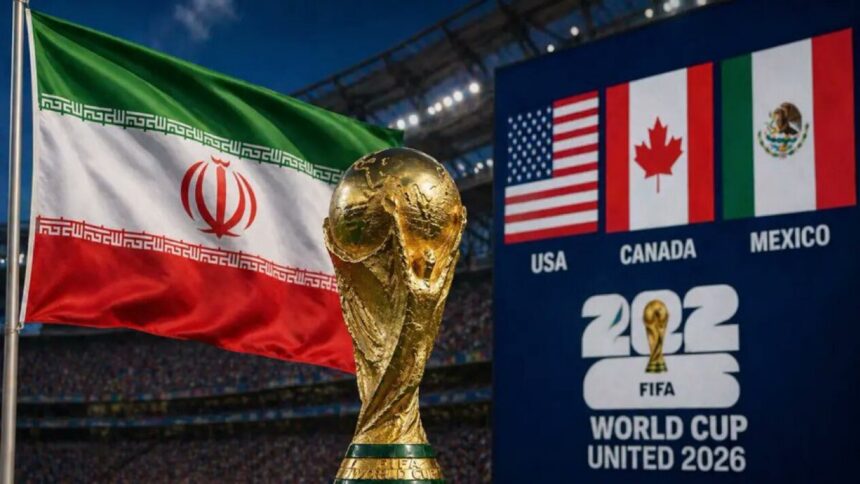
Media reports have circulated statements attributed to Iranian official sources indicating the existence of reassurances and guarantees related to the organizational arrangements for the 2026 World Cup, which will be jointly hosted by the United States, Mexico, and Canada. These reports focus on aspects related to entry procedures, visas, and logistical coordination for delegations participating in the tournament.
These reports suggest that there is ongoing coordination between the International Federation of Association Football and the host countries to ensure the provision of an integrated organizational environment, enabling participating teams to carry out their duties without administrative or organizational obstacles, in accordance with the regulations previously adopted by FIFA.
These reports also come amid growing interest in the upcoming edition of the World Cup, especially since it will be held in three different countries for the first time, which requires a higher level of administrative and security coordination between all concerned parties.
FIFA’s position on the participation system
According to information issued by the International Federation of Association Football (FIFA), the system of the 2026 World Cup is entirely based on the results of continental qualifiers organized by the various continental confederations under FIFA supervision, where the qualified teams are determined based solely on on-field sporting performance.
The International Federation emphasizes in all its official statements that participation in the tournament is not subject to any political or non-sporting considerations, but rather depends exclusively on the previously approved qualification rules, which ensure equal opportunities for all national teams across different continents.
FIFA also stresses that all teams that successfully pass the qualifiers will have the right to participate in the finals, with the host countries committed to providing all necessary organizational requirements to receive participating delegations in an official and organized manner.
Qualification mechanism and determination of qualified teams
The World Cup relies on an expanded qualification system in which national teams from all continents participate under the supervision of FIFA’s continental confederations. The qualifiers are divided into different stages, through which the qualified teams are determined based solely on sporting results.
This system aims to enhance the principle of sporting fairness and ensure representation of different regions of the world in the final tournament, while applying unified standards that guarantee transparency in the selection of participating teams.
It also contributes to raising the level of competition among national teams, as teams play official matches throughout the qualification period, making qualification for the World Cup a direct result of on-field performance without external factors.
Responsibilities of host countries in organizing the tournament
The three host countries of the 2026 World Cup bear major responsibilities related to providing the necessary infrastructure to host teams and fans, including stadiums, training facilities, transportation, and accommodation services.
These responsibilities also include implementing FIFA standards regarding entry procedures and visas, in addition to ensuring the highest levels of security and safety for all participants in the tournament, including players, technical staff, and fans.
Coordination between local organizing committees and FIFA continues on an ongoing basis to ensure the implementation of all organizational aspects in accordance with international standards, ensuring a smooth and organized tournament without obstacles.
Coordination between FIFA and the organizing countries
FIFA continues to monitor all details related to preparations for the 2026 World Cup through joint committees with the host countries working on developing the implementation plans for the tournament.
This coordination includes logistical, administrative, and security aspects, as well as organizing the movement of teams between host cities in the three countries, ensuring an integrated experience for participating teams.
This cooperation also aims to ensure equal opportunities for all teams and provide a fair competitive environment in line with FIFA rules and regulations.
Importance of the expanded World Cup edition
The 2026 World Cup is considered a distinctive edition in the history of the tournament, as it will see an increase in the number of participating teams to 48, representing a significant expansion compared to previous editions.
This expansion aims to allow more teams from around the world to participate in the biggest football event, enhancing the global reach of the sport and increasing the level of competition within the tournament.
It also requires more precise organization and coordination between host countries and FIFA to ensure the success of the tournament at all levels.
United News Network – UNN Arabic
An independent media platform providing reliable news and objective analysis, aiming to promote peace and cultural dialogue worldwide, conveying truth and building bridges of understanding between peoples.
For more news, you can visit our homepage:
https://un-news.org
Author: Consultant Faisal Al-Mutairi
Publication date: May 18, 2026
Last update: —