
Satellite images detect the destruction of 10 oil tanks in Russian territory
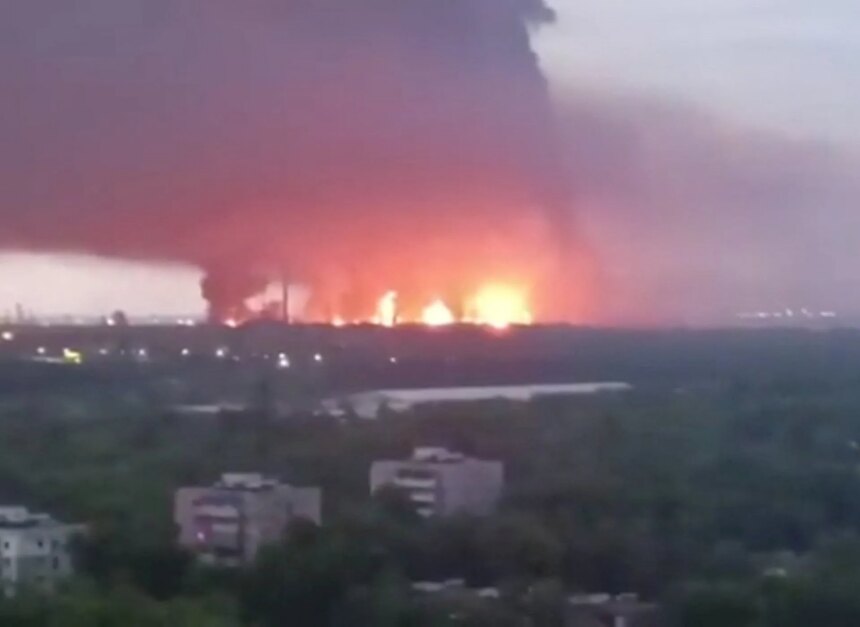
Recent satellite images have revealed extensive damage to Russia’s oil infrastructure, documenting the burning and destruction of 10 oil storage tanks following two separate attacks that targeted vital facilities inside Russian territory.
The satellite images showed the destruction of six tanks at the “Perm” oil facility in western Russia, in addition to four other tanks at the “Solnechnogorsk” oil pumping station located on the outskirts of the capital, Moscow. This escalation reflects the continuation of the Ukrainian strategy aimed at targeting energy infrastructure and fuel-supply chains deep inside Russia.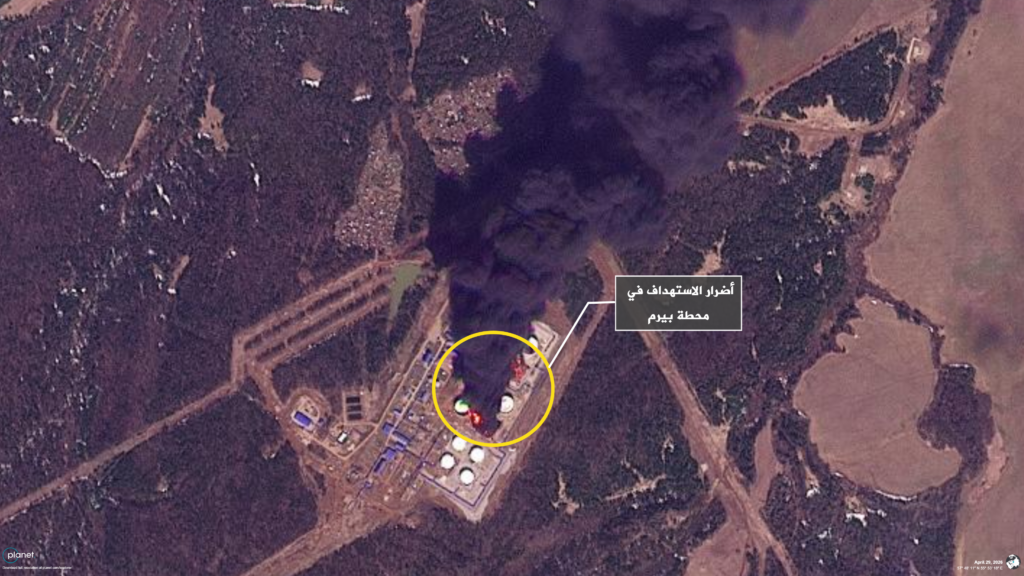 Satellite images show extensive destruction at the Perm refinery (Planet)
Targeting strategic facilities far from the Ukrainian border
Visual comparisons between satellite images taken on April 17 and those captured on May 17 reveal the extent of the damage sustained by the “Perm” refinery, which belongs to the company “Transneft,” following the strike that targeted the facility in late April.
Images captured by the U.S. company “Planet” on April 29 showed massive fires and thick black smoke rising from the site, while the more recent images—taken after the situation was brought under control, the fires extinguished, and the smoke cleared—revealed the burning of six main fuel storage units within the oil complex. This reflects the scale of the losses suffered by a strategic facility located more than 1,500 kilometers from the Ukrainian border.
In a new field development, the scope of the targeting expanded on the night of May 17 to reach the vicinity of the Russian capital, Moscow. Satellite images showed the destruction of an additional four oil tanks within the filling station belonging to “Transneft” in the Solnechnogorsk area near the village of Dorikino.
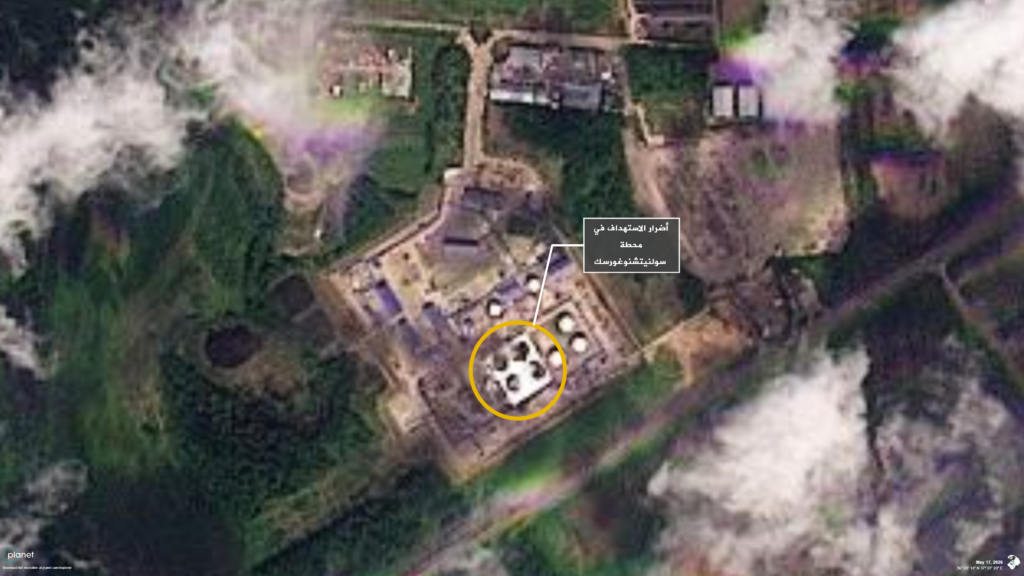
Satellite images reveal extensive destruction at the Solnechnogorsk refinery (Planet)
Drone attacks and escalating tensions between Moscow and Kyiv
The visual data aligns with official statements issued by both sides, as the Ukrainian Security Service announced responsibility for carrying out one of the largest drone attacks on the Moscow region, confirming the successful targeting of the Solnechnogorsk facility, as well as the Moscow oil refinery and other industrial sites.
Meanwhile, both the governor of Moscow Oblast, Andrey Vorobyov, and the mayor of the capital, Sergei Sobyanin, acknowledged that the region had come under a large-scale attack, while Russian authorities confirmed the downing of a significant number of drones.
Despite the interception efforts, falling debris resulted in the deaths of three civilians and injuries to others in the areas of Khimki and Mytyshi, in addition to massive fires that broke out within oil facilities—events documented in widely circulated videos posted by local residents on various social media platforms.
Oil drops amid expectations of easing tensions in the Strait of Hormuz
Oil prices declined by roughly 2% during early Asian trading on Tuesday, following U.S. President Donald Trump’s announcement of the suspension of a planned strike against Iran, in order to give room for a negotiation path aimed at ending the conflict—an indication tied to ongoing regional tensions and their direct impact on global energy markets and maritime traffic in the Strait of Hormuz.
Brent crude futures for July delivery fell by 2.7% to around $109.09 per barrel, while U.S. West Texas Intermediate (WTI) crude for June delivery dropped by 1.3% to $107.28 per barrel. Both benchmarks had reached their highest levels since early May during the previous session amid geopolitical escalation and concerns over oil supply routes.
Markets awaiting developments in the Strait of Hormuz
In this context, analyst Tim Waterer from KCM Trade, as quoted by Reuters, said that Trump’s statements had eased some of the immediate pressure on the markets; however, underlying risks remain—especially as markets await Iran’s response and whether the U.S. remarks represent a genuine move toward de-escalation or merely a temporary tactical step.
Waterer added that developments in the Strait of Hormuz—particularly regarding the movement of oil tankers—would remain a decisive factor in determining the direction of oil prices in the upcoming period. This comes amid continuing tensions that have recently affected the security of oil facilities and global supply flows.
In a related development, data from the U.S. Department of Energy showed a record withdrawal of approximately 9.9 million barrels from the Strategic Petroleum Reserve last week alone, reducing reserves to about 374 million barrels—the lowest level recorded since July 2024.
This comes as concerns grow over the expanding scope of attacks targeting Russia’s energy infrastructure and the potential consequences for global oil markets and supply routes. The scale of the damage revealed by satellite imagery reinforces the likelihood of continued escalation within the ongoing conflict, amid international anticipation of any shifts that could impact energy security and market stability in the coming stage.
United News Network – UNN Arabic
An independent media platform delivering reliable news and objective analysis, committed to promoting peace and intercultural dialogue, conveying the truth, and building bridges of understanding between nations.
For more news, you can visit our homepage:
https://un-news.org
Author: Adviser Faisal Al-Mutairi
Publication date: May 19, 2026
Last updated: