
Leoni Egypt launches a new 80-million-euro industrial project to boost the manufacturing of electrical wiring systems
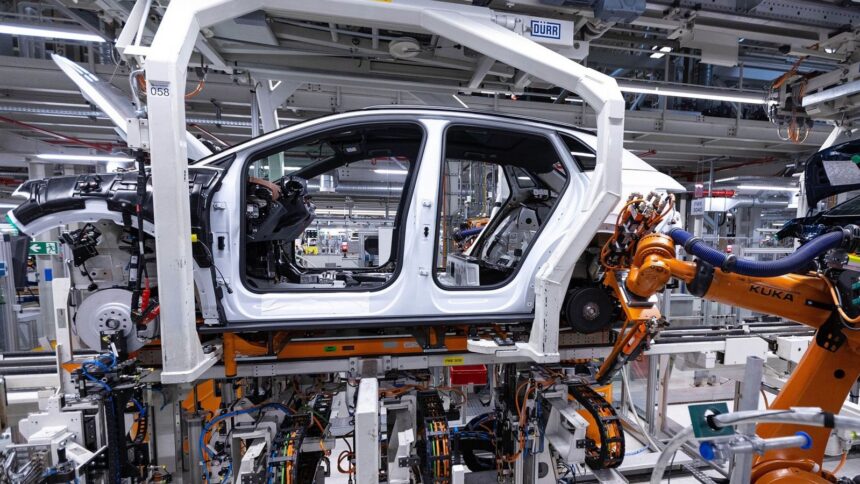
“Leoni Egypt”, a subsidiary of the global German group “Leoni”, intends to inject investments worth 80 million euros by 2028 to establish a new industrial complex specializing in the production of electrical wiring systems for both conventional and electric vehicles. This comes as part of supporting the state’s efforts to localize the automotive industry entirely.
In an interview with Asharq, the company’s Chairman, Sherif El-Desouky, explained that the initial phase of the project began at the start of this year and extends over 15 months with investments approaching 40 million euros, followed by a second phase with similar investment size and execution period.
He added that the new complex is located in Badr City, east of Cairo, and is considered the company’s 16th factory since entering the Egyptian market in 1998. It is built on a 91,000-square-meter plot owned by the company for the first time, compared with its previous factories, which operate on rented spaces totaling nearly 89,000 square meters.
The company expects the project to double its current production capacity of around 100,000 wiring harnesses per day, in addition to creating about 3,000 new job opportunities in its first phase, raising the total number of employees to around 9,000.
In the same context, El-Desouky noted that the new investments represent about two-thirds of the company’s total investments in Egypt since its establishment, which amounted to nearly 120 million euros in machinery, production lines, and various projects.
Global expansion of the electric vehicle industry amid energy and supply chain disruptions
The surge in the electric vehicle market in Thailand and Vietnam—driven by rising sales and expanding investments—comes as part of a broader global shift toward sustainable mobility, supported by government incentives and growing demand for low-emission vehicles, along with expansion in production bases and job opportunities across EV-related industries.
Within this framework, the mentioned industrial growth intersects with other developments in the global automotive supply chain, including investment expansions in essential components such as electrical wiring systems. Leoni Egypt’s strategy to invest 80 million euros in establishing a new industrial complex to support the production of automotive components reflects a growing trend toward localizing supply chains and enhancing production capabilities for both conventional and electric vehicles.
On the other hand, escalating disruptions in global energy markets—including rising engine oil prices and risks of supply shortages—pose additional challenges to this industrial transformation. Since the automotive sector depends directly on the stability of oil-derived supplies, these disruptions highlight the tension between the accelerating shift toward clean energy and the persistent instability in traditional energy systems worldwide.
Smart-car race accelerates the global shift toward electric mobility
Chinese automakers at the Beijing Auto Show continue to showcase the latest autonomous-driving technologies and smart-assistance systems in an effort to strengthen their position in a fiercely competitive global innovation landscape.
This development comes as part of a wider wave of transition toward electric mobility and the expansion of industries related to it worldwide, including the development of supply chains and production components such as wiring systems, within efforts to localize automotive manufacturing.
This technological race reflects a growing global trend toward smarter and more sustainable transportation, amid heightened competition over shaping the future of the automotive industry.
European sanctions on Russia increase pressure on global automotive supply chains
The EU’s decision to include several Chinese companies—among them Yangtze Memory Technologies, a manufacturer of electronic chips—within the 10th package of sanctions imposed on Russia, intersects with rising challenges facing the global automotive sector, particularly concerning the supply of sensitive components.
Industry experts warn that excluding major suppliers such as Yangtze adds further pressure on the European automotive industry at a time when markets are still recovering from previous semiconductor shortages, which had already affected major companies including Nexperia.
Sector estimates indicate that current chip stocks may only be sufficient for a limited period, raising concerns among manufacturers and making it more difficult to secure alternative suppliers—especially as many others have already reached full production capacity. This threatens production stability in the coming period.
Oil-market disruptions weigh on the automotive sector amid rising operational and maintenance costs
The impact of rising global engine-oil prices—driven by disruptions in oil supplies and tensions within energy chains—extends directly to the automotive sector, since conventional vehicles rely on these oils as a key element for operation and routine maintenance.
This rise comes at a time when the global automotive industry is already facing pressures related to production costs and supply chains, threatening to increase the cost of owning and operating vehicles, especially with the risk of shortages in some of the most commonly used lubricants. This may force consumers to delay maintenance or resort to alternatives with lower efficiency.
This situation also reflects on the industry’s push toward accelerating the transition to electric vehicles, which rely far less on engine oils, in an attempt to reduce exposure to oil-market fluctuations and ensure more stable long-term operating costs.
The “Leoni Egypt” project to expand the production of electrical wiring systems reflects a broader trend toward deepening the local manufacturing of automotive components, coinciding with the global growth of the electric vehicle market. This comes at a time when the sector is facing increasing pressure from energy disruptions and supply-chain challenges, reinforcing the strategic importance of localized manufacturing as a means to achieve stability and reduce external risks.
United News Network – UNN Arabic
An independent media platform providing reliable news and objective analysis, aiming to promote peace and cultural dialogue worldwide, delivering truth and building bridges of understanding among peoples.
For more news, visit our homepage:
https://un-news.org
Writer: Counselor Faisal Al-Mutairi
Publication date: 20 May 2026
Last updated: