
A judicial ruling sparks controversy over the identity of a historical and religious site
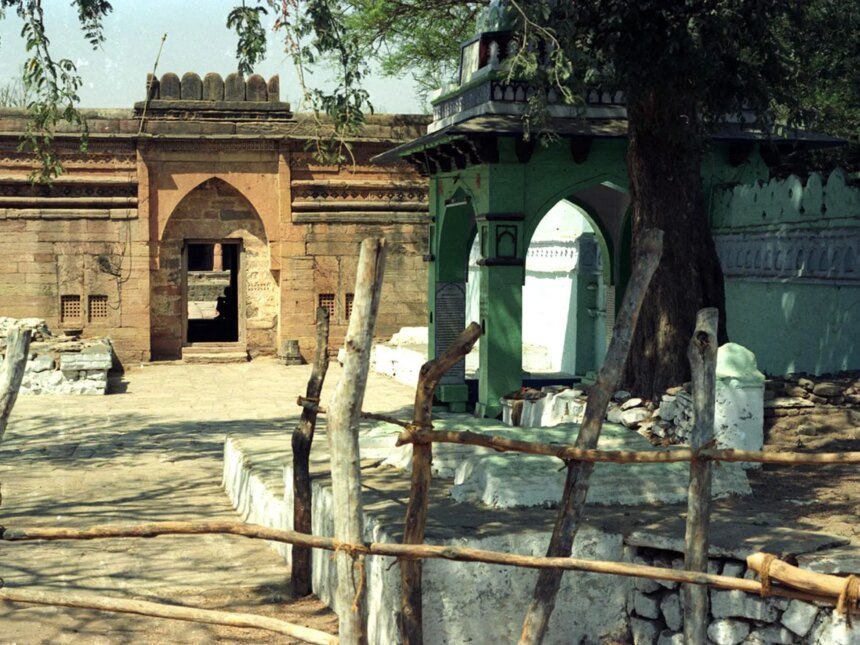
The Kamal Mola Mosque in the Dhar area of Madhya Pradesh, in the heart of India, has for decades been a central part of the life of 78-year-old Muhammad Rafiq. For nearly fifty years, he has regularly delivered the call to prayer from the mosque’s historic minaret, continuing a family tradition begun by his grandfather, Hafiz Rafiq, before India gained independence from British colonial rule in 1947.
However, this long-standing scene is now under threat. Rafiq and Muslim worshippers have been barred from entering the mosque, which lies within the archaeological site of Bhojshala, following a ruling by the state’s High Court based on claims that an older temple exists at the location currently occupied by the mosque.
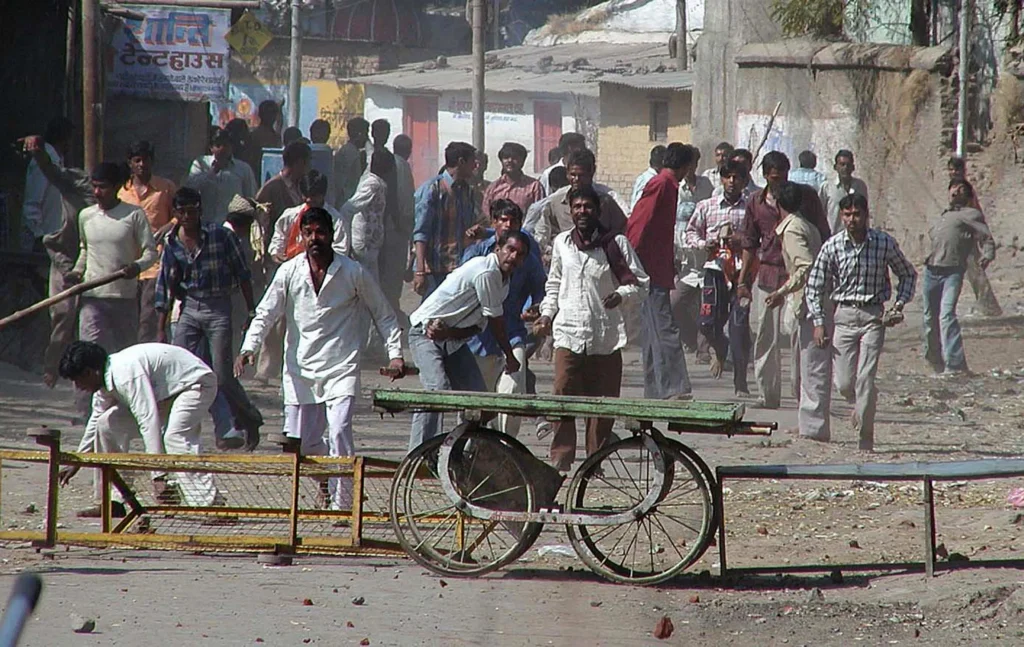
Hindu extremists pelt police with stones after they were pushed back to allow Muslims to pray at the Mola Mosque (AFP)
Accusations of fueling Islamophobia as controversy over the site’s identity escalates
In a move aimed at immediately giving the site a Hindu character, activists hoisted saffron flags associated with the right-wing nationalist Hindutva movement at the archaeological complex, which dates back to the 13th and 14th centuries. Temporary statues of Hindu deities were also placed there amid heavy security deployment.
The court ruled that the location is a temple dedicated to the goddess Vagdevi, known in Hindu belief as the goddess of speech, allowing Hindus to perform their rituals on-site. The ruling relied largely on the findings of a survey conducted two years ago by the Archaeological Survey of India (ASI).
Conversely, the court rejected the Muslim community’s request, while allowing them to seek an alternative location to build a mosque. Their representatives have announced plans to appeal to the Supreme Court.
Meanwhile, historian of the Indian subcontinent Audrey Truschke criticized the ASI’s conclusions, stressing that academic research must rely on rigorous methodologies and clear scientific standards. She added that “politically motivated surveys lack scholarly value.”
Truschke also noted that the growing targeting of mosques in India reflects what she described as “deep-rooted Islamophobia” within Hindu nationalist circles, pointing to ongoing restrictions on Muslims’ freedom to practice their religious rituals in the country.
Escalating “Hindutva” campaigns around religious and historical sites
The controversy surrounding the Kamal Mola complex is not an isolated case in India. Hindu nationalist activists have previously launched similar campaigns claiming that several mosques were built on the ruins of Hindu temples after the arrival of Islam in the Indian subcontinent.
These campaigns have intensified since Prime Minister Narendra Modi came to power in 2014, backed by the Hindu nationalist Bharatiya Janata Party (BJP).
The disputes no longer revolve only around mosques; they have expanded to major historical landmarks such as the Taj Mahal, whose 17th-century Mughal origins have sparked debate despite the fact that it is a mausoleum, not a mosque.
As for the Kamal Mola Mosque dispute, it dates back to the 1950s, when the first claims from Hindu nationalist groups regarding ownership of the site emerged. In 2003, an agreement was reached with the Archaeological Survey of India allowing Hindus to visit the site weekly on Tuesdays, in exchange for allowing Muslims to continue holding Friday prayers at the mosque.
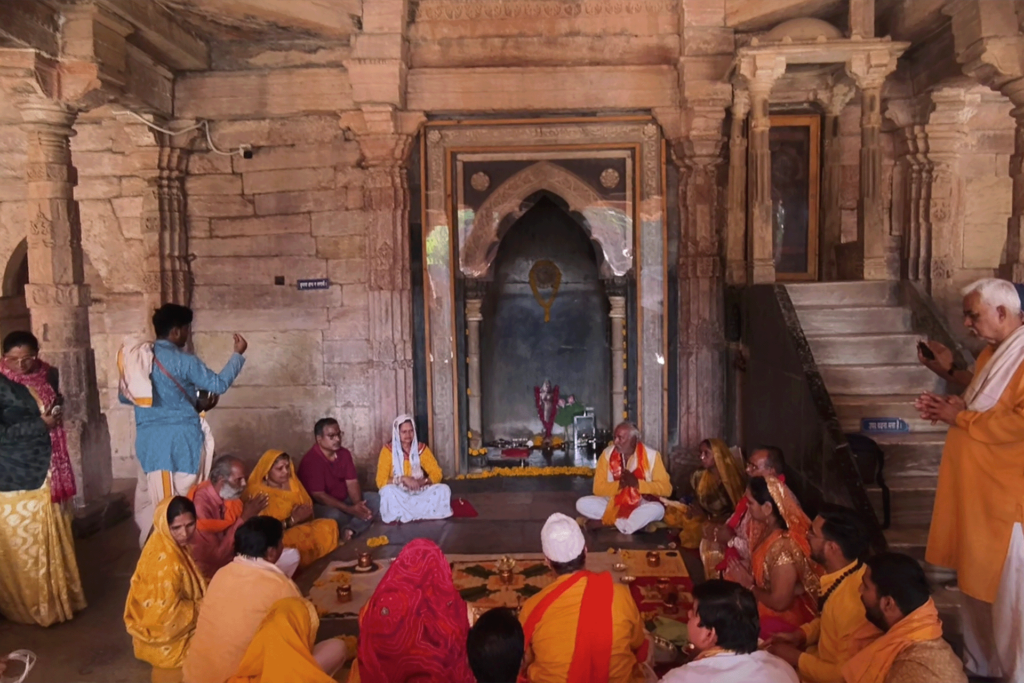
Hindus perform rituals inside the Bhojshala monument (Al Jazeera)
Widespread controversy over historical records and ownership of the site
Muslim protesters and critics of the High Court’s decision believe the ruling granted the site to the Hindus in a manner that contradicts historical administrative records—most notably a notice published in the official gazette in 1935, which classified the site as a mosque and affirmed Muslims’ right to perform prayers inside it.
In contrast, the court refused to rely on those referenced documents on the grounds that they date back to the colonial era—before the application of current laws. It also called on the Indian government to consider retrieving the Vagdevi statue displayed in the British Museum, after Hindu activists claimed it was linked to the alleged temple at the disputed site.
For his part, lawyer Ashar Warsi, who represents the Muslim side before the High Court in Madhya Pradesh, confirmed that historical records do not indicate that the statue was found within the Kamal Mola Mosque site. He argued that the opposing side’s claims “are not based on accurate historical facts.”
Fears of repeating the Babri Mosque scenario
India’s 1991 Places of Worship Act prohibits altering the religious character of places of worship from what they were at the time of the country’s independence in August 1947.
Despite this, in 2019 the Indian Supreme Court issued a widely controversial ruling granting the land on which the Babri Masjid—a 16th-century mosque in the city of Ayodhya in Uttar Pradesh—once stood, to a trust designated to build a Ram temple.
Political criticism and warnings regarding Islamic places of worship
Asaduddin Owaisi criticized the High Court’s decision, calling it “provocative,” and said that the Archaeological Survey of India has—according to him—become a tool in the hands of forces associated with the Hindutva movement.
Owaisi added that any move to convert mosques into temples is, in his view, a troubling message about the future of places of worship belonging to Muslims, who are the largest religious minority in India.
United News Network – UNN Arabic
An independent media platform delivering reliable news and objective analysis. It seeks to promote peace and cultural dialogue worldwide, conveying truth and building bridges of understanding between nations.
For more news, you can visit our homepage:
https://un-news.org
Writer: Counselor Faisal Al-Mutairi
Publication date: 21 May 2026
Last updated:21 May 2026