
A diplomatic escalation brings back memories of the “Mavi Marmara” to the forefront between Ankara and Tel Aviv.
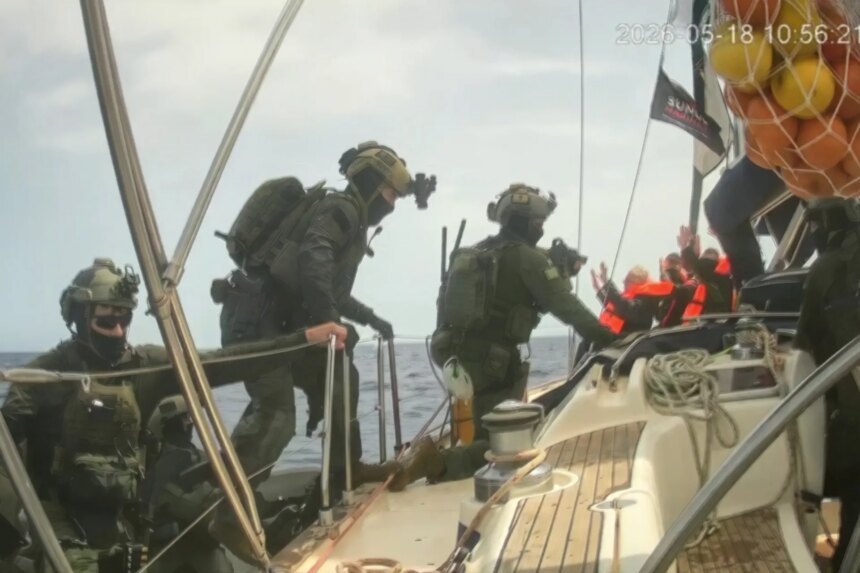
In broad daylight on Monday, nearly 250 nautical miles off the coast of the Gaza Strip, the Israeli navy intercepted the vessels of the “Global Fleet of Steadfastness” while they were sailing in international waters off Cyprus.
The journey began as a peaceful civilian initiative aimed at breaking the blockade imposed on Gaza and easing the humanitarian crisis faced by the people of the Strip. However, it quickly turned into an intense political and media crisis between Ankara and Tel Aviv, with the two sides exchanging accusations of piracy and acting as a “hostile state.”
These developments brought back memories of the 2010 Mavi Marmara incident, which at the time represented one of the most tense episodes between both sides.
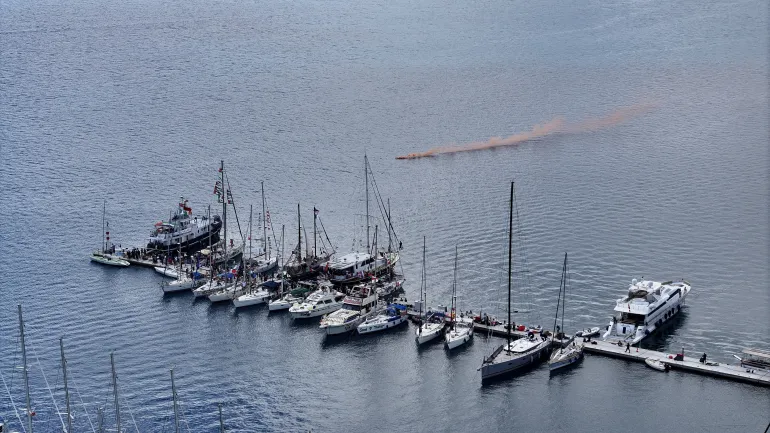
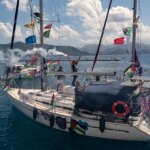
Sailing of the “Fleet of Steadfastness” from the Turkish city of Marmaris with the participation of 54 vessels (Anadolu)
Field scene details
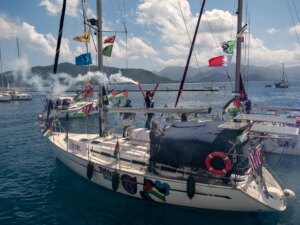
The fleet set off last Thursday from Marmaris, Turkey, consisting of 54 boats and ships, carrying 426 activists from about 40 countries, including dozens of Turkish nationals.
According to the organizers, Israeli forces intercepted 10 vessels and stormed the first boat in broad daylight, while communication was lost with 23 other ships.
Regarding the detentions, the newspaper Yedioth Ahronoth reported that the Israeli navy had prepared a ship to be used as a “floating prison”, where activists would be temporarily held before being transferred to the city of Ashdod.
For his part, a Cypriot official clarified that Israel conducted the operation in international waters without requesting any assistance from Nicosia, merely informing them that all detainees were in good health.
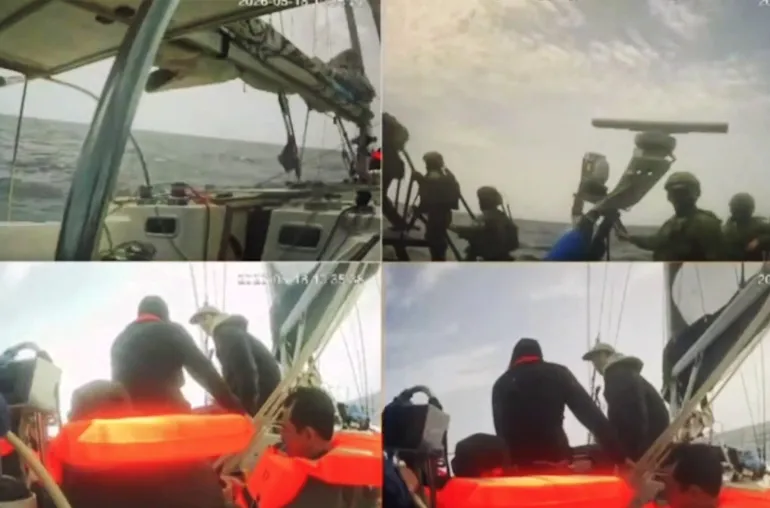
Moment of intercepting the path of the Fleet of Steadfastness (Al Jazeera)
Israel’s position on the fleet’s movements
In Tel Aviv, the Fleet of Steadfastness was treated as a serious and real security threat. Prime Minister Benjamin Netanyahu canceled his attendance at a court session related to corruption charges, justifying this by saying he was occupied with “security meetings throughout the day” to follow developments, according to The Washington Post.
From inside the Ministry of Defense, Netanyahu stated that his forces were “foiling a hostile plan aimed at breaking the isolation imposed on Hamas,” describing the fleet as “pro-terrorism.”
The Israeli Ministry of Foreign Affairs also justified the operation as the implementation of what it calls a “legal naval blockade,” accusing “two violent Turkish groups” of participating in the move in support of the Hamas movement and obstructing what it refers to as the American peace plan.
In the same context, the most escalatory stance came from former commander of the Israeli Navy, Reserve Major General Cheyni Marom, who told the national radio that “Turkey is behaving like a hostile state.”
Marom revealed that Israel had previously tried—through the American administration—to pressure Ankara to stop the fleet, but it was unsuccessful.
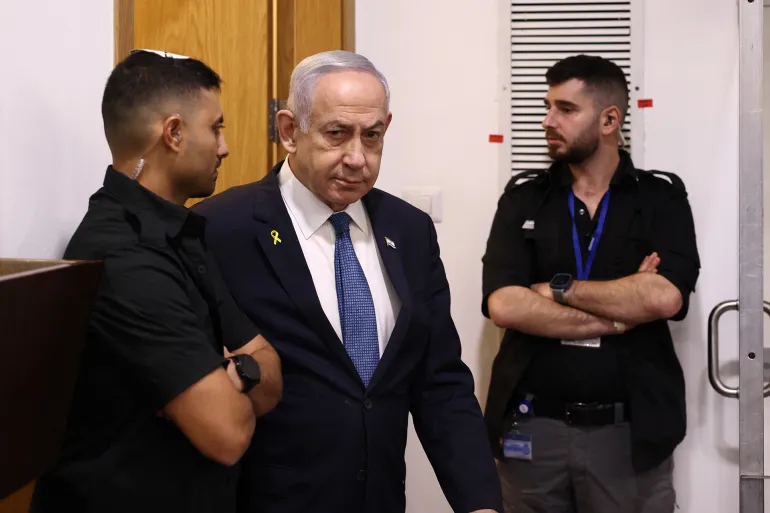
Netanyahu cancels his attendance at his corruption trial, citing being occupied with “security meetings all day” (AFP)
Turkish accusations of piracy and committing a “war crime”
On the other hand, Ankara and the organizers of the fleet insist that the interception was illegal. The Turkish Ministry of Foreign Affairs issued a statement describing what happened as “a new act of piracy,” affirming that Israeli policies “will not deter the international community from showing solidarity with Gaza.”
The ruling Justice and Development Party (AKP) escalated its rhetoric, with its spokesperson Omer Celik calling the attack “savage and barbaric,” and saying that the fleet “represents the conscience of humanity.”
This coincided with a unanimous condemnation by the Turkish Parliament, which described the Israeli interception as a “war crime.”
In the same context, the head of the Communications Directorate at the Turkish Presidency, Burhanettin Duran, stated that targeting civilians constitutes “a direct assault on humanity as a whole.”
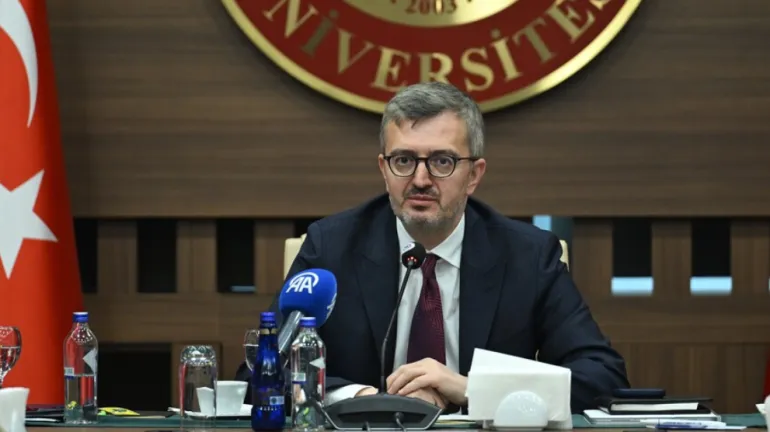
Duran said that targeting civilians is “a direct assault on all of humanity” (Anadolu).
It is worth noting that this was not the first confrontation of its kind. In May 2010, Israeli forces attacked the “Mavi Marmara” ship in international waters, resulting in the killing of 10 Turkish activists and triggering a severe diplomatic crisis that was not resolved until Israel issued an apology in 2013, followed by a normalization agreement in 2016.
However, the normalization path did not last long, as tensions once again escalated significantly with the outbreak of the Israeli genocide in Gaza in 2023, before reaching their peak when Turkey initiated lawsuits and legal actions against Israeli officials.
Ongoing attempts to break the blockade and renewed debate over the legality of the maritime interception
Away from the bilateral escalation between Ankara and Tel Aviv, the mentioned campaign — the third attempt within a year to break the blockade — reintroduces renewed questions regarding the legality of the Israeli interception in international waters, amid ongoing human rights and international condemnations.
Although these flotillas have not been able to reach Gaza’s shores since 2008, organizers stress that their goal is not merely to deliver aid, but also to bring the humanitarian catastrophe in the Strip back to the forefront of global attention and prevent it from fading amid the international community’s preoccupation with the U.S.-Israeli war on Iran.
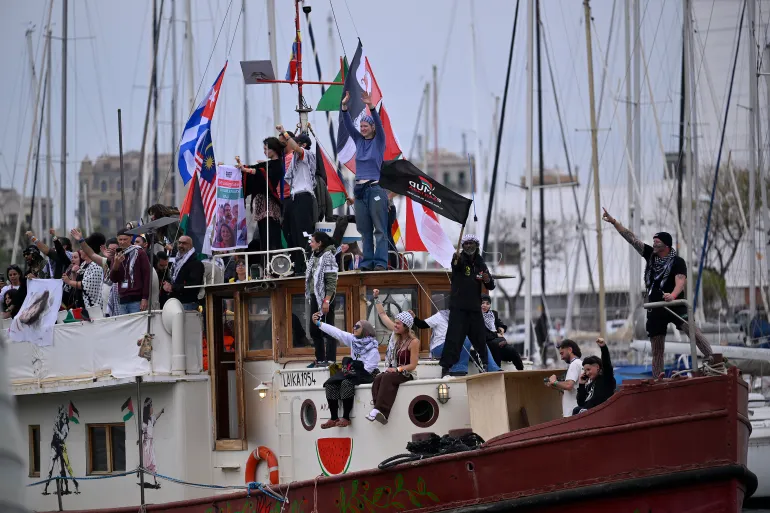
The organizers of the flotilla seek to bring the humanitarian catastrophe in the Gaza Strip back to the forefront of global attention (Anadolu).
United News Network – UNN Arabic
An independent media platform that provides reliable news and objective analysis, striving to promote peace and cultural dialogue around the world, to convey the truth and build bridges of understanding between peoples.
For more news, you can visit our homepage:
Author: Advisor Faisal Al-Mutairi
Publication Date: May 21, 2026
Update Date:May 21, 2026