

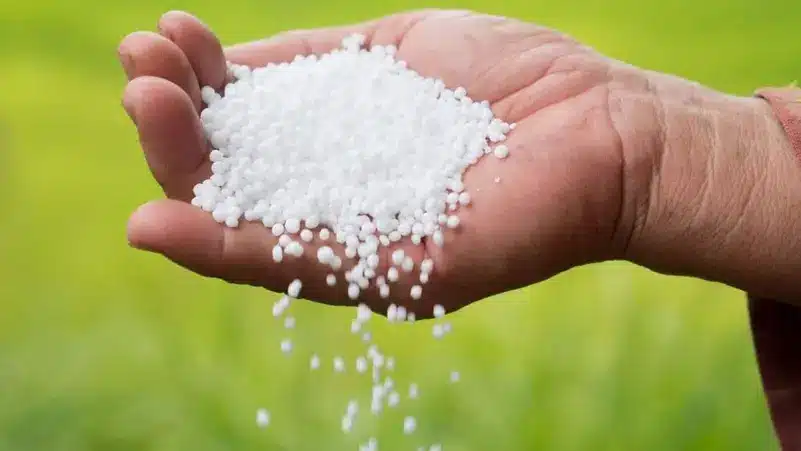
Algerian urea has emerged as a potential pressure point for France’s agricultural sector, in a development reflecting how tensions between Algiers and Paris are spilling over into the economic sphere. Reuters reported on Friday that Algeria had instructed producers of the fertilizer to halt exports to France, citing diplomatic sources and sources in the fertilizer industry.
The move is significant because Algeria accounts for around 30% of France’s urea imports, according to estimates cited by Reuters from the French Fertilizer Union and a wheat growers’ organization. If the suspension of supplies is confirmed and continues, French farms could face additional difficulties securing their needs and controlling production costs.
Urea is a nitrogen-based fertilizer that provides plants with the nitrogen essential for growth, containing approximately 46% nitrogen. It is particularly important in cereal farming, especially wheat and corn, as it supports plant growth and improves yields when applied at appropriate rates.
These developments come at a time when French agriculture is facing rising fertilizer and energy costs, as farmers prepare to secure supplies for the upcoming growing season. Industry sources have warned that reduced Algerian supplies, combined with higher gas prices, could increase the financial burden on farmers.
According to a Reuters report, the move follows reports that Algeria had imposed undisclosed restrictions on imports of French goods since late July 2026, raising concerns that the trade dispute between the two countries could widen. Algeria has issued no official announcement confirming a halt to urea exports to France, while the French Foreign Ministry said it had received no notification of these restrictions. A representative of France’s fertilizer sector warned that it was still too early to determine the actual impact on shipments.
France could seek alternative suppliers to replace Algerian supplies, but this would not necessarily be possible immediately, as it depends on prices, available volumes, transportation costs, and delivery schedules. In July 2026, the French government announced a plan to support farmers and strengthen domestic production of nitrogen fertilizers, indicating that dependence on imports was already a challenge before the latest developments.
The significance of the crisis extends beyond a dispute over a commercial commodity, raising questions about France’s ability to secure one of the essential inputs for agricultural production amid political tensions and supply chain challenges.
United News Network – UNN Arabic
An independent media platform providing reliable news and objective analysis, seeking to promote peace and cultural dialogue around the world, convey the truth, and build bridges of understanding among peoples.
For more news, visit our homepage:
Author: Counselor Faisal Al-Mutairi.
Publication Date: October 26, 2026.
Updated: October 2026.