
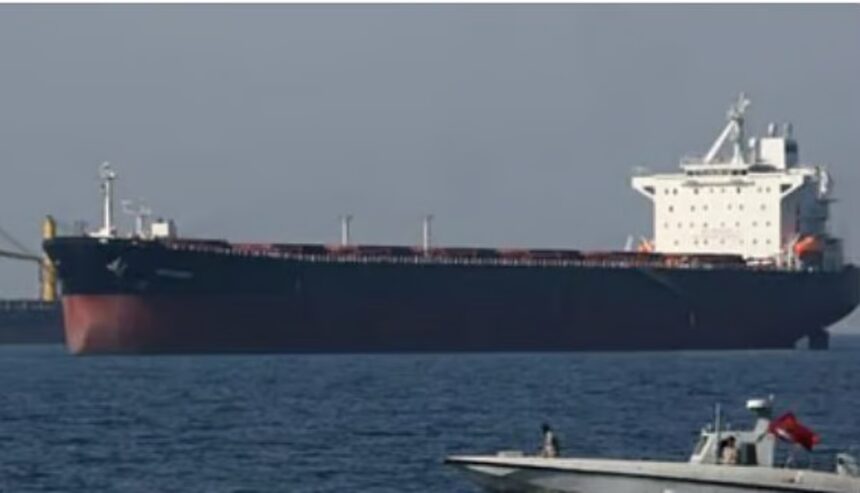
Opening the Strait of Hormuz to Ships Following a U.S.–China Understanding
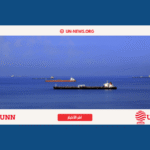
Iranian television reported today that an official in the Iranian Revolutionary Guard Navy announced that more than 30 ships have been allowed to pass through the Strait of Hormuz since last night, in a step that reflects a significant on-ground breakthrough in one of the world’s most sensitive strategic maritime passages.
This development comes after rising tensions regarding navigation through the strait, which is considered a main artery for the flow of global energy supplies, as a large portion of oil and gas exports to international markets passes through it — making any disruption a major source of economic and geopolitical concern worldwide.
In the same context, the White House announced in an official statement following a high-level summit between U.S. President Donald Trump and Chinese President Xi Jinping in the Chinese capital, Beijing, that both sides agreed on the importance of keeping the Strait of Hormuz open and ensuring freedom of maritime navigation to maintain the uninterrupted flow of energy to global markets.
This U.S.–China understanding reflects a rare alignment between the world’s two largest economic powers regarding one of the most prominent international security issues, amid rising regional tensions in the Middle East and global concerns about the impact of any potential closure or military escalation on energy prices and international economic stability.
The agreement also indicates that the Beijing summit extended beyond bilateral issues between Washington and Beijing to include sensitive international matters, among them maritime security, Middle East stability, and maintaining balance in global markets — reinforcing the importance of international coordination in addressing geopolitical crises.
Allowing these ships to pass is viewed as an early sign of a relative de-escalation in tensions and a practical message aimed at preventing further escalation that could threaten global trade, particularly given the heavy dependence of major economies on stable oil flows through the Strait of Hormuz.
Gulf Arab Rejection of Any Unilateral Changes in the Management of the Strait of Hormuz
In a regional development that reflects the continued strategic sensitivity of maritime security in the Strait of Hormuz, Saudi Arabia, the UAE, Kuwait, Qatar, Bahrain, and Jordan expressed — through a joint letter to the United Nations and the Security Council — their rejection of any Iranian attempts to impose “new rules” for managing the strait, affirming their commitment to freedom of navigation and adherence to international regulations governing this vital passageway.
The signatory states stressed that their defensive and security arrangements, along with their international partnerships, are legitimate sovereign rights, and that no external party has the authority to impose unilateral security choices or restrictions on them — sending a clear message emphasizing the importance of regional balance and the stability of global trade and energy routes.
The Importance of the Strait of Hormuz in International Security
This position comes in the context of recent developments related to reopening the Strait of Hormuz to ships after the U.S.–China understanding reached during the Beijing summit between President Donald Trump and President Xi Jinping, which emphasized the necessity of keeping the strait open to ensure the continued flow of energy supplies to global markets.
The Gulf-Jordanian rejection underscores a growing concern about preventing any escalation that could jeopardize the recent diplomatic gains related to maritime stability, particularly since the Strait of Hormuz is one of the world’s most important waterways for transporting gas and oil. Any disruption is expected to have wide-ranging economic and geopolitical consequences.
This Arab move also confirms that the security of the strait is no longer a regional matter alone, but has become part of the broader equation of global economic security, amid increasing international and regional coordination aimed at maintaining stability and preventing any unilateral actions that could impact global trade and energy.
Iran Affirms Regulation of Navigation in Hormuz Amid Regional and International Debate
Amid growing attention to the security of the Strait of Hormuz, Iran affirmed that its maritime measures related to the strait fall within routine procedures aimed at ensuring safe navigation and protecting commercial vessels, stressing that coordination with its naval forces is part of standard maritime security mechanisms — not an attempt to restrict international shipping or disrupt global trade flow.
An Iranian source explained that ships passing through the strait are asked to coordinate with Iranian naval forces as part of an organizational framework aimed at enhancing transit safety, while rejecting any attempts that could disrupt navigation or threaten the stability of global energy supplies passing through this strategic passage.
Escalating Political Dispute Over the Management of the Strait of Hormuz
In the same context, Iranian Foreign Minister Mohammad Javad Zarif denied any intention to disrupt international navigation, asserting that the accusations directed at Tehran go beyond the impact of U.S. sanctions and the economic blockade, which he described as illegal and harmful to regional stability. He expressed hope for ending these measures in a way that positively affects regional security.
This position comes at a time when the strait is witnessing rapid developments following its reopening to ships after a U.S.–China understanding at the Beijing summit, in addition to the Gulf-Jordanian rejection of any unilateral changes to its administration — highlighting the sensitivity of the issue and the complexity of its political and economic dimensions.
The Strait of Hormuz is considered one of the most important waterways in the world, as it handles nearly one-fifth of global oil shipments daily — making it a decisive factor in the stability of global energy markets and a constant focal point of geopolitical tensions among various regional and international powers.
For more news, you can visit our homepage:
Writer: Consultant Faisal Al-Mutairi
Publication date: 14 May 2026
Update date: